





Table of Contents
What Has Changed? (Summary by Electrical4Less)
The EICR 2025 Update brings major new legal responsibilities for landlords in England and Northern Ireland.
From 1 November 2025, England’s social rented sector must follow the same 5-year electrical inspection rules already required in the private sector. Social landlords now need mandatory EICRs, electrical equipment checks and fast turnaround on remedial work.
This marks one of the most significant shifts in electrical safety regulation in over five years. Below, we summarise the updated legislation using official information from GOV.UK, along with further analysis from NICEIC and NAPIT.
Government Legislation Overview – EICR 2025 Update
Source: UK Government (GOV.UK) – Summary by Electrical4Less
The UK Government has extended the original Electrical Safety Standards in the Private Rented Sector (England) Regulations 2020 to cover:
- All social housing tenancies
- Mandatory 5-year EICR inspections
- Mandatory testing of electrical appliances supplied by social landlords
- Clear transition times for new vs existing tenancies
These changes align electrical safety rules across both private and social rented homes.
Quoted Government Text (Direct From GOV.UK)
“These regulations require all landlords to have the electrical installations in their properties inspected and tested by a qualified person at least every 5 years… Social landlords must also have the electrical equipment that they provide under the tenancy checked by a qualified person at least every 5 years.”
Industry Insight: NICEIC – EICR 2025 Update Across the UK
Source: NICEIC – Summary by Electrical4Less
NICEIC highlights two major regulatory expansions as part of the EICR 2025 Update:
1. England – Social Rented Sector
- EICR every 5 years
- EICR copies must be given to tenants
- C1, C2 and FI remedial work must be completed promptly
- PAT testing required for all landlord-supplied appliances
2. Northern Ireland – All Private Tenancies
- From 1 December 2025, all private rented homes require 5-year EICRs
- This extends the April 2025 rules that originally applied only to new tenancies
Full NICEIC article:
https://niceic.com/views/eicrs-in-the-rented-sector/
Industry Insight: NAPIT & Awaab’s Law – EICR 2025 Update Context
Source: NAPIT – Summary by Electrical4Less
NAPIT has welcomed the EICR 2025 Update, noting that:
- Social landlords must now meet the same electrical inspection duties as private landlords
- 5-year inspections and competent inspectors are mandatory
- C1, C2 and FI issues require urgent remediation
- PAT testing is required for any appliances supplied as part of a tenancy
They also highlight the link between the update and Awaab’s Law, which came into force on 27 October 2025. This law requires social landlords to repair dangerous hazards (initially damp and mould), with electrical hazards included in the next phase from 2026.
Original NAPIT article:
https://www.napit.org.uk (navigate to Articles → 05 November 2025)
Awaab’s Law guidance:
https://www.gov.uk/government/publications/awaabs-law-guidance-for-social-landlords
What the EICR 2025 Update Means for Landlords
England – Social Landlords
- New tenancies: EICR required from 1 Nov 2025
- Existing tenancies: inspections required by 1 May 2026
- Reports must follow BS 7671
- Reports must be provided to tenants, prospective tenants, and local councils
- Remedial work must be completed within 28 days unless otherwise specified
Northern Ireland
- From 1 December 2025, all private tenancies will require 5-year EICRs
Practical Impact
Landlords and electrical professionals should expect a significant rise in:
- Consumer unit upgrades
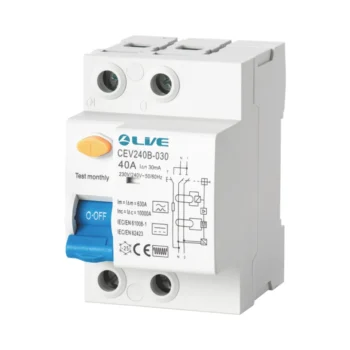
- RCBO and SPD installations
- Remedial works following unsatisfactory EICRs
- Demand for PAT testing
The EICR 2025 Update aims to bring consistent safety standards across both private and social rented homes.
Where to Buy 18th Edition Consumer Units
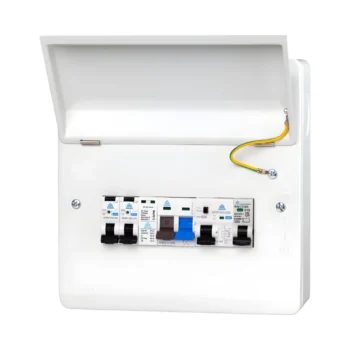
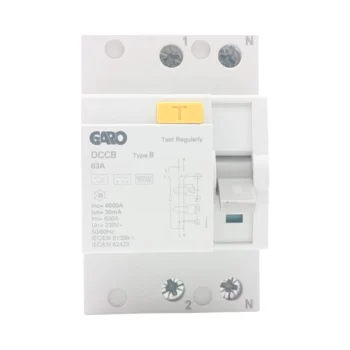
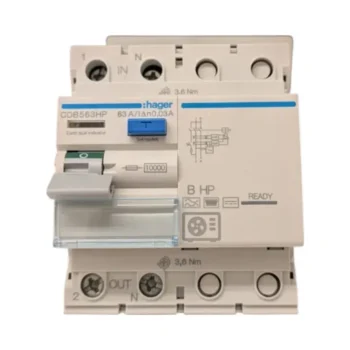
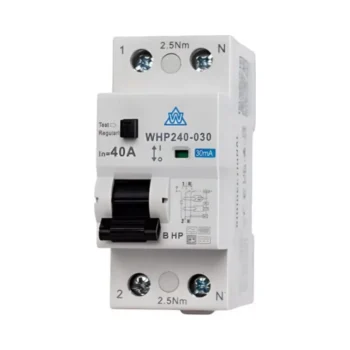
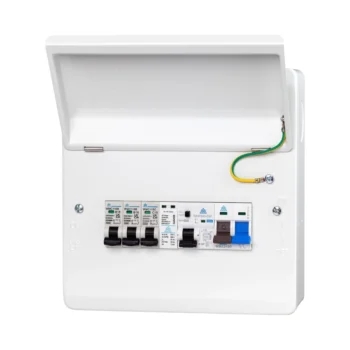
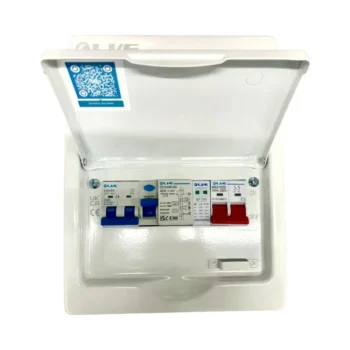
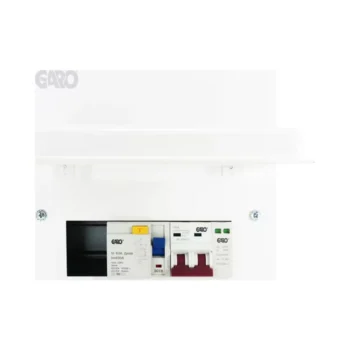
If remedial work is required following the EICR 2025 Update, or if an installation needs upgrading to meet current BS 7671 standards, fully compliant 18th Edition consumer units are available through reputable UK electrical wholesalers. These units support modern protection requirements.
FAQs – EICR 2025 Update
1. What is the main purpose of the EICR 2025 Update?
The update extends mandatory five-year electrical installation inspections to the social rented sector in England and aligns rules with the private rented sector. It also strengthens responsibilities for reporting, documentation, and timely remedial work.
2. When do the new rules apply to social housing?
For new social housing tenancies, the rules apply from 1 November 2025.
For existing tenancies, inspections must be completed by 1 May 2026.
3. Does the EICR 2025 Update change requirements for private landlords?
Private rented sector requirements remain the same, but the update effectively standardises expectations across both private and social housing.
4. What is a qualified or competent person for an EICR?
A qualified person is someone with the appropriate training, skills, and experience to safely inspect and test electrical installations. Landlords should refer to recognised registration bodies such as NICEIC or NAPIT
5. What happens if an EICR shows C1, C2, or FI codes?
These classifications indicate issues requiring immediate action. Remedial or investigative work must be completed within the timeframe specified in the report, typically within 28 days.
6. Do landlords need to test electrical appliances as well as installations?
Yes, in the social rented sector. Any electrical equipment supplied under the tenancy must undergo appropriate in-service inspection and testing (often referred to as PAT testing).
7. Does the EICR 2025 Update apply to Northern Ireland?
Yes, but separately. From 1 December 2025, all privately rented homes in Northern Ireland must have five-year EICRs, extending earlier rules that applied only to new tenancies.
8. How does Awaab’s Law relate to the EICR 2025 Update?
Awaab’s Law introduces mandatory timeframes for landlords to address serious hazards, including damp, mould, and—starting in 2026—electrical and fire hazards. It complements the electrical safety changes.
9. Do new-build homes or recently rewired properties need an EICR?
If a property has a valid Electrical Installation Certificate (EIC), this usually covers the first five-year period. The EIC serves as evidence of compliance until the next inspection date.
10. What documents must landlords provide to tenants under the updated rules?
Landlords must provide copies of the EICR, any follow-up confirmation of completed remedial work, and—where applicable—records of appliance testing.
References
- GOV.UK – Electrical Safety Standards in the Private & Social Rented Sectors
https://www.gov.uk/government/publications/electrical-safety-standards-in-the-private-and-social-rented-sectors-guidance/electrical-safety-standards-in-the-private-and-social-rented-sectors-guidance - NICEIC – EICRs in the Rented Sector
https://niceic.com/views/eicrs-in-the-rented-sector/ - NAPIT – Electrical Safety Requirements & Awaab’s Law
https://www.napit.org.uk - GOV.UK – Awaab’s Law: Guidance
https://www.gov.uk/government/publications/awaabs-law-guidance-for-social-landlords
Disclaimer
This article contains summaries of publicly available information from GOV.UK, NICEIC and NAPIT. Electrical4Less does not provide legal, regulatory or installation advice. For full details, always consult the original sources and qualified professionals.



















































EICR 2025 Update – Major Regulatory Changes Explained