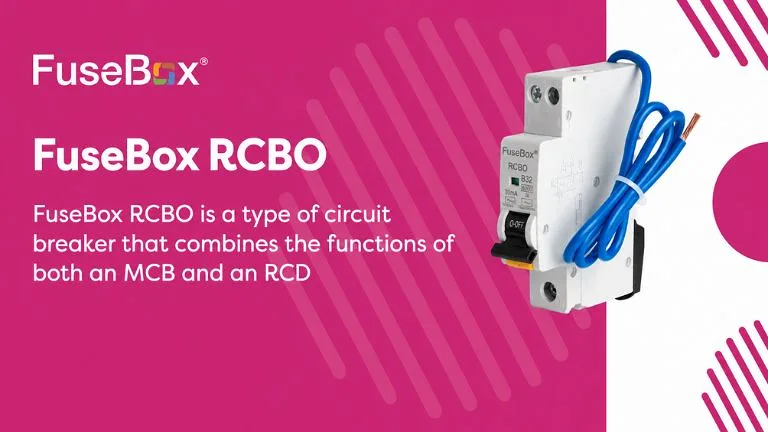
This FuseBox RCBO Guide explains the main FuseBox RCBO ranges, what they are used for and what to check before ordering. FuseBox RCBOs are available in several formats, including standard size 6kA RCBOs, compact mini RCBOs, bi-directional compact RCBOs, older non bi-directional compact RCBOs and 10kA RCBOs for compatible TPN / three-phase boards.
Looking for FuseBox RCBO products? Browse our FuseBox RCBO category, or view our main RCBO circuit breakers range for other brands and ratings.
FuseBox RCBOs are not all the same. Different FuseBox consumer units and distribution boards may require different RCBO formats, so it is important to check the board type, busbar arrangement, breaking capacity, device size and whether the installation requires a bi-directional RCBO before ordering.
The sections below group the main FuseBox RCBO ranges to make selection easier.
Standard Size 6kA FuseBox RCBOs – RTA Range
The standard size FuseBox RCBO range is the RTA range and is one of the most common FuseBox RCBO types used in domestic consumer units.
These are standard size 6kA RCBOs designed for compatible FuseBox consumer units. They are often used for domestic circuit protection, including lighting circuits, socket circuits, cooker circuits, radial circuits and other final circuits where the correct rating and curve have been selected by the installer.
This range is a good starting point if you are replacing an existing standard size FuseBox RTA RCBO or working on a compatible FuseBox domestic consumer unit that uses the standard device format.
Bi-Directional Compact Mini FuseBox RCBOs
The FuseBox bi-directional RCBO range is the compact mini-size range designed for compatible FuseBox consumer units.
These RCBOs are smaller than the standard size RTA range, helping save space inside the consumer unit and giving a neater installation. They are also bi-directional, which makes them suitable for modern installations where current flow direction may be relevant, subject to the manufacturer’s instructions and the design of the installation.
This is now the preferred compact option for many FuseBox consumer unit installations, especially where the installer wants a modern mini RCBO with 1 Pole + Switched Neutral operation and Type A residual current protection.
Older Compact Mini FuseBox RCBOs – Non Bi-Directional
The older compact FuseBox RCBO range is the previous mini compact RCBO range. These devices are compact, but they are not bi-directional.
We may still have some remaining stock of these older compact RCBOs. They can appear alongside the newer FuseBox compact and bi-directional RCBO options, so it is important to read the product title and description carefully before ordering.
If the installation specifically requires a bi-directional RCBO, choose the newer bi-directional compact mini range instead. If you are replacing an older non bi-directional compact FuseBox RCBO like-for-like, check the exact SKU, rating and curve before purchase.
10kA 1 Pole + Switched Neutral FuseBox RCBOs for TPN Boards
The FuseBox 10kA 1 Pole + Switched Neutral RCBO range is designed for compatible FuseBox TPN / three-phase distribution boards.
These are 10kA devices and are not the same as standard domestic 6kA RCBOs. They are intended for FuseBox TPN boards where a 1 Pole + Switched Neutral RCBO is required for single-phase final circuits taken from a three-phase board.
Use this range when working with compatible FuseBox TPN distribution boards and when the board requires the 10kA 1 Pole + Switched Neutral RCBO format. Do not assume a standard 6kA domestic RCBO will fit or be suitable for a TPN board.
10kA 3 Pole + Switched Neutral Bi-Directional FuseBox RCBOs for TPN Boards
The FuseBox 10kA 3 Pole + Switched Neutral bi-directional RCBO range is also designed for compatible FuseBox TPN / three-phase boards.
These devices are used where three-phase RCBO protection is required. They provide 3 Pole + Switched Neutral operation, 10kA breaking capacity and bi-directional suitability for compatible FuseBox TPN installations.
This range is different from the 10kA 1 Pole + Switched Neutral RCBO range. The 1 Pole + Switched Neutral devices are for single-phase circuits within compatible TPN boards, while the 3 Pole + Switched Neutral devices are for three-phase circuits.
automatically interchangeable. Always check the board, device type and manufacturer requirements before ordering.
Fusebox RCBO - Complete Guide 3
Which FuseBox RCBO Range Do I Need?
As a simple guide, choose the range based on the board and device type already in use:
Standard domestic FuseBox board using RTA devices: choose standard size 6kA RTA FuseBox RCBOs.
Modern compact FuseBox board requiring mini RCBOs: choose compact mini FuseBox RCBOs.
Installation requiring bi-directional RCBOs: choose the FuseBox bi-directional compact mini RCBO range.
Replacing older compact non bi-directional RCBOs: check the older compact FuseBox RCBO range while stock remains.
FuseBox TPN board with single-phase final circuits: choose 10kA 1 Pole + Switched Neutral FuseBox RCBOs for TPN boards.
FuseBox TPN board with three-phase circuits: choose 10kA 3 Pole + Switched Neutral bi-directional FuseBox RCBOs.
Important: Always confirm compatibility before ordering. Some FuseBox RCBO ranges may be suitable as alternatives in certain boards, but standard size, compact mini and 10kA TPN-board RCBOs should only be selected after checking the consumer unit type, busbar arrangement and manufacturer compatibility.
Shop FuseBox RCBOs
For current product options, visit our FuseBox RCBO category.
FuseBox RCBOs should be selected, installed and tested by a qualified electrician in accordance with current UK wiring regulations and the manufacturer’s instructions. Always confirm the board type, busbar arrangement, rated current, tripping curve, breaking capacity, device format and compatibility before installation.
Conclusion
FuseBox RCBOs are available in several different formats, so choosing the correct range is important. Standard size RTA RCBOs, compact mini RCBOs, bi-directional compact RCBOs and 10kA TPN-board RCBOs are not
Fusebox RCBO - Complete Guide 4
Fusebox RCBO FAQ
What is a FuseBox RCBO?
A FuseBox RCBO (Residual Current Breaker with Overcurrent protection) is a device that combines the functions of an RCD and an MCB. It provides both earth fault protection and overcurrent protection, ensuring comprehensive safety for electrical installations.
Do FuseBox make mini RCBOs?
Yes, FuseBox manufactures mini RCBOs. These compact devices offer the same level of protection as standard RCBOs but in a smaller form factor, making them ideal for installations where space is limited.
Do FuseBox make compact RCBOs?
Yes, FuseBox offers compact RCBOs designed to save space in electrical installations. These RCBOs are ideal for installations with limited space, providing reliable protection without compromising on performance.
What type of device is an RCBO?
Yes, FuseBox offers compact RCBOs designed to save space in electrical installations. These RCBOs are ideal for installations with limited space, providing reliable protection without compromising on performance.
What is the difference between RCBO and RCD?
An RCBO provides both earth fault protection and overcurrent protection, while an RCD only provides earth fault protection. RCBOs are more versatile as they can protect against both types of faults, making them a preferred choice for many installations.
Are FuseBox RCBO’s double poles?
FuseBox RCBOs are commonly described as 1 Pole + Switched Neutral rather than simply double pole. This means the device provides protection on the live pole and also switches the neutral. Some people may loosely call this double pole switching, but for FuseBox RCBO listings the more accurate wording is 1 Pole + Switched Neutral. Always check the exact product specification and board compatibility before ordering.
Is FuseBox a good consumer unit?
Yes, FuseBox consumer units are well regarded in the electrical industry for their reliability, advanced features, and ease of installation. They provide superior protection and performance, making them a popular choice among electricians and homeowners.
What’s the difference between a Type A and Type B RCBO?
Type A RCBOs provide protection against both AC and pulsating DC residual currents, while Type B RCBOs provide protection against AC, pulsating DC, and smooth DC residual currents. Type A RCBOs are suitable for most residential and commercial installations, while Type B RCBOs are typically used in industrial settings with specific requirements.
Should I use MCB or RCBO?
Yes, FuseBox consumer units are well regarded in the electrical industry for their reliability, advanced features, and ease of installation. They provide superior protection and performance, making them a popular choice among electricians and homeowners.
Which type of RCBO should I use?
The type of RCBO to use depends on the specific requirements of the installation. Type A RCBOs are suitable for most applications, providing protection against AC and pulsating DC residual currents. For installations with specific requirements, such as industrial settings, Type B RCBOs may be necessary.
Can you use Type B RCBO in domestic?
While Type B RCBOs can be used in domestic installations, they are typically reserved for industrial settings with specific requirements. Type A RCBOs are generally sufficient for most residential applications.
Where do you use Type A RCBO?
Type A RCBOs are used in a variety of settings, including residential, commercial, and industrial installations. They provide protection against AC and pulsating DC residual currents, making them suitable for modern electrical systems that include electronic devices.
What size RCBO for shower?
The size of the RCBO required for a shower depends on the power rating of the shower unit. Generally, a 32A or 40A RCBO is used for electric showers, but it is important to check the manufacturer’s specifications to ensure the correct size is selected.
Do all circuits need RCBO protection?
In modern domestic installs you should assume yes – all final circuits require 30 mA RCD protection under BS 7671, and the simplest way to achieve this is by using RCBOs on every circuit.
How to tell the difference between a single pole and double pole breaker?
A single pole breaker has one switch and interrupts the live conductor, while a double pole breaker has two switches and interrupts both the live and neutral conductors. Double pole breakers provide higher safety by completely isolating the circuit in the event of a fault.
What is the amp rating of a FuseBox RCBO?
FuseBox RCBOs are available in various amp ratings, including 6A, 10A, 16A, 20A, 25A, 32A, 40A, 45A and 50A. Selecting the appropriate amp rating is crucial to ensure the RCBO can handle the load of the connected circuits without tripping unnecessarily.
What is the difference between b curve and c curve in RCBO?
B curve RCBOs trip between 3 and 5 times the rated current and are typically used in residential and light commercial installations where the connected equipment has low inrush currents. C curve RCBOs trip between 5 and 10 times the rated current and are used in commercial and industrial settings where the connected equipment may have higher inrush currents, such as motors and transformers.
What is the difference between type A and type AC RCBO?
Type A RCBOs provide protection against both AC and pulsating DC residual currents, while Type AC RCBOs provide protection against AC residual currents only. Type A RCBOs are more versatile and suitable for modern electrical installations that include electronic devices producing pulsating DC currents.
What does an RCBO protect against?
An RCBO protects against both earth faults and overcurrent conditions. It detects earth leakage currents, preventing electric shocks, and also protects against overcurrent conditions that could cause overheating and potential fires.
Will an RCBO stop nuisance tripping?
RCBOs are designed to reduce nuisance tripping by only tripping when there is a genuine fault. Proper installation and selecting the appropriate type and rating of RCBO can help minimise nuisance tripping.
What causes RCBO to trip?
An RCBO can trip due to various reasons, including earth faults, overcurrent conditions, and short circuits. It is designed to trip when it detects a fault condition, ensuring the safety of the electrical installation.
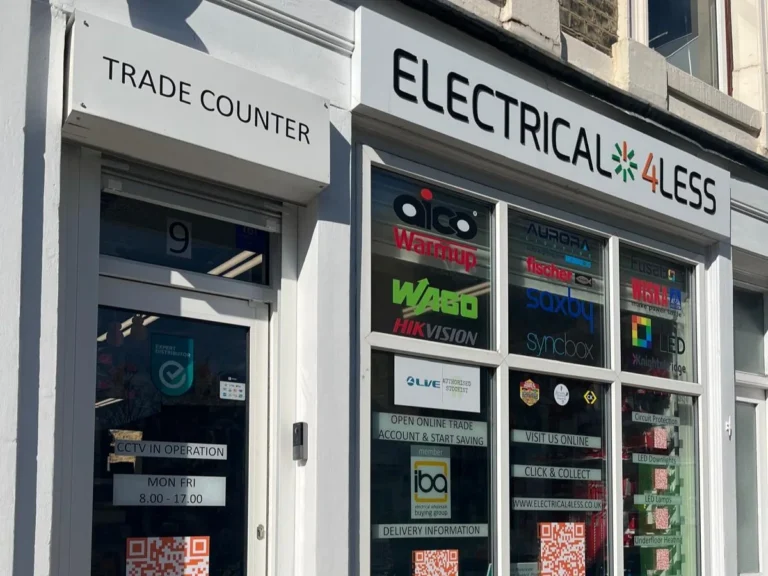
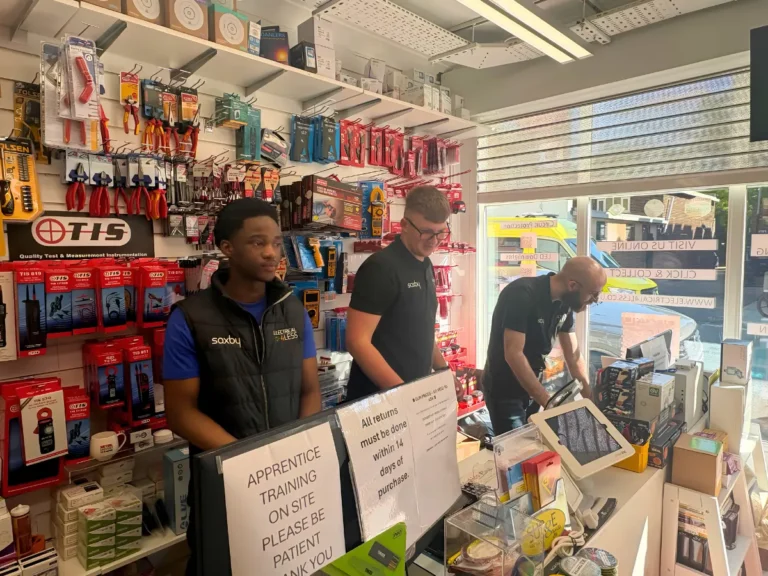
We’re an independent electrical trade counter and online supplier based in Fulham, London SW6 1RP. Every day we support local electricians and construction sites with fast, reliable supply of trusted products. Whether you need same-day collection, local delivery, or next-day courier across the UK, we make it happen without the hassle. Overseas orders? No problem — we’ve got you covered.
Our Memberships
As proud members of the Independent Buying Association (IBA) and the Electrical Distributors’ Association (EDA), we’re connected to over 100+ approved UK suppliers. That means the buying power of a national wholesaler with the flexibility and personal service of an independent.
Membership gives us more than sharp pricing — it guarantees professional standards, compliance, and best practice, so you can trust every order meets industry requirements.
Why Choose Us
We’re not a faceless website or call centre — we’re a hands-on team who pick up the phone, answer WhatsApp, and actually listen. No bureaucracy, no endless forms. Just people ready to help you get the job done, quickly and reliably.
Easy contact via WhatsApp, phone, or email
Friendly, no-nonsense service from people who know the trade
Hands-on help finding exactly what you need
Fast UK courier delivery plus international shipping available
Proudly serving electricians and construction projects across Fulham, Chelsea, and the wider London area — and nationwide with fast next-day delivery by courier.
Cut-Off Time and Order Information
To ensure your order qualifies for next day delivery, please place your order by 3:00 PM. This is subject to all items being available on the shelf at the time of your order. For orders where the total value exceeds £200 + VAT (double our standard carriage-paid order value of £100 + VAT), we are happy to split the delivery into two shipments if some items are needed urgently and others are not immediately available. If you have any questions or need further assistance, feel free to reach out to us via WhatsApp for live support. We’re here to help!
In Stock Delivery Policy
Free Next-Day Delivery Over £100 + VAT:
Orders above £100 + VAT qualify for free next-day delivery via DPD for in-stock items. While we strive for timely dispatch, we recommend placing orders early to avoid potential delays. Once dispatched, unexpected issues may arise despite the courier’s efforts.
Orders Below £200 + VAT:
To keep costs manageable, we dispatch your order once all items are ready, including products with longer lead times.
Need items faster? You can pay for an additional delivery service to receive in-stock items sooner. Simply email us with your order details, and we’ll send you a payment link for the extra delivery cost.
Orders Above £200 + VAT:
For larger orders, we can split delivery at no extra cost. In-stock items will be sent immediately, with the remaining items dispatched once available.
Supplier Lead Time & Availability
This item may be sourced from our supplier before dispatch.
The lead time shown is an estimate only and is based on the usual supplier timeframe. It is subject to supplier availability and is not a guaranteed delivery date.
We do not have a live supplier stock feed, so supplier stock can change without notice.
Delivery timers and courier estimates apply once the item is available for dispatch.
If the item is unavailable, we will contact you with the available options, including waiting for stock, choosing an alternative product, cancellation, or a refund for the unavailable item.
This does not affect your statutory rights.
Didn't find what you're looking for?
No problem — message us directly on WhatsApp and we’ll help you out.
We usually respond within minutes during working hours.
Ordering this product
To purchase this catalogue item, start by adding it to your quote list. Submit your enquiry with the quantity you require, and our team will help you complete your order.
Cookie Preferences
We use cookies to enhance your browsing experience, serve personalised content, and analyse our traffic. By clicking "Accept All", you consent to our use of cookies. To find out more about how we use cookies please view our
Privacy Policy.
Cookie Preferences
We use cookies to help you navigate the site and use its features. Below you will find details about each cookie category.
Cookies marked as "Necessary" are stored in your browser and are required for the site to function properly.
We also use third-party cookies to analyse site usage, remember your preferences, and show you relevant content and ads. These are only stored with your consent.
You can enable or disable optional cookies below. Turning some off may affect how the site works for you.
NecessaryAlways Active
Necessary cookies are needed for core site features, such as secure login and saving your cookie preferences. They do not store personal data.
Functional cookies enable embedded product videos, interactive maps, customer reviews, and faster page loading.
Enable
Analytics cookies help us understand how visitors use the site, including visitor numbers, bounce rate, and traffic sources.
































Fusebox RCBO – Complete Guide