


Replace the old 2022 content with this:
When Does a Three-Phase Distribution Board Need an SPD?
When does a three-phase distribution board need an SPD? The answer depends on the installation design, the possible consequences of transient overvoltages and the requirements of the applicable edition of BS 7671.
A three-phase board does not automatically require an SPD simply because it is three-phase. The electrical designer must assess the complete installation, connected equipment, supply arrangement and potential consequences of surge damage.
What Does an SPD Do?
A Surge Protection Device helps protect an electrical installation and connected equipment against short-duration transient overvoltages.
These surges may originate from lightning activity, switching operations or equipment such as motors, transformers, high-current loads and energy-storage systems. SPDs are normally installed at the origin or within distribution boards, with additional protection provided further downstream where required. (IET Wiring Regulations)
When Is Surge Protection Required?
Surge protection should be assessed where an overvoltage could result in serious injury, significant financial loss, data loss or damage to important equipment.
For other installations, the designer and customer should consider the likely consequences and cost of equipment damage before deciding whether surge protection can reasonably be omitted.
Three-phase commercial installations often supply equipment such as:
- Machinery and motors
- Control panels
- IT and communication systems
- Heating and ventilation equipment
- Commercial lighting
- Refrigeration
- EV charging equipment
- Solar PV and battery systems
- Fire alarms and other safety-related systems
The presence of sensitive or expensive equipment can make surge protection particularly important.
Type 1 or Type 2 SPD?
A Type 2 SPD is commonly installed within a distribution board to protect against switching surges and indirect lightning effects.
A Type 1 SPD, or a combined Type 1 and Type 2 device, may be required where the installation has an external lightning protection system or where the electrical design identifies a risk from direct lightning current.
Where several SPDs are installed at different points in the installation, they must be properly coordinated. (IET Wiring Regulations)
Choosing an SPD for a Three-Phase Distribution Board
The SPD must be suitable for the:
- Supply voltage
- Earthing arrangement
- Number of phases
- Prospective short-circuit current
- Required protection level
- Distribution-board configuration
- Connected equipment
- Manufacturer’s installation requirements
Installers should not assume that every three-phase SPD is suitable for every TPN distribution board.
SPD Overcurrent Protection
Under BS 7671:2018+A4:2026, an SPD must have suitable protection against short-circuit overcurrent.
This protection may be built into the SPD or provided by an external protective device, depending on the manufacturer’s instructions. The permitted rating and type of external protection must be checked before installation. (IET Wiring Regulations)
Live Electrical Three-Phase Distribution Boards
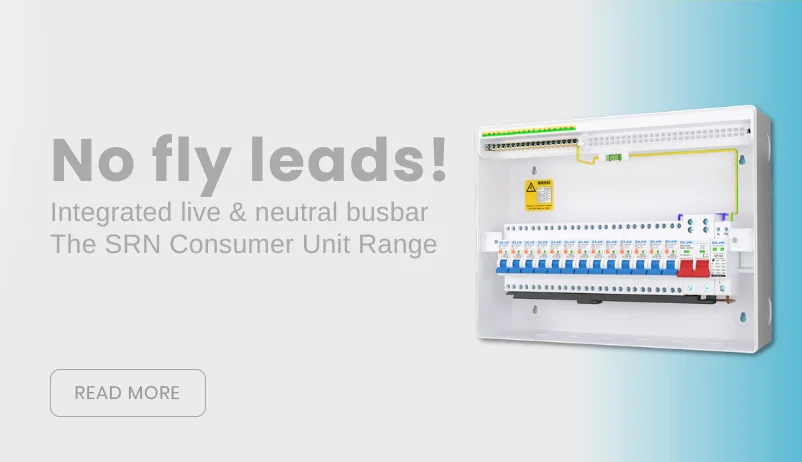
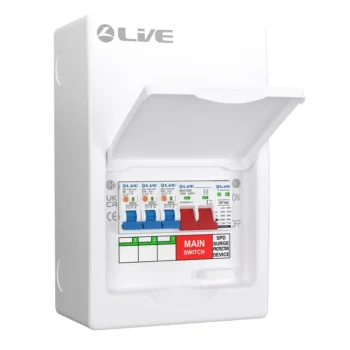
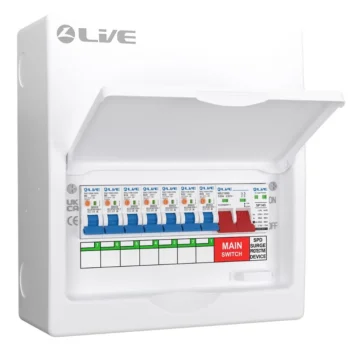
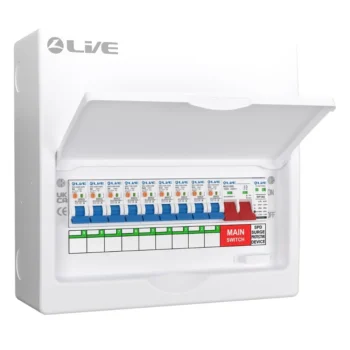
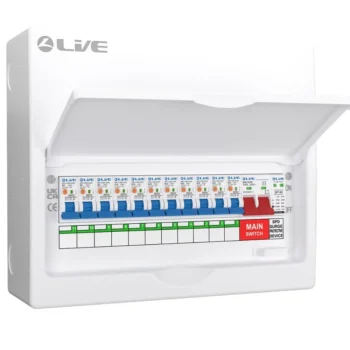
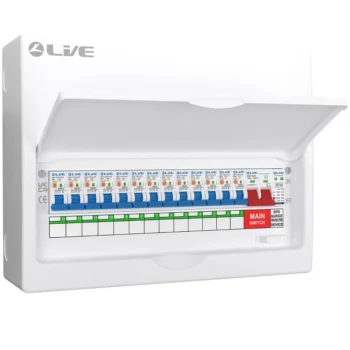
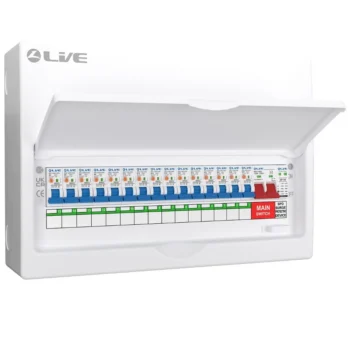
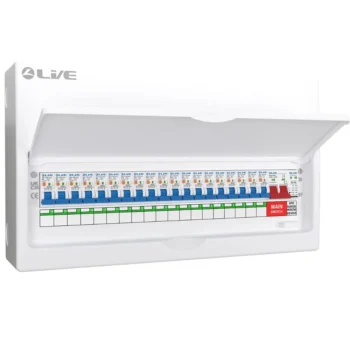
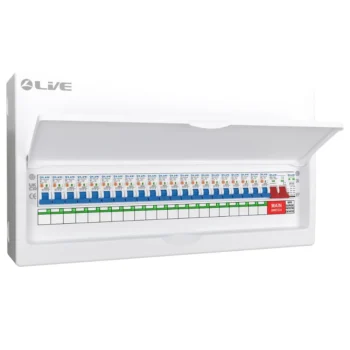
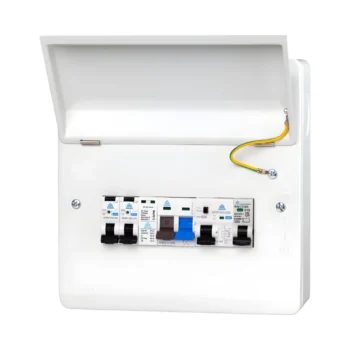
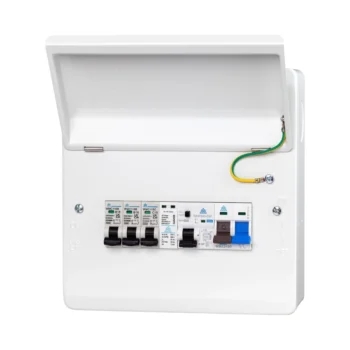
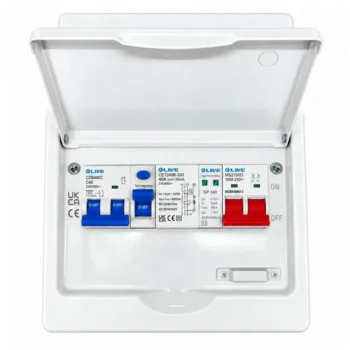
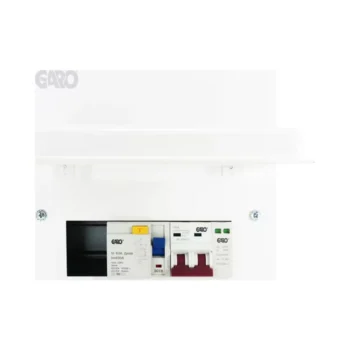
Live Electrical offers TPN distribution boards in different configurations, including main-switch-controlled boards and versions supplied with integrated surge protection.
Current options include different board sizes and current ratings, with configurations available for installations requiring 100A, 125A or 250A arrangements. (liveelectrical.co.uk)
Available installation features may include:
- Removable gland plates for cable entry
- Fully enclosed busbar systems
- Keyhole wall fixings
- Accessible earth and neutral terminals
- Main-switch and SPD configurations
- Extension-board options
The exact specification varies by model, so the individual product information and installation instructions should always be checked before ordering.
Device Compatibility
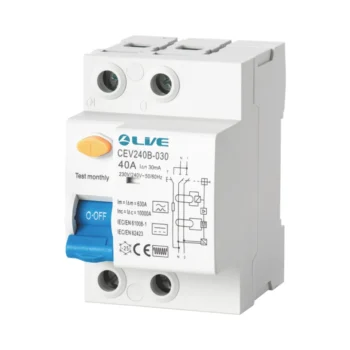
Protective devices must be compatible with the selected distribution board and busbar system.
MCBs and RCBOs from different product ranges should not be mixed unless the manufacturer has confirmed compatibility. The installer should verify the device series, breaking capacity, current rating and installation method before fitting them into the board.
Installation and Testing
Three-phase distribution boards and SPDs should be installed by a suitably qualified electrician.
The completed installation must be inspected and tested, including verification of:
- Earthing and bonding
- Prospective fault current
- Phase sequence
- Protective-device ratings
- SPD connections
- Overcurrent protection
- Neutral arrangements
- Manufacturer torque settings
- SPD status indicator
BS 7671:2018+A4:2026 is now published, so installers should ensure they are using the applicable edition of the Wiring Regulations and current manufacturer instructions. (IET Wiring Regulations)
Conclusion
A three-phase distribution board may need an SPD where transient overvoltages could damage equipment, interrupt essential services or cause significant financial or data loss.
The correct solution depends on the installation design, supply arrangement, connected equipment and applicable regulations. Where an SPD is required, the electrician must select the correct type, confirm its overcurrent protection and ensure compatibility with the distribution board.
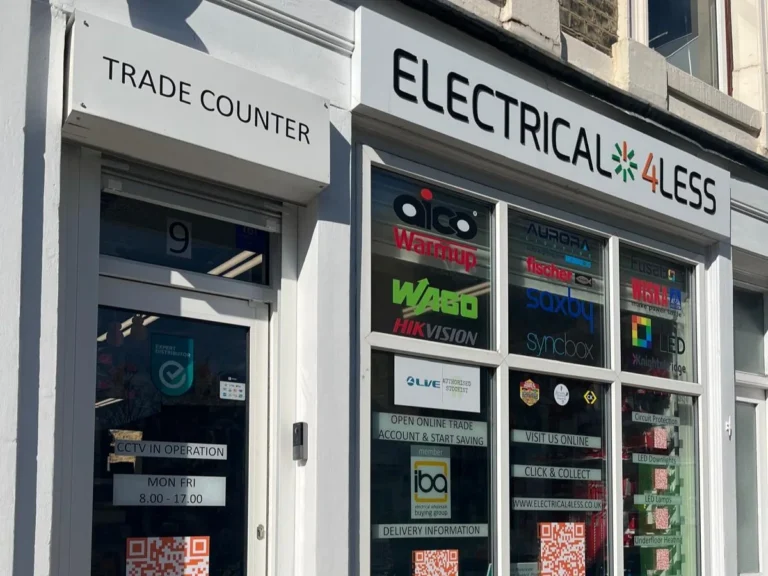
Electrical4Less supplies Live Electrical three-phase distribution boards with and without integrated surge protection at competitive online trade prices.
































When Does a Three-Phase Distribution Board Need an SPD?