


Table of Contents
Flexible cables play a vital role in electrical installations, offering the durability and adaptability needed across residential, commercial, and light-industrial projects. In this practical guide to flexible cables, we look at the main types, their uses, and how to choose the right size and construction for your application.
Flexible PVC cables are manufactured to BS EN 50525-2-11 standards and are available in a variety of core counts and sizes. They are used for everything from lighting and heating control circuits to appliance leads and small power connections. With stranded copper conductors and PVC insulation, they offer good flexibility and resistance to moisture and wear. Electrical4Less supplies flexible cables both by the metre and in full 50 m or 100 m drums, giving you the freedom to buy exactly what you need.
2 Core Flexible Cables
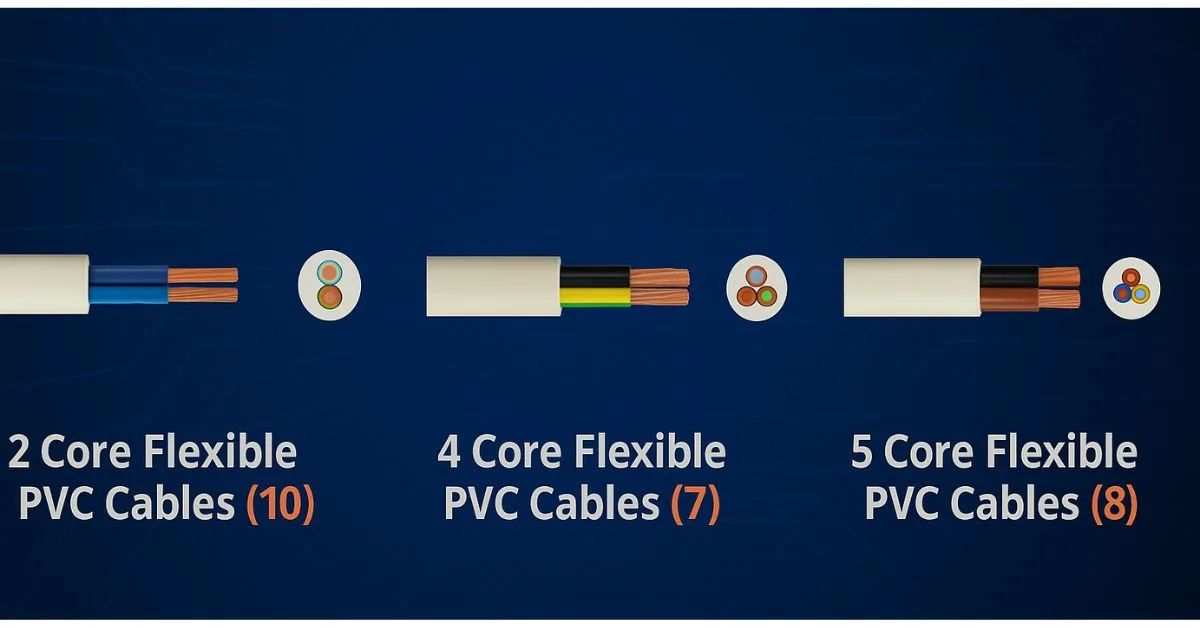
Two-core flexible cables are typically used for standard 230 V mains applications, such as light fittings, small appliances, or fixed wiring where an earth is not required. They are also very common for secondary-voltage systems at 12 V or 24 V, particularly for LED strip lighting where the driver is located remotely.
The cable size you choose depends on the wattage of the lighting and the distance between the driver and the strip. In most installations, 1.0 mm² or 1.5 mm² conductors are sufficient.
3 Core Flexible Cables
Three-core flexible cables, type 3183Y, are manufactured in accordance with BS EN 50525-2-11. They include an additional conductor, often coloured green/yellow, that can serve as an earth or control wire. These cables are widely used in pendant fittings, heating thermostats, and general-purpose power leads. The extra core provides flexibility in wiring options, allowing safe earthing or an additional switched-live conductor when correctly sleeved. Their stranded construction makes them easy to handle and ideal for use in conduit, trunking, or surface-mounted runs where bends are frequent.
4 Core and 5 Core Flexible Cables
Multi-core types such as 3184Y and 3185Y are designed for control and signal wiring in heating systems, boilers, zone valves, and motor circuits. The extra conductors allow live, neutral, and control signals to share a single sheath, keeping wiring neat and efficient. These cables are rated 300/500 V, flexible enough for tight spaces, and fully compliant with BS EN 50525-2-11 and CPR requirements.
Selecting the Correct Cable Size – Practical Guide to Flexible Cables
When selecting any flexible cable, consider total load current, cable run length, and installation conditions to maintain voltage-drop and temperature limits under BS 7671 (18th Edition).
- 1.0 mm² and 1.5 mm² are typical for lighting and LED circuits.
- 2.5 mm² and 4.0 mm² are used for heating or small power feeds.
- Always ensure the conductor size suits the protective-device rating and current-carrying capacity.
About Electrical4Less
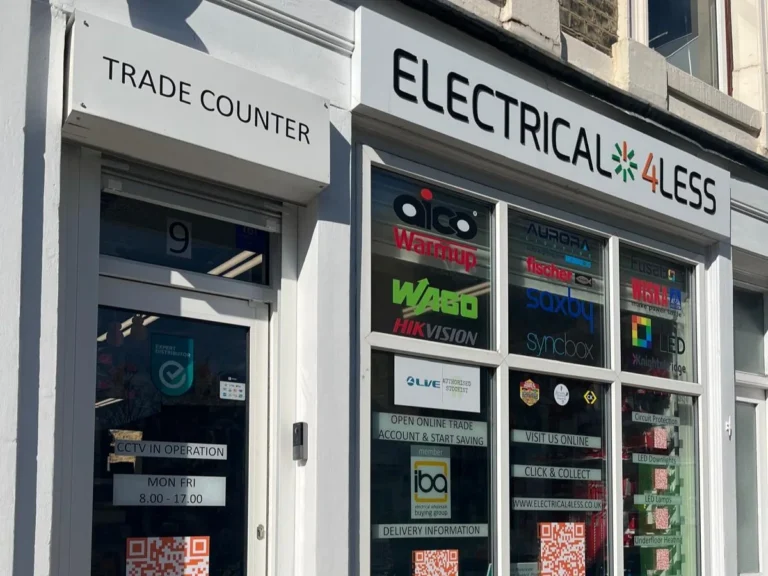
Electrical4Less is a trusted electrical supplier based in Fulham, London. Our trade counter at 9 Seagrave Road, SW6 1RP, serves professional electricians and DIY customers across the UK. We hold an extensive range of flexible cables, glands, and accessories for every application.
All products are sourced from recognised UK brands and shipped quickly to ensure reliable supply for site and workshop needs. Whether you are rewiring a heating system or upgrading LED lighting, our practical guide to flexible cables can help you choose the correct specification for safe and efficient installation.
Frequently Asked Questions – Practical Guide to Flexible Cables
Q1. What are flexible cables used for?
Flexible cables are commonly used in domestic and commercial installations for connecting lighting, heating controls, small appliances, and low-voltage circuits. Their stranded copper conductors make them easy to install in tight spaces and ideal for applications where vibration or movement is present.
Q3. What’s the difference between 2-core and 3-core flexible cables?
A 2-core cable includes live and neutral conductors, while a 3-core cable adds an additional earth or control conductor. Three-core types are often used where an earth connection or switched live is required.
Q4. Are flexible cables compliant with UK regulations?
Yes. Electrical4Less supplies BASEC-approved and CPR-compliant cables that meet BS EN 50525-2-11 and BS 7671 standards for safe and reliable installation.
Q6. Where can I buy flexible cables in London?
Electrical4Less is based at 9 Seagrave Road, Fulham, London SW6 1RP. You can visit our trade counter or order online for fast UK-wide delivery.
Q5. Can flexible cables be used for LED lighting?
Yes. Flexible cables are widely used for LED strip lighting, particularly when the driver is installed remotely. The correct conductor size must be chosen based on the total wattage and cable run length to avoid voltage drop.
Further Information and Useful Links – Practical Guide to Flexible Cables
Stay Connected
Follow Electrical4Less for product updates and practical installation tips:
YouTube – https://www.youtube.com/@ELECTRICAL4LESS
Instagram – https://www.instagram.com/electrical_4_less/
Facebook – https://www.facebook.com/electrical4less.wholesaler/
Thank you reading Practical Guide to Flexible Cables

































Practical Guide to Flexible Cables