


How Wiska COMBI Boxes Work – Everyday Wiring and Installation Guide
Understanding how Wiska COMBI boxes work helps electricians select and install suitable junction enclosures for everyday wiring. The COMBI range combines polypropylene construction, practical cable-entry systems and a choice of sizes for protecting electrical connections. This guide explains how the membranes, seals, glands and internal connectors work together, along with common installation mistakes to avoid.
How Does a Wiska COMBI Junction Box Work?
A Wiska COMBI junction box provides an enclosure for suitable electrical connections, helping protect them against environmental exposure and accidental contact. Its effectiveness depends on the enclosure itself, the cable-entry arrangement, the internal terminals and how the box is installed.
Wiska uses polypropylene for its COMBI enclosure bodies, with TPE sealing gaskets on relevant models. Together with correctly secured covers and compatible cable entries, these components help provide the protection specified for the particular product.
COMBI models have different sizes, entry positions and mounting arrangements, so the manufacturer’s instructions should always be checked before installation.
Understanding the Cable-Entry Membranes
One of the most recognisable features of Wiska COMBI boxes is the use of cable-entry membranes on many models. These allow suitable cables to pass through designated openings while providing a sealing function.
When used correctly and with cables within the specified diameter range, compatible membrane entries can achieve IP66 protection without requiring a separate cable gland.
The correct installation method depends on the enclosure model and entry type. Membranes should not be cut, enlarged or modified unless the manufacturer’s instructions specifically permit it.
When Are Threaded Cable Glands Needed?
Threaded cable glands provide a different cable-entry arrangement and may offer additional sealing, cable retention or strain-relief characteristics depending on their design.
Wiska specifies IP67 protection for selected COMBI models when suitable ESKV glands are correctly installed in the designated entries. This differs from the IP66 protection provided by the specified membrane arrangement.
Neither entry method is automatically correct for every situation. The choice depends on cable diameter, cable construction, environmental protection requirements and the enclosure’s technical specification.
For more detailed selection guidance, read our Wiska polyamide cable gland range or explore the wider Wiska accessories selection.
IP66 and IP67 Protection Explained
The IP rating describes the degree of protection provided against solid objects and water under specified test conditions.
- IP66 – dust-tight protection and resistance to powerful water jets.
- IP67 – dust-tight protection and resistance to temporary immersion under defined conditions.
For example, the Wiska COMBI 607 is specified with IP66 protection when using its membrane entries and IP67 when compatible ESKV cable glands are installed in the appropriate threaded entries.
It is important to remember that the finished installation must be assessed as a complete assembly. Cable entries, unused openings, lid seals and the enclosure’s condition can all affect its protection.
An IP66 or IP67 rating does not automatically make a standard COMBI enclosure suitable for permanent immersion or direct burial.
How to Keep Electrical Connections Reliable
A weather-resistant junction box is only one part of a suitable electrical connection. Internal wiring must also be correctly arranged, terminated and protected.
When installing a Wiska COMBI enclosure, consider the number of conductors, the required connector ratings, cable bending space and whether the enclosure remains accessible where necessary.
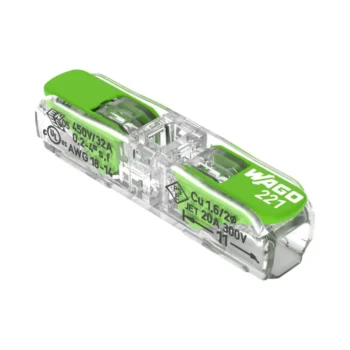
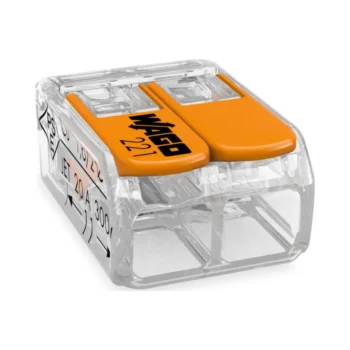
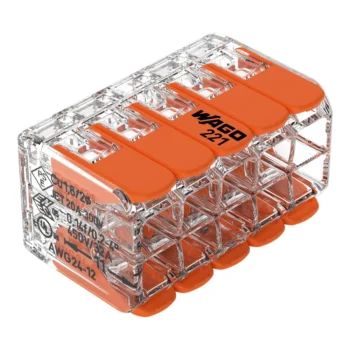
Suitable WAGO 221 lever connectors can provide a convenient termination arrangement for compatible conductors. Selected COMBI versions are also supplied with connectors or terminals.
WAGO 221 connectors are not independently waterproof, so the surrounding enclosure or an approved sealing arrangement must provide the necessary environmental protection.
Choosing a Wiska COMBI Size for Everyday Wiring
Different COMBI models offer different enclosure dimensions and cable-entry configurations. Selecting the right size can make installation and maintenance easier.
- COMBI 206 – compact rectangular design for smaller cable connections.
- COMBI 304 – circular enclosure for selected compact installations.
- COMBI 308 – square enclosure with additional entry positions.
- COMBI 310 – elongated enclosure offering a different cable-entry layout.
- COMBI 407 – larger enclosure providing additional wiring space.
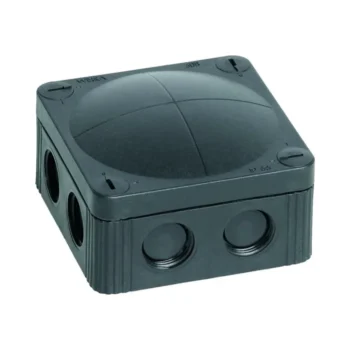
- COMBI 607 – larger square box with seven M25 threaded membrane entries on the standard model.
Rather than selecting a box by its external dimensions alone, check the internal space required for cables, connectors and safe terminations.
For a full comparison covering the COMBI 206, 304, 308, 310, 407, 607, 1010, 1210 and 1610, see our guide to choosing a Wiska COMBI junction box.
Practical Installation Example – Outdoor Lighting
Consider a typical outdoor lighting installation where several suitable cables need to be connected inside one enclosure. The installer must choose a junction box with enough internal space, appropriate cable entries and the required environmental protection.
A compact COMBI model might be suitable for a small number of connections, while a larger model may be preferable when additional cables or connectors are involved.
Where the specified membrane entries provide the required protection and suit the cable dimensions, they may offer a convenient installation method. If a different sealing or termination arrangement is needed, compatible glands should be selected.
This is an illustrative installation scenario, not a documented customer case study. The appropriate enclosure and electrical connections must be determined for the actual site conditions.
Mounting and Maintaining Wiska COMBI Boxes
Correct mounting helps maintain the enclosure’s intended protection and makes future inspection easier.
- Use the designated mounting points or approved mounting accessories.
- Check that the selected fixing arrangement does not compromise the sealing area.
- Position the enclosure to suit cable routing, exposure and access requirements.
- Keep the lid gasket and sealing surfaces clean and free from damage.
- Secure the cover according to the manufacturer’s instructions.
- Inspect glands, membrane entries and seals if the enclosure is opened for maintenance.
Selected COMBI enclosures feature captive cover screws, and certain models offer compatible external mounting or internal accessory arrangements. These features vary across the range.
Common Installation Mistakes to Avoid
- Using a cable outside the permitted diameter range of the selected entry.
- Assuming all COMBI boxes have identical membrane, gland or knockout arrangements.
- Overfilling the enclosure or leaving insufficient space for cable bending.
- Modifying or drilling the box without checking manufacturer approval.
- Using an unsuitable SWA termination or failing to provide necessary armour continuity.
- Damaging the lid gasket or leaving the cover incorrectly secured.
- Assuming an IP66 or IP67 enclosure is suitable for permanent immersion.
Further Guidance from Wiska
For a manufacturer’s example of cable entries, enclosure construction and mounting arrangements, refer to the official Wiska COMBI 607 technical specification.
Wiska also provides COMBI 1010 technical information, showing how different models use alternative cable-entry and sealing systems.
Electrical4Less – An Independent Supplier for Everyday Installations
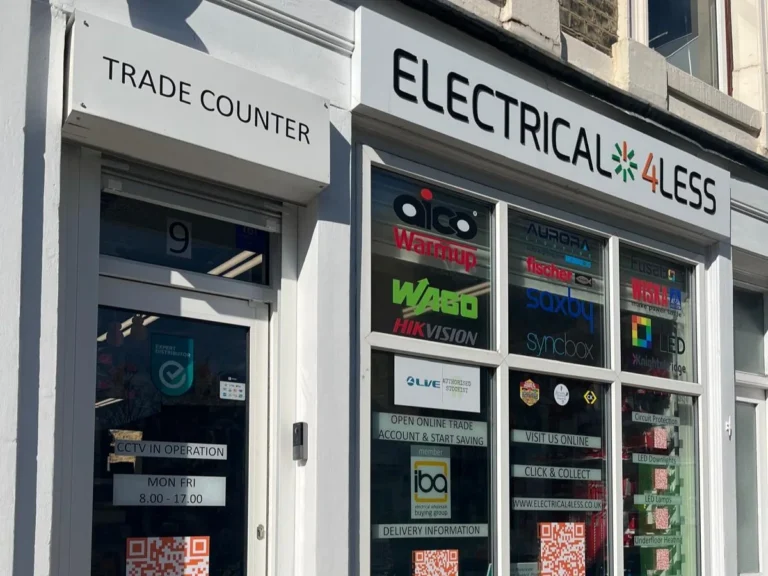
From a straightforward outdoor lighting connection to a larger commercial wiring project, choosing suitable electrical accessories matters. Electrical4Less supplies Wiska COMBI enclosures, glands and connection products through our independent trade counter in Fulham and our online electrical wholesale store.
Based at 9 Seagrave Road, London SW6 1RP, we support local electricians with trade-counter collection and customers throughout the UK with online ordering. Electrical4Less is a member of the Independent Buying Association (IBA) and the Electrical Distributors’ Association (EDA).
Our business was shortlisted for Best Wholesaler (1–5 Branches) at the Electrical Wholesaler Awards 2026 and recognised as a Website of the Year finalist at the London Chamber of Commerce SME London Business Awards 2026. We continue to develop clear product information to help customers compare electrical installation options.
Frequently Asked Questions About Wiska COMBI Boxes
Explore the Wiska COMBI junction box range for available sizes, colours and compatible accessories, or read our outdoor installation guide for further advice on environmental protection.

























Leave a Reply