


How Wiska TriShot Cable Glands Work – Installation and Technical Guide
Understanding how Wiska TriShot cable glands work helps electricians choose a suitable cable-entry system for electrical enclosures. Wiska developed TriShot using three-shot injection moulding technology to combine different materials and sealing functions in one compact product. This guide explains the gland’s construction, IP68 protection, M20 cable sizing, installation process and manufacturer’s sustainability claims.

What Is the Wiska TriShot Cable Gland?
Wiska TriShot is a plastic cable gland designed to provide a sealed cable entry into suitable electrical enclosures. Unlike conventional gland designs that rely on several separately assembled sealing components, TriShot uses an integrated manufacturing process combining different materials.
The system incorporates polyamide, polypropylene and a thermoplastic elastomer (TPE) gasket. This arrangement is intended to simplify installation while providing reliable sealing for cables within the specified diameter range.
TriShot is intended for compatible non-armoured cable applications. It should not be confused with a specialist SWA armour gland or a gland designed to terminate cable screening.
How Does Three-Shot Injection Moulding Work?
Three-shot injection moulding is a manufacturing process that combines multiple materials or moulding stages within the production of a component.
In Wiska’s TriShot design, the process incorporates the gland’s structural and sealing functions into a compact assembly. The objective is to reduce the need for separate sealing inserts while providing a convenient installation arrangement.
This offers several potential advantages:
- Fewer separate sealing components to handle during installation.
- An integrated gasket designed to provide an appropriate seal around the cable.
- A wide cable clamping range for a single M20 gland size.
- A simplified fitting process using the cap-nut design.
- Reduced product material and manufacturing impacts as described in Wiska’s sustainability information.
These features do not remove the need to check cable diameter, gland compatibility or the manufacturer’s fitting instructions.
Watch the Wiska TriShot Product Demonstration
The following Wiska video introduces the TriShot cable gland and its design. It is a useful visual reference alongside the manufacturer’s installation instructions.
Wiska TriShot Technical Specifications
For the TriShot ETKV-SET 20 black and light-grey versions, Wiska publishes the following technical specifications:
- Connection thread: M20 x 1.5.
- Permitted cable outside diameter: 6–14 mm.
- Ingress protection rating: IP68 under the manufacturer’s specified test conditions.
- Temperature range: −40°C to +100°C.
- Gland materials: polypropylene and polyamide.
- Sealing gasket: thermoplastic elastomer (TPE).
- Glow-wire test: 650°C according to Wiska’s current ETKV-SET product specifications.
- Thread length: 10 mm.
- Spanner width: 24 mm.
- Total product length: 32 mm.
- ETKV-SET versions supplied with a locknut.
The glow-wire test value is a product test characteristic and should not be interpreted as a general fire-resistance rating for the complete electrical installation.
Always check the current manufacturer’s data for the precise TriShot variant being used, as different product generations or configurations may have different published characteristics.
Understanding the TriShot IP68 Rating
Wiska specifies IP68 protection for the TriShot ETKV cable gland range. The first digit indicates dust-tight protection, while the second digit describes protection against water immersion under conditions specified by the manufacturer.
IP68 does not mean that a gland can be immersed indefinitely at any depth. The permitted test conditions and installation limitations must be confirmed from the relevant technical documentation.
Equally, fitting an IP68 cable gland into a junction box does not automatically make the complete assembly IP68 rated. Enclosure construction, cable diameter, gland seating, unused openings and lid seals all affect the finished installation.
For a wider explanation of cable gland ratings, read our Wiska polyamide gland information and product specifications.
What Cable Sizes Fit a Wiska TriShot?
The M20 TriShot models featured in this article accept cables with an outside diameter between 6 mm and 14 mm, according to Wiska’s specifications.
It is important to measure the actual cable outside diameter rather than relying only on conductor cross-sectional area or cable type.
For example, two cables containing conductors of the same cross-sectional area can have different overall diameters because of differences in insulation, sheath thickness and construction.
The gland’s M20 connection thread and its 6–14 mm cable sealing range are separate dimensions. Both must be compatible with the intended installation.
Wiska TriShot ETKV and ETKV-SET – What Is the Difference?
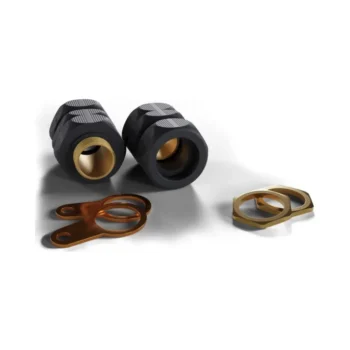
Wiska offers TriShot ETKV models and TriShot ETKV-SET versions. The ETKV-SET products include a locknut, which may be required for the intended enclosure mounting arrangement.
Always check the manufacturer’s product code when ordering, particularly where a locknut is required or where several colour variants are available.
TriShot ETKV-SET 20 Light Grey – 10112715
The Wiska 10112715 TriShot ETKV-SET 20 LG is the light-grey version, RAL 7035. It has an M20 x 1.5 thread and a 6–14 mm cable diameter range, with a locknut included.
View the Wiska 10112715 TriShot light-grey cable gland.
TriShot ETKV-SET 20 Black – 10112716
The Wiska 10112716 TriShot ETKV-SET 20 BK is the black version, RAL 9005. It uses the same M20 x 1.5 connection thread and 6–14 mm cable diameter range, with a locknut included.
View the Wiska 10112716 TriShot black cable gland.
How to Install a Wiska TriShot Cable Gland
The manufacturer’s installation instructions should always be followed. The following overview explains the general fitting sequence for a suitable TriShot ETKV-SET gland.
- Confirm that the cable outside diameter is within the gland’s specified 6–14 mm range.
- Check that the enclosure has a suitable M20 entry and that the mounting arrangement is compatible.
- Fit the gland body into the appropriate entry using the specified sealing and securing arrangement.
- Use the supplied locknut where required by the installation and manufacturer’s instructions.
- Pass the cable through the gland without damaging its sheath or the internal sealing components.
- Tighten the cap nut using the method or torque specified by Wiska.
- Inspect the gland for correct seating, cable retention and sealing.
Do not assume that maximum possible tightening gives the best result. Overtightening can damage the gland, cable sheath or sealing components.
Wiska provides mounting instructions through its official TriShot ETKV-SET 20 BK product page.

Can Wiska TriShot Be Used Outdoors?
TriShot can be suitable for outdoor electrical enclosures where the cable gland’s environmental ratings, material properties and installation requirements match the intended application.
Its IP68 rating and published temperature range provide useful information for product selection. However, suitability for a particular outdoor location also depends on the cable, enclosure, environmental exposure and manufacturer’s guidance.
For example, an exposed outdoor junction box may require suitable weather-resistant enclosure construction, compatible cable glands and appropriate cable routing. A high IP rating alone does not establish that the complete installation is suitable.
For more guidance on enclosure selection, see our Wiska COMBI outdoor installation guide.
TriShot Sustainability – Understanding Wiska’s Carbon Reduction Claim
Wiska highlights sustainability as one of the main development objectives behind its TriShot cable gland technology.
In its TriShot product literature, Wiska reports a 54.5% reduction in product carbon footprint compared with the manufacturer’s reference design.
This is a manufacturer-reported product-level comparison, not a guaranteed reduction in the environmental impact of an entire electrical installation. The figure should be understood in the context of the manufacturer’s assessment and comparison method.
The integrated multi-material manufacturing process is intended to reduce the use of separate components and improve production efficiency while maintaining the gland’s required technical performance.
For additional information, consult the official Wiska TriShot brochure.
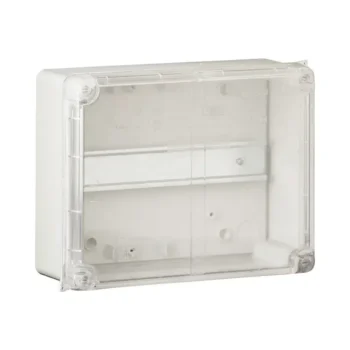
Using TriShot with Wiska COMBI Junction Boxes
Wiska manufactures both cable glands and electrical junction enclosures, allowing installers to select compatible products from the same manufacturer.
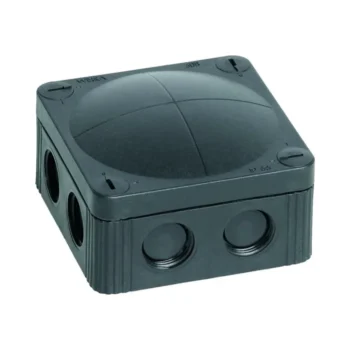
Selected Wiska COMBI junction boxes offer M20 threaded cable-entry positions that may be suitable for compatible TriShot glands.
Before installation, confirm the enclosure entry thread, wall thickness, available internal space and required environmental protection.
Do not assume every COMBI model or cable-entry position accepts the same gland. The applicable technical specifications must be checked for the intended enclosure and gland combination.
TriShot vs Conventional Polyamide Cable Glands
Conventional polyamide glands often use separate sealing components that must be assembled or positioned as part of the installation. TriShot uses an integrated multi-material design with a built-in sealing arrangement.
The main practical difference is installation convenience. TriShot’s design may reduce the number of loose components while providing a specified cable clamping and sealing range.
However, a conventional gland may still be the appropriate choice where different thread sizes, cable diameters, strain-relief characteristics or specialist environmental requirements apply.
For other options, compare the Wiska polyamide cable gland range and our wider Wiska product selection.
Common Wiska TriShot Selection Mistakes
- Choosing the gland by its M20 thread without checking the cable’s outside diameter.
- Assuming the TriShot 6–14 mm range covers every cable construction.
- Using a conventional TriShot gland where an SWA armour termination is required.
- Assuming an IP68 gland automatically provides IP68 protection for the whole enclosure.
- Using the wrong mounting arrangement or omitting a required securing component.
- Overtightening the cap nut or damaging the cable sheath.
- Assuming the manufacturer’s carbon reduction figure applies to an entire electrical project.
Wiska TriShot Manufacturer Data Sheets
The official manufacturer product pages provide the latest published technical information for the following models:
- Wiska 10112716 TriShot ETKV-SET 20 BK technical information
- Wiska 10112715 TriShot ETKV-SET 20 LG technical information
- Wiska TriShot product brochure
Electrical4Less – Specialist Electrical Supplies in Fulham
Choosing a cable gland involves more than matching a thread size. At Electrical4Less, we help customers compare cable-entry products, enclosure accessories and installation materials through our independent electrical wholesale business.
Our Fulham trade counter is located at 9 Seagrave Road, London SW6 1RP, with local collection and online ordering for customers throughout the UK. We supply Wiska junction boxes, cable glands and related electrical installation products.
Electrical4Less is a member of the Electrical Distributors’ Association (EDA) and the Independent Buying Association (IBA), maintaining links with the wider electrical distribution industry.
Our online operations were recognised when Electrical4Less became a Website of the Year finalist at the London Chamber of Commerce SME London Business Awards 2026. We were also shortlisted for Best Wholesaler (1–5 Branches) at the Electrical Wholesaler Awards 2026.
Frequently Asked Questions About Wiska TriShot Cable Glands
Download the Wiska TriShot Technical PDF
For a copy of the existing Electrical4Less product documentation, the Wiska 10112716 TriShot ETKV-SET 20 Black PDF is available below.
Explore our Wiska polyamide cable glands for available sizes and types, or visit the Electrical4Less Wiska Shop for additional Wiska installation products.




























Leave a Reply