


SWA Cable Gland IP Ratings Explained
SWA cable gland IP ratings explained: understanding the difference between IP66 and IP68 helps electricians select suitable cable glands for dry, damp and outdoor installations. Steel wire armoured cables require correctly sized glands that provide suitable armour termination, cable retention and environmental protection where necessary. This guide covers BW and CW cable glands, Wiska ShieldGLAND and SWA STORM products, explaining what their protection ratings mean and why the complete installation matters.
SWA Cable Gland IP Ratings Explained – What They Mean
An Ingress Protection (IP) rating describes how effectively an enclosure or component resists the entry of solid objects and water under specified test conditions.
IP ratings use two characteristic digits. The first describes protection against solid objects and dust, while the second describes protection against water.
For SWA cable glands, the rating is important when a cable enters an electrical enclosure in an environment exposed to moisture, rain, water jets or other conditions requiring environmental sealing.
However, an IP-rated cable gland does not automatically provide the same rating for the entire installation. The cable, gland, enclosure, entry seal and fitting method must all be suitable.
What Does IP66 Mean for SWA Cable Glands?
IP66 means the tested product or assembly is dust-tight and protected against powerful water jets under defined test conditions.
Many conventional CW brass cable glands are specified with IP66 protection when properly installed with compatible cables and appropriate sealing components.
This can make suitable CW glands appropriate for many outdoor electrical installations where exposure to rain and water jets is expected.
IP66 does not indicate that a gland is suitable for immersion in water. Applications involving flooding, standing water or submersion require separate consideration.
What Does IP68 Mean for SWA Cable Glands?
IP68 indicates dust-tight protection and resistance to immersion under conditions specified by the manufacturer.
Unlike IP67, where the temporary immersion test is standardised, the immersion conditions associated with IP68 are defined by the manufacturer and should be checked for the individual product.
For example, a gland tested under a specified water pressure for a limited period should not automatically be assumed suitable for permanent underwater use.
Where a product is described as IP68, check the manufacturer’s documentation for:
- Specified immersion depth or test pressure.
- Duration of the test.
- Permitted cable diameters.
- Required seals and fitting instructions.
- Any limitations on continuous exposure or underground applications.
IP68 is not a substitute for confirming that the whole installation is suitable for the intended environment.
BW and CW Cable Glands – Why the Difference Matters
BW and CW are familiar types of brass gland used for steel wire armoured cable termination. Their principal distinction relates to environmental sealing.
BW Glands for Dry Indoor Installations
Traditional BW glands are intended for suitable dry indoor environments where external sealing around the cable sheath is not required.
They provide a mechanical termination for the cable armour and allow the required electrical continuity to be established using the appropriate components and installation arrangement.
Typical applications include suitable indoor distribution equipment, electrical panels and switchgear.
A conventional BW gland should not be relied upon to prevent water ingress where the installation requires a weather-resistant cable entry.
CW Glands for Damp and Outdoor Installations
Traditional CW glands provide armour termination alongside a sealing arrangement around the cable’s outer sheath.
They are commonly selected for outdoor or damp applications where appropriate protection against moisture is required.
Many conventional CW gland ranges are rated IP66 when installed in accordance with the manufacturer’s instructions.
Check the individual product rating rather than assuming that all CW glands offer identical environmental protection.
For a more detailed comparison of traditional gland types, read our SWA Cable Glands range information and the applicable manufacturer data sheets.
Wiska ShieldGLAND – A Specialist IP68 Option
Wiska ShieldGLAND is a specialist gland system developed for selected cable constructions, including certain armoured, screened and non-armoured cables.
Unlike conventional brass BW or CW glands, ShieldGLAND uses a hybrid design incorporating polyamide and brass components.
Selected ShieldGLAND Standard products are specified by Wiska with an IP68 rating, subject to the published installation and test conditions.
Other features depend on the exact version and may include:
- Specialist cable clamping arrangements.
- Sealing components for defined cable diameter ranges.
- Alternative termination arrangements for compatible cable constructions.
- Options supplied with earthing accessories.
- Standard, Pro and other variants with different supplied components.
ShieldGLAND is not automatically suitable for every SWA, SY or CY cable. Always check the specific cable dimensions, armour or screening arrangement and the manufacturer’s fitting instructions.

SWA STORM Cable Glands – IP68 Sealing
The SWA STORM range provides another option for suitable armoured cable termination applications requiring a higher level of environmental protection.
Selected STORM products are specified as IP68-rated and are available in different gland sizes and kit configurations.
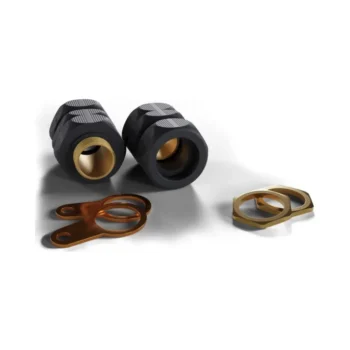
Depending on the product, supplied accessories may include brass locknuts, earth tags or specialist earthing components.
STORM products are also available in related ranges, including Tauras STORM and EarthFix STORM, which use different earthing arrangements.
These products should not be treated as identical solely because they are part of the STORM family.
For the intended application, check:
- The correct gland size for the cable.
- The gland’s published IP rating and test conditions.
- The armour clamping method.
- The earthing components supplied with the kit.
- Compatibility with the enclosure and cable-entry arrangement.
STORM glands may offer practical installation advantages, but installation times depend on cable preparation, gland size, the installer and site conditions. There is no universal basis for claiming that one gland is always the fastest to fit.

Are IP68 SWA Glands Suitable for Underground Installations?
Not automatically. An IP68-rated cable gland has passed specified immersion tests, but underground installations introduce additional considerations.
Buried electrical equipment may be exposed to groundwater, soil pressure, mechanical damage, chemicals and temperature changes.
The gland, cable and complete jointing or enclosure system must therefore be specifically suitable for those conditions.
For direct burial or long-term immersion, use a complete system intended for the environment and follow the relevant manufacturer installation instructions.
Do not assume that an ordinary enclosure becomes suitable for underground use simply because an IP68 gland is fitted.
Does an IP68 Gland Make the Complete Enclosure IP68?
No. The completed cable-entry arrangement must be considered as a whole.
For example, an IP68-rated gland installed into an enclosure with a lower protection rating does not automatically increase the enclosure rating.
Protection can also be compromised by:
- An incorrect cable diameter.
- A missing or damaged sealing washer.
- An unsuitable gland entry or enclosure wall.
- Incorrect tightening or assembly.
- Unsealed unused enclosure entries.
- A damaged enclosure lid or sealing gasket.
The final assembly must be suitable for the intended environmental conditions.
Why Armour Earthing Matters for SWA Cable Glands
SWA cable glands are not selected only for environmental sealing. They also form part of the cable armour termination arrangement.
Where the steel wire armour is required to provide protective earthing or bonding, the connection must be electrically and mechanically suitable.
Depending on the gland system, installation and enclosure, the arrangement may include an earth tag, compatible earthing nut or other specified accessory.
The suitability of the armour as a protective conductor and the required continuity arrangements must be assessed according to BS 7671.
Do not assume that fitting a gland into an enclosure automatically establishes a satisfactory protective earth connection.
How to Choose an SWA Cable Gland for Different Locations
Environmental conditions are an important part of gland selection, but they must be considered alongside the cable construction and the relevant electrical requirements.
Dry Indoor Installations
A suitable BW gland may be appropriate where no environmental sealing is necessary and the armour termination requirements are satisfied.
Outdoor Electrical Equipment
A suitably specified CW gland or another weather-resistant gland system may be required to protect the cable entry from rain and moisture.
Exposed or Demanding Environments
Specialist IP68-rated gland systems, such as selected Wiska ShieldGLAND or STORM products, may be appropriate where their published specifications match the expected conditions.
Buried or Submerged Connections
Use a complete jointing arrangement specifically suitable for the intended underground or immersion conditions. The gland rating alone is insufficient.
Common Mistakes When Selecting SWA Cable Glands
- Choosing gland size based only on the cable’s conductor cross-section.
- Failing to check the actual cable bedding and overall diameter.
- Using a BW gland where environmental sealing is required.
- Assuming every CW gland has an identical IP rating.
- Assuming IP68 always means unlimited immersion.
- Ignoring armour clamping and protective earthing requirements.
- Failing to fit the required locknut, sealing washer or earth tag.
- Using an IP68 gland with an unsuitable enclosure or jointing system.
- Assuming that the gland alone guarantees BS 7671 compliance.
Correct product selection should always start with the cable manufacturer’s dimensions and the gland manufacturer’s compatibility information.
Does an IP-Rated SWA Gland Guarantee BS 7671 Compliance?
No. An IP rating describes environmental protection under specified conditions. It does not establish compliance with the wider requirements of BS 7671.
A compliant electrical installation also depends on suitable cable selection, circuit design, protective conductor arrangements, cable support, correct termination, inspection and testing.
All work must be carried out by a suitably competent person following the applicable requirements and manufacturer instructions.
Explore SWA Cable Gland Ranges at Electrical4Less
Electrical4Less supplies traditional and specialist armoured cable glands from manufacturers including Wiska, SWA and Unicrimp.
Our product categories include:
- SWA Cable Glands – the main selection of armoured cable gland products.
- Outdoor SWA Cable Glands – selected products for external and exposed applications.
- IP68 SWA Cable Glands – specialist gland systems with defined immersion protection ratings.
- Wiska ShieldGLAND – specialist Wiska cable termination products.
- Wiska SWA Brass Cable Glands – traditional brass gland products in selected sizes.
Compare the product code, gland size, supplied accessories and technical specifications before ordering. Stock information and any applicable supply lead time are shown on the relevant product pages.
About Electrical4Less – SWA Cable Gland Suppliers
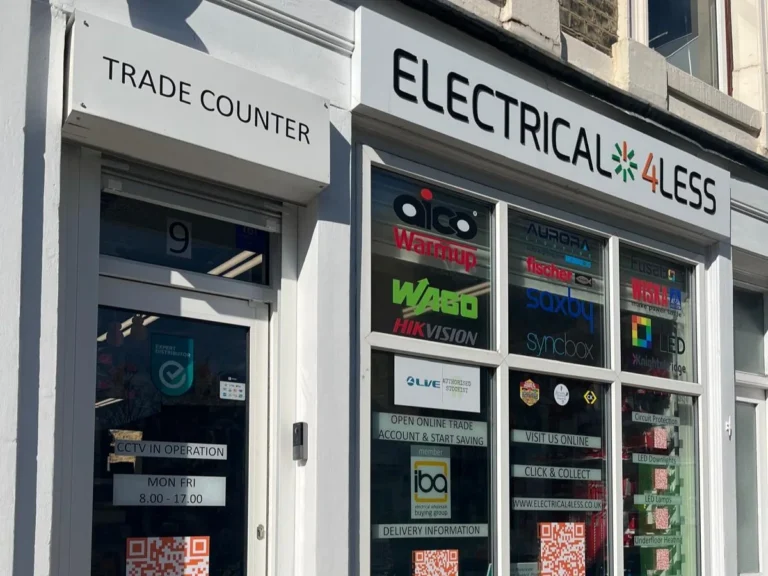
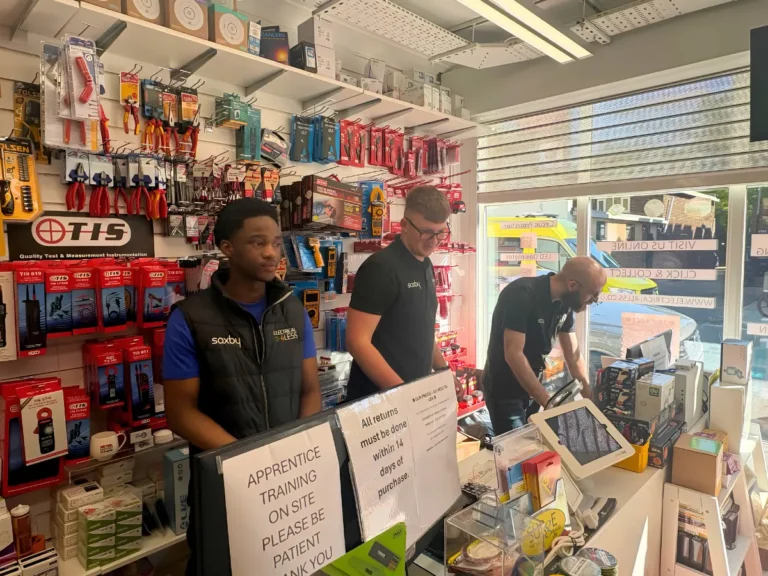
Electrical4Less Ltd is an independent electrical wholesaler based at 9 Seagrave Road, Fulham, London SW6 1RP. We supply electrical contractors, installers and online customers with armoured cables, cable glands, enclosures and other electrical installation materials.
We are members of the Independent Buying Association (IBA) and the Electrical Distributors’ Association (EDA).
In 2026, Electrical4Less was a finalist for Website of the Year at the London Chamber of Commerce SME London Business Awards and shortlisted for Best Wholesaler (1–5 Branches) at the Electrical Wholesaler Awards.
Customers can order suitable products online for UK delivery or arrange collection of eligible items from our Fulham trade counter, subject to stock availability and our published delivery terms.
Frequently Asked Questions About SWA Cable Gland IP Ratings
Final Thoughts on SWA Cable Gland IP Protection
Understanding IP66 and IP68 helps when selecting SWA cable glands, but environmental ratings should always be considered alongside cable size, armour termination, protective earthing and enclosure compatibility.
For further guidance, read our SWA Cable Glands product information and review the applicable manufacturer specifications before selecting a gland for your installation.
Our Latest Posts
Related Articles
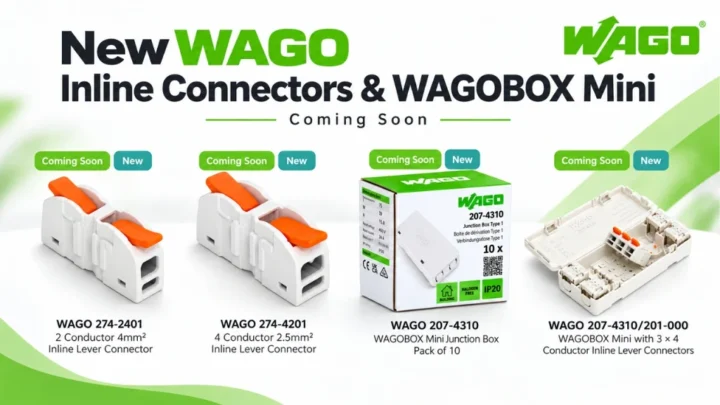
WAGO 274 Series Explained: New Inline Connectors and WAGOBOX Mini
Blog category: Brand News & Features | Electrical4Less Technical Guide The new WAGO 274 Series brings a different approach to inline electrical…
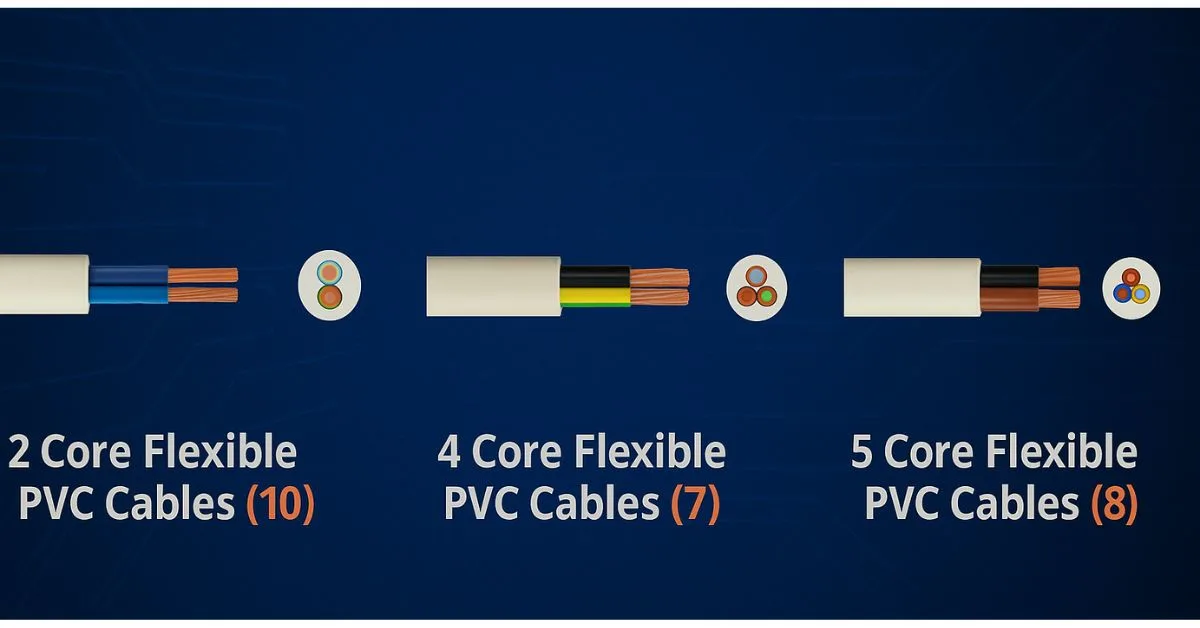
Practical Guide to Flexible Cables
Flexible cables play a vital role in electrical installations, offering the durability and adaptability needed across residential, commercial, and light-industrial projects. In…

Complete 6mm Armoured Cables Guide
Welcome to the 6mm Armoured Cables Guide from Electrical4Less, the UK’s trusted electrical trade counter and online wholesaler.This guide explains everything you…


















Leave a Reply