



How to Choose a Bathroom Extractor Fan
How to choose a bathroom extractor fan depends on the room size, duct length, installation position, required airflow, noise level and the type of control needed.
A bathroom extractor fan removes humid air created by showers and baths, helping reduce condensation, mould growth and damage to walls, ceilings and fittings. The fan must discharge the air outside rather than into a loft or other enclosed space.
Why Does a Bathroom Need an Extractor Fan?
Bathrooms regularly produce high levels of moisture. Without effective ventilation, this moisture can lead to:
- Condensation on windows and walls
- Mould and mildew
- Peeling paint or damaged decoration
- Damp smells
- Damage to timber, fittings and electrical equipment
The correct fan should provide enough airflow for the room while operating quietly and efficiently.
Types of Bathroom Extractor Fans
Standard Extractor Fan
A standard fan operates from a light switch or separate control and stops when switched off.
It may suit smaller bathrooms with straightforward ventilation requirements, although it does not continue extracting moisture after the room has been used.
Timer Extractor Fan
A timer fan continues running for a preset period after the light or control has been switched off.
This helps remove moisture remaining after a shower or bath and is one of the most common options for domestic bathrooms.
Humidistat Extractor Fan
A humidistat fan monitors the humidity level and operates automatically when moisture rises above the selected setting.
This can be useful in busy bathrooms or where users may forget to switch the fan on manually.
PIR Sensor Extractor Fan
A PIR fan uses movement detection to start automatically when someone enters the room.
It normally continues running for a set period after movement is no longer detected. However, movement alone does not measure humidity, so the most suitable control depends on how the bathroom is used.
Continuous-Running Extractor Fan
A continuous-running fan operates at a low background speed and increases its airflow when required.
These fans may suit modern homes where continuous ventilation is part of the overall ventilation design.

Bathroom Zones and IP Ratings
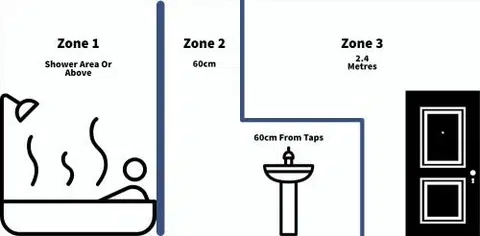
The correct IP rating depends on where the extractor fan will be installed in relation to the bath or shower.
Electrical equipment installed in bathroom zones 1 or 2 must normally provide at least IPX4 protection. Where water jets may be used, at least IPX5 protection may be required. A suitable 230V extractor fan can be installed in zone 1 where the manufacturer confirms that it is suitable for that location.
Do not assume that every IP44 fan can be fitted anywhere in a bathroom. Always check:
- The exact bathroom zone
- The fan’s IP rating
- The supply voltage
- The manufacturer’s permitted installation locations
- Whether additional protection is required
- Whether the fan is exposed to water jets
A fan should not normally be selected for installation inside a bath or shower simply because it has a high IP rating. The complete product specification and installation instructions must be followed.
Bathroom Ventilation Requirements
The required airflow depends on the ventilation design and whether the fan operates intermittently or continuously.
For dwellings in England, Approved Document F specifies a minimum intermittent extract rate of 15 litres per second for a bathroom. Continuous ventilation systems use different design rates and should be selected as part of the complete dwelling ventilation strategy.
A higher-capacity fan may be appropriate where the bathroom is:
- Large
- Used frequently
- Without an opening window
- Connected to a long duct
- Served by ducting with several bends
- Particularly prone to condensation
The fan must discharge the extracted air outside. It should not vent into a loft, ceiling void or another enclosed space.
Choosing the Correct Airflow
Extractor fan performance may be shown in litres per second or cubic metres per hour.
A fan’s published airflow is often measured under test conditions. The actual airflow can be reduced by:
- Long duct runs
- Flexible ducting
- Tight bends
- Undersized ducting
- Restrictive external grilles
- Backdraught shutters
- Poor replacement-air provision
For a short route directly through an outside wall, a standard axial fan may be suitable.
Where the duct run is longer or includes several bends, an inline or centrifugal fan may provide better performance against resistance.
Fan Size and Duct Diameter
Many domestic bathroom extractor fans use 100mm ducting, but larger sizes are also available.
The correct size depends on:
- Required airflow
- Duct length
- Number of bends
- Fan type
- External grille
- Available installation space
Reducing the duct size below the fan outlet can restrict airflow and increase noise. The ducting should follow the diameter and layout recommended by the fan manufacturer.
Timer, Humidistat or Continuous Operation?
Timer Fans
A timer fan continues operating after the light or control has been switched off.
This helps remove moisture remaining after a bath or shower. Check whether the fan requires permanent live, switched live and neutral connections.
Humidistat Fans
A humidistat fan monitors moisture levels and activates when the humidity rises above its set level.
Correct positioning is important. A fan located too close to a source of steam may run more frequently, while one placed too far away may respond more slowly.
PIR Fans
A PIR fan starts when movement is detected.
This can provide automatic operation, although movement detection does not directly measure moisture.
Continuous-Running Fans
Continuous-running fans operate at a low background rate and boost when additional ventilation is required.
They should be chosen as part of the property’s ventilation design rather than treated as a direct replacement for every intermittent fan.
Electrical Installation and Isolation
Bathroom electrical work must comply with the applicable requirements of BS 7671 and Part P of the Building Regulations in England.
The electrician should check:
- Bathroom zones
- Required IP rating
- RCD protection
- Cable routing
- Fan controls
- Isolation arrangements
- Earthing requirements
- Manufacturer’s wiring instructions
A timer fan may require a permanent live, switched live and neutral connection. Where an isolator is needed, a three-pole fan isolator is commonly used so the relevant conductors can be disconnected for maintenance.
The isolator must be installed in a suitable position outside the restricted bathroom zones. The IET notes that a timer fan with an overrun facility requires appropriate isolation of the switched line, permanent line and neutral.
Installation, testing and certification should be completed by a suitably qualified electrician.
Noise Levels
Bathroom fan noise is normally shown in decibels, often as dB(A).
When comparing fans, check that the sound figures were measured at the same distance. A rating measured at three metres cannot be compared directly with one measured at one metre.
A quieter fan may be particularly important for:
- En-suite bathrooms
- Bedrooms close to the bathroom
- Night-time use
- Small rooms where the fan is close to the user
Noise can also increase where the ducting is restrictive, poorly supported or contains unnecessary bends.
Wall, Ceiling or Inline Installation
Wall-Mounted Fans
Wall-mounted fans are commonly used where the bathroom has a short, direct route to an outside wall.
Ceiling-Mounted Fans
A ceiling-mounted fan can be used where the duct passes through a loft or ceiling void before reaching an external grille.
The duct should be properly supported and insulated where required to reduce condensation.
Inline Fans
An inline fan is installed within the duct rather than directly on the bathroom wall or ceiling.
Inline fans can be useful for longer duct runs, multiple extract points or installations where a more powerful fan is required.
Replacement Air
An extractor fan cannot work effectively if replacement air cannot enter the bathroom.
A suitable air path may be provided through:
- A gap beneath the door
- A transfer grille
- Another approved ventilation opening
Insufficient replacement air can reduce extraction performance and increase fan noise.
Accessories for Bathroom Extractor Fans
A complete installation may require:
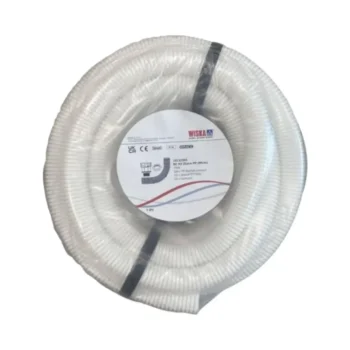
- Rigid or flexible ducting
- Duct connectors
- Duct clamps or sealing tape
- External wall grille
- Backdraught shutter
- Ceiling grille
- Condensation trap
- Insulated ducting
- Fan isolator
- Fixings and seals
Rigid ducting normally creates less resistance than long lengths of flexible ducting. Flexible duct should be kept as short and straight as practical.
Where Should a Bathroom Extractor Fan Be Positioned?
The fan should be positioned to draw moist air across the room and discharge it outside.
The best location depends on:
- Position of the bath or shower
- Bathroom zones
- External wall or roof access
- Duct length
- Ceiling height
- Replacement-air path
- Manufacturer’s instructions
Locating the fan near the source of moisture can improve extraction, provided the fan is suitable for the bathroom zone.
Conclusion
Learning how to choose a bathroom extractor fan involves comparing airflow, duct performance, bathroom zones, IP rating, noise and control options.
A standard wall fan may be suitable for a small bathroom with a short duct run, while a timer, humidistat, continuous-running or inline fan may be more appropriate for other installations.
The fan must discharge outside and should be selected and installed in accordance with the ventilation design, manufacturer’s instructions and applicable electrical requirements.
Electrical4Less supplies bathroom extractor fans, ducting and installation accessories at competitive online trade prices.

































How to Choose a Bathroom Extractor Fan