

How to choose electric underfloor heating depends on the room size, floor finish, available installation depth, required heat output and the way the system will be controlled.
Electric underfloor heating uses heating mats or loose cables installed beneath the finished floor. It is commonly used in bathrooms, kitchens, extensions and renovation projects where comfortable, evenly distributed heat is required.
The system should be selected as part of the complete room design. Insulation levels, heat loss, furniture positions and the maximum temperature permitted by the floor manufacturer must all be considered before installation.
What Is Electric Underfloor Heating?
Electric underfloor heating converts electrical energy into heat through cables installed beneath the floor surface.
The heat rises evenly across the room, reducing the cold areas that can occur with a single wall-mounted radiator. Depending on the room and heat-loss calculation, the system may be used as the main source of heating or as additional background warmth.
Heating Mats or Loose Heating Cable?
Electric Heating Mats
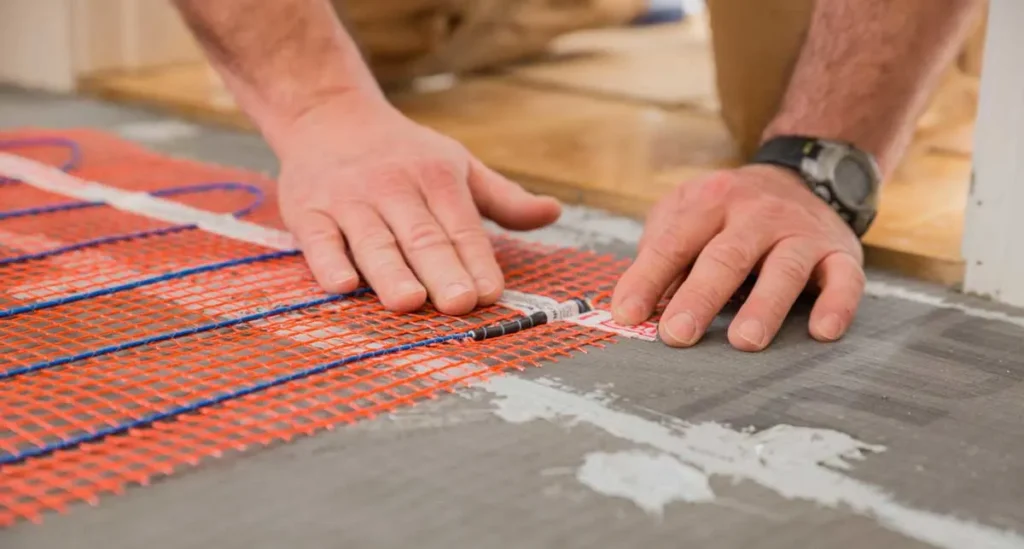
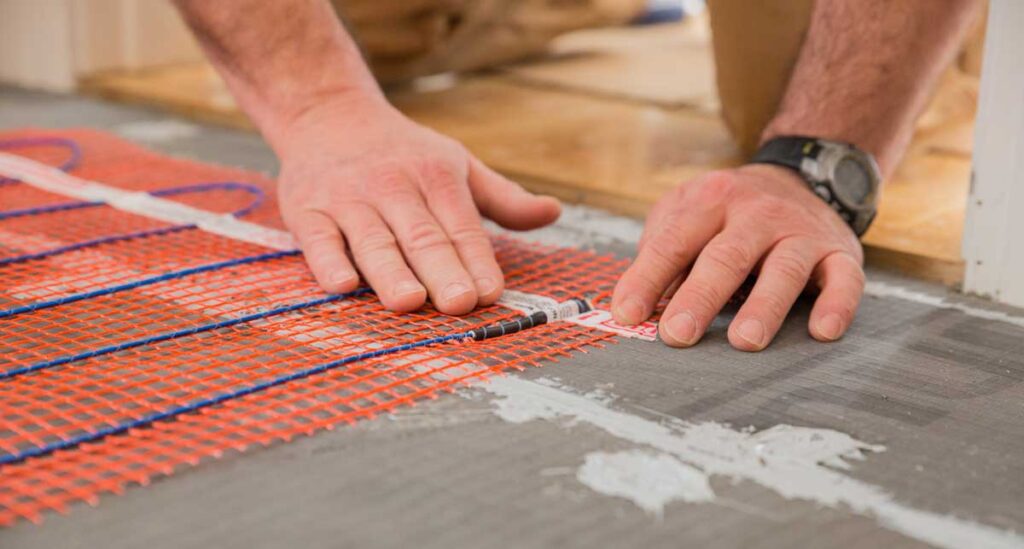
Heating mats use cable pre-spaced on a mesh backing. They are generally suited to regularly shaped rooms and open floor areas because the mat can be rolled out across the available space.
They can provide:
- Consistent cable spacing
- Straightforward installation
- Even heat distribution
- Different output options for different rooms
The mat must not be cut through the heating cable. The mesh can normally be cut and turned to help the mat follow the room layout.
Loose Heating Cable
Loose cable systems allow the installer to adjust the cable spacing around irregular layouts, curved areas, fixed furniture and other obstacles.
They may be more suitable for:
- Small bathrooms
- Irregularly shaped rooms
- Rooms with many permanent fittings
- Areas where a standard mat does not fit efficiently
The cable spacing and total heated area must follow the manufacturer’s design instructions.
Electric or Water-Based Underfloor Heating?
Electric systems use heating cables or mats, while water-based systems circulate heated water through pipes beneath the floor.
Electric underfloor heating is often selected for individual rooms, renovations and smaller projects because it can require less installation depth and does not need to connect to the central heating pipework.
Water-based systems may be considered for larger properties, new builds or whole-house heating projects. This guide focuses specifically on choosing an electric underfloor heating system.

How to Choose the Right Electric Underfloor Heating System
Choosing the correct system requires more than measuring the total room size. The heated area, floor finish, insulation and required heat output must all be considered.
1. Measure the Heated Floor Area
Calculate only the floor area that will actually be heated. Do not include spaces beneath permanent fittings such as:
- Kitchen units
- Baths and shower trays
- Toilets
- Built-in wardrobes
- Fixed appliances
- Other floor-mounted furniture
The selected heating mat or cable must fit within the usable heated area without overlapping or being cut.
2. Check the Required Heat Output
Electric underfloor heating systems are available with different outputs, usually measured in watts per square metre.
The correct output depends on:
- Room heat loss
- Insulation levels
- Floor construction
- Whether the system is the main heat source
- Whether it is being used only for additional floor warmth
A heat-loss calculation may be required where electric underfloor heating will provide the main source of heating.
3. Match the System to the Floor Finish
The finished floor must be suitable for use with electric underfloor heating.
Tile and stone generally transfer heat effectively. Wood, laminate, vinyl and carpet may also be suitable, but their maximum permitted temperature and overall thermal resistance must be checked.
Always follow the flooring manufacturer’s instructions as well as the heating-system requirements.
4. Choose a Heating Mat or Loose Cable
Heating mats are generally easier to install in open, regularly shaped rooms.
Loose heating cables provide greater flexibility around permanent fittings and within small or irregularly shaped spaces.
The system should be planned before installation so that the heating cable is distributed correctly across the available area.
5. Consider Insulation Boards
Insulation boards can reduce downward heat loss and help the floor reach the selected temperature more quickly.
They are particularly useful over concrete subfloors or in rooms where heat-up time and efficiency are important. The correct board type and thickness will depend on the floor construction and available installation depth.
6. Select the Correct Thermostat
A compatible thermostat allows the floor temperature and heating schedule to be controlled.
Available options may include:
- Standard programmable thermostats
- Touchscreen controls
- Wi-Fi thermostats
- App-controlled systems
- Floor and air temperature sensing
The thermostat and floor sensor must be suitable for the selected heating system and room.
7. Arrange Professional Installation
The electrical connection, testing and certification must be completed by a suitably qualified electrician.
The heating cable should be tested before installation, after it has been laid and again after the finished floor has been completed. Test results should be recorded in accordance with the manufacturer’s instructions.
Choosing Warmup Electric Underfloor Heating
Warmup offers electric heating mats, loose cable systems, insulation boards and thermostats for different room sizes and floor finishes.
Before ordering, confirm:
- The usable heated area
- Required wattage per square metre
- Floor-covering compatibility
- Available installation depth
- Thermostat requirements
- Whether insulation boards are needed
Conclusion
Learning how to choose electric underfloor heating involves assessing the heated floor area, required output, floor finish, insulation and control method.
Heating mats are usually suited to regular room layouts, while loose cables provide greater flexibility for small or irregular spaces. Correct planning and professional electrical testing are essential for safe and reliable operation.
Electrical4Less supplies Warmup electric underfloor heating systems, thermostats and installation accessories at competitive online trade prices.





































How to Choose an Electric Underfloor Heating System