


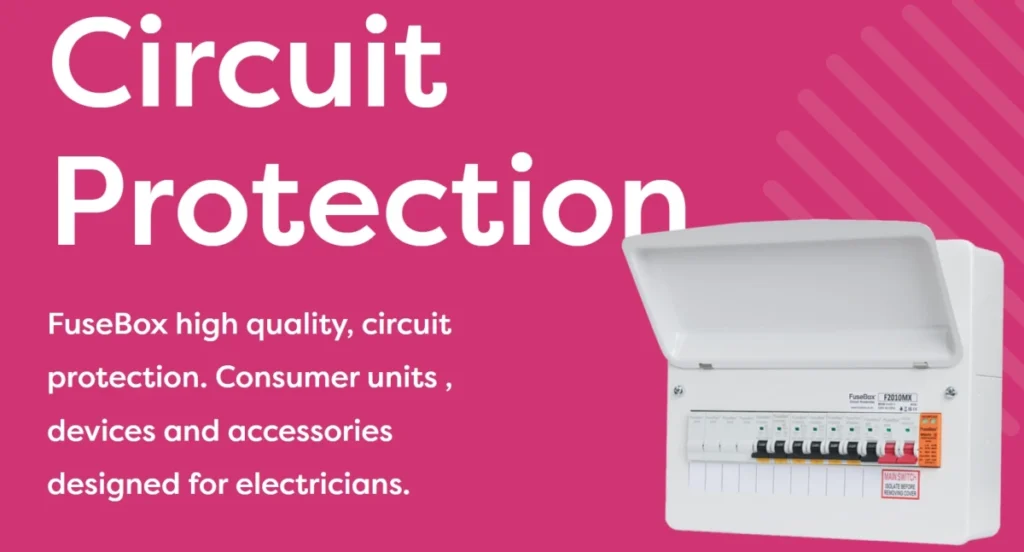
How to Choose a Consumer Unit
How to choose a consumer unit depends on the number of circuits, the protective devices required, the installation location and any future electrical work that may be planned.
The board should not be selected only by its advertised number of ways. The electrician must also consider the incoming supply, earthing arrangement, circuit design, surge protection and equipment such as EV chargers, solar panels, battery storage or heat pumps.
Consumer Unit Choices in 2026
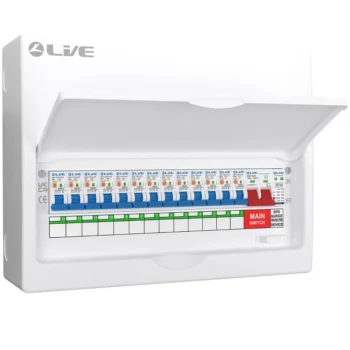
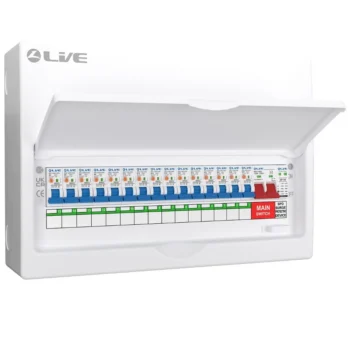
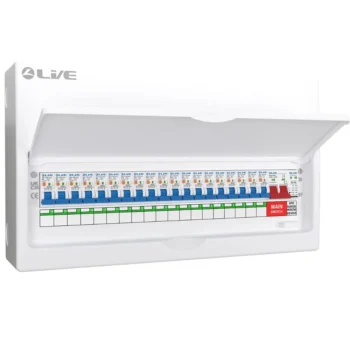
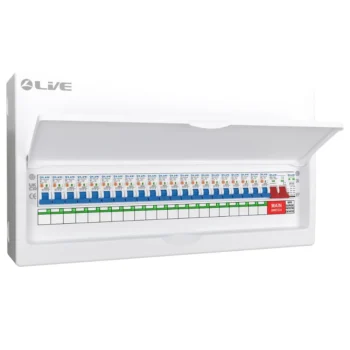
For most new domestic installations and consumer unit replacements in 2026, a main switch consumer unit fitted with individual RCBOs is generally the practical choice.
Each RCBO provides residual-current and overcurrent protection for one circuit. If a fault occurs, only the affected circuit will normally disconnect rather than several unrelated circuits losing power through a shared RCD.
Individual RCBO protection provides:
- Better separation between circuits
- Less disruption when a fault occurs
- Easier fault identification
- Greater flexibility for future circuits
- Suitable options for EV charging, solar PV, battery storage and heat pumps
Dual RCD and high-integrity consumer units are still found in existing installations, but they are now less commonly chosen for complete domestic consumer unit replacements.
What Is a Consumer Unit and Why Is It Important?
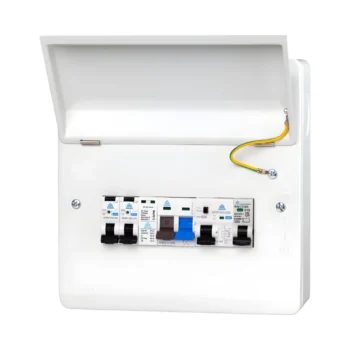
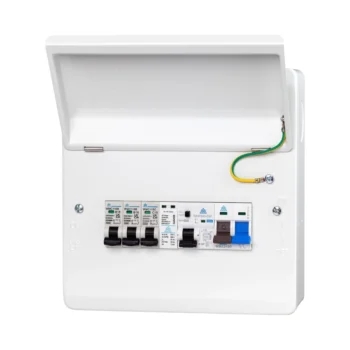
A consumer unit is the main distribution and circuit-protection point within a domestic or similar electrical installation. It receives the incoming electrical supply and divides it between individual circuits such as lighting, sockets, cooking appliances, heating and outdoor equipment.
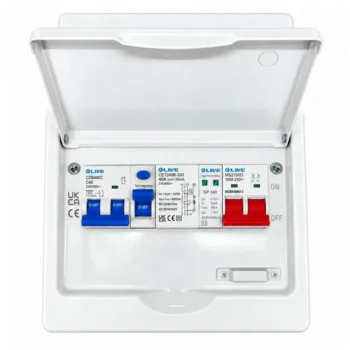
The consumer unit contains protective devices that disconnect circuits when electrical faults occur. Depending on its configuration, these may include RCBOs, MCBs, RCDs, surge protection devices and arc fault detection devices.
It also provides a central isolation point, allowing the complete installation or individual circuits to be switched off for testing, maintenance or repair.
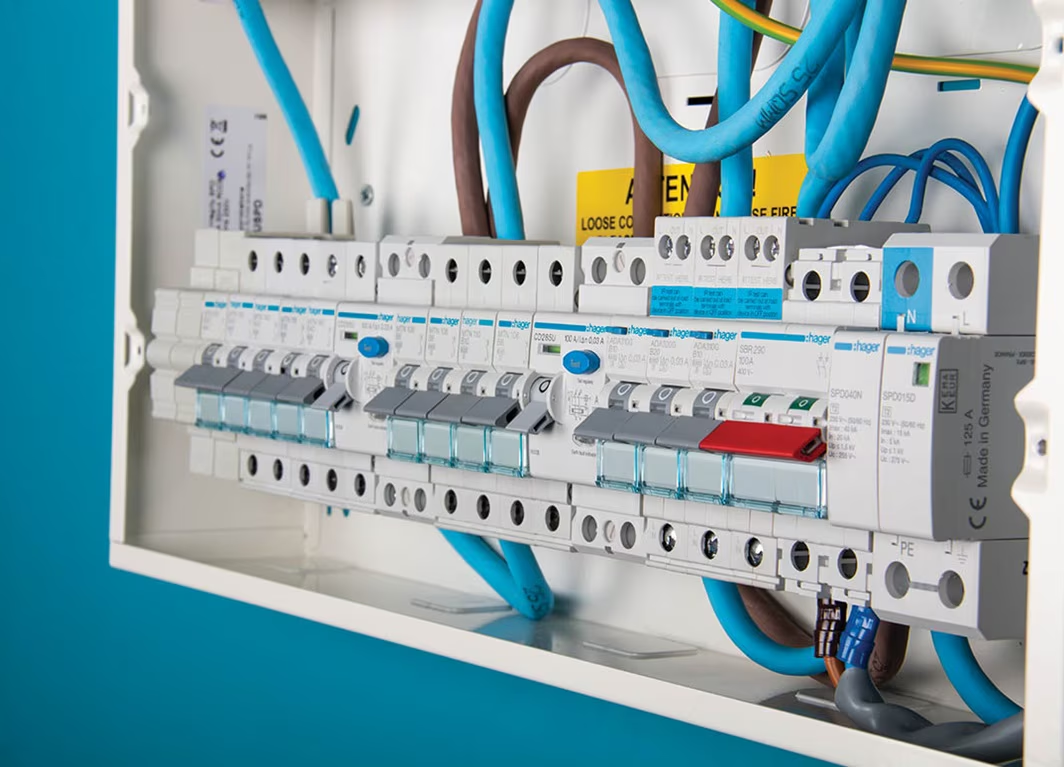
Main Switch Consumer Units with Individual RCBOs
For most new domestic installations and consumer unit replacements in 2026, the most common configuration is a main switch consumer unit fitted with an individual RCBO for each circuit.
An RCBO combines residual-current protection with overload and short-circuit protection. Because each circuit has its own RCBO, a fault will normally disconnect only the affected circuit rather than several unrelated circuits.
The main advantages include:
- Individual protection for every circuit
- Improved circuit separation
- Easier fault identification
- Less disruption when a fault occurs
- Greater flexibility for future additions
- Better options for EV chargers, solar PV, batteries and heat pumps
The RCBOs must be compatible with the selected consumer unit. Devices from different manufacturers should not be mixed unless compatibility has been specifically confirmed.
Older Dual RCD and High-Integrity Consumer Units
Dual RCD consumer units divide several circuits between two shared RCDs, with individual MCBs providing overload and short-circuit protection.
High-integrity consumer units use a similar arrangement but include additional ways for individual RCBOs. This allows important circuits to receive separate protection while other circuits remain grouped under shared RCDs.
These configurations are still found in many existing installations and are not automatically unsuitable. However, they are now less commonly selected for complete domestic consumer unit replacements because one fault can disconnect several circuits connected to the same RCD.
RCD incomer boards, where one RCD protects the complete consumer unit, provide even less circuit separation and are generally used only for particular applications.
How Many Ways Does a Consumer Unit Need?
The number of ways refers to the number of outgoing circuits that can be connected to the consumer unit.
When comparing boards, it is important to distinguish between:
- The total enclosure size
- The number of modules
- The number of usable outgoing ways
- The space occupied by the main switch
- The space occupied by an SPD or other equipment
The electrician should list every existing and planned circuit, including:
- Lighting circuits
- Socket circuits
- Cooker and oven circuits
- Immersion heaters
- Electric heating
- Smoke and fire alarms
- Outdoor supplies
- Garages and outbuildings
- EV chargers
- Solar PV
- Battery storage
- Heat pumps
- Spare circuits for future work
Selecting a consumer unit with spare capacity can avoid the need to replace or extend the board when new circuits are added later.
RCBOs, MCBs and RCDs
RCBOs
An RCBO provides residual-current, overload and short-circuit protection for an individual circuit.
When selecting RCBOs, the electrician must confirm:
- Current rating
- Trip curve
- Residual-current type
- Breaking capacity
- Number of poles
- Bidirectional or unidirectional operation
- Compatibility with the consumer unit
Type A RCBOs are commonly used for modern domestic circuits because many electronic appliances can produce pulsating DC residual currents.
MCBs
An MCB protects a circuit against overload and short-circuit current. It does not provide residual-current protection by itself.
Where MCBs are used, any required residual-current protection must be provided separately, normally by an RCD protecting one or more circuits.
RCDs
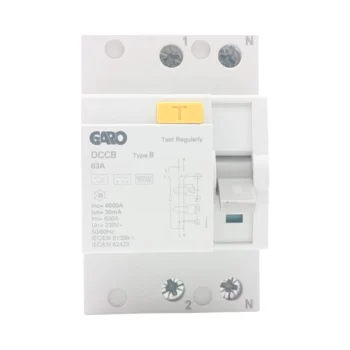
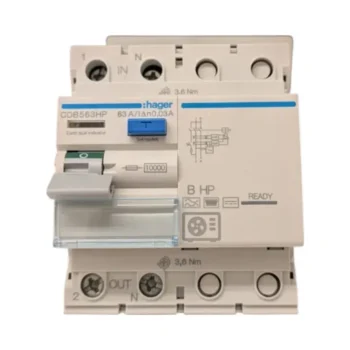
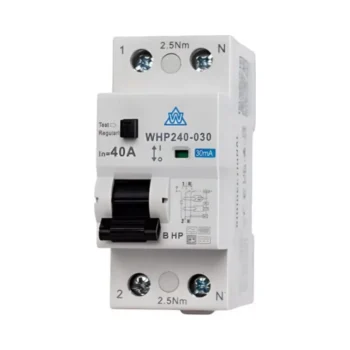
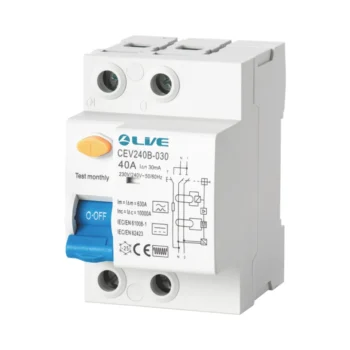
An RCD detects residual current and disconnects the supply when its operating threshold is exceeded.
The correct RCD type must be selected according to the connected equipment and the possible presence of DC components or different frequencies. Shared RCD protection generally provides less circuit separation than individual RCBOs.
Surge Protection in Consumer Units
A Surge Protection Device helps protect the electrical installation and connected equipment against transient overvoltages.
Many modern consumer units are supplied with a factory-fitted Type 2 SPD. Other boards allow a compatible SPD to be installed separately.
When selecting a board, consider:
- Whether an SPD is included
- How many modules it occupies
- The required backup protection
- The conductor arrangement
- Whether additional surge protection may be required elsewhere
The electrician must assess the installation and select the correct surge protection arrangement.
Arc Fault Detection Devices
An Arc Fault Detection Device is designed to identify certain dangerous electrical arc faults that conventional circuit breakers may not detect.
AFDDs are commonly supplied as combined AFDD and RCBO devices, providing arc fault, residual-current and overcurrent protection for one circuit.
Whether an AFDD is required or recommended depends on the type of premises, the circuit and the applicable edition of BS 7671. The electrical designer must assess the installation rather than assuming the same requirement applies to every circuit.
Surface-Mounted and Flush Consumer Units
A surface-mounted consumer unit is fixed directly to the wall. It is generally easier to install and provides straightforward access for cables and future maintenance.
A flush-mounted consumer unit is recessed into the wall, providing a neater appearance in hallways, kitchens and other visible areas. Flush installation normally requires more preparation and sufficient wall depth.
Dual-row and multi-row consumer units may be useful where a large number of circuits is required but horizontal wall space is limited.
Metal and IP-Rated Consumer Units
Consumer units installed in domestic premises are normally supplied in non-combustible metal enclosures to meet current fire-containment requirements.
Cable entries must be correctly finished to protect cables and maintain the required enclosure protection. Unused openings should be closed with suitable blanks or accessories.
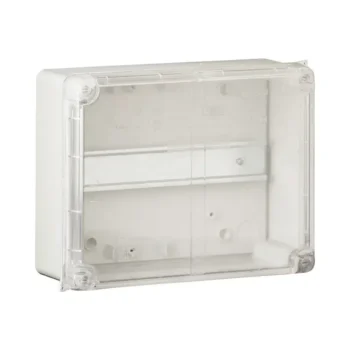
IP-rated consumer units may be required in garages, workshops, agricultural buildings and other locations exposed to moisture or dust.
The IP rating alone does not confirm that a consumer unit is suitable for every outdoor location. The electrician must also consider:
- Condensation
- Temperature
- Direct sunlight and ultraviolet exposure
- Corrosion
- Cable-entry arrangements
- Mechanical damage
- Manufacturer instructions
Consumer Units for Garages and Outbuildings
Garage consumer units are compact boards intended for smaller installations with a limited number of circuits.
They may be used for lighting, sockets or equipment in garages, sheds and workshops. However, the correct arrangement depends on the distribution circuit, earthing system, environmental conditions and equipment being supplied.
The complete installation must be assessed rather than choosing the board solely by its number of ways.
EV Charger Consumer Units
A dedicated EV consumer unit may be used to provide protection and isolation for an electric vehicle charging circuit.
Depending on the charger and installation, the board may need to include:
- A correctly rated RCBO or MCB
- Suitable residual-current protection
- Open-PEN fault protection
- DC residual-current protection
- A Type 2 SPD
- Isolation
- Space for load-management equipment
Some EV chargers include certain protective functions internally. Others require separate protection within the EV consumer unit.
The charger manufacturer’s instructions and the property’s earthing arrangement must be checked before selecting the board.
Solar PV and Battery Consumer Units
Solar PV and battery systems can allow current to flow through protective devices in a different direction from a conventional load circuit.
Protective devices used on these circuits must be suitable for the direction of power flow. Where bidirectional operation is required, compatible bidirectional devices should be selected.
The electrician must also consider:
- Manufacturer compatibility
- Circuit current
- Isolation
- Surge protection
- Available consumer unit capacity
- Labelling requirements
- Coordination with the existing installation
Heat-Pump Consumer Units
Heat pumps may require dedicated circuits, higher-current protective devices and additional space for controls, meters or contactors.
Selection should be based on the heat-pump manufacturer’s instructions, starting current, cable design and required protective devices.
A separate consumer unit or extension enclosure may be appropriate where the existing main board does not have sufficient capacity.
Dual-Tariff Consumer Units
Dual-tariff consumer units provide separate sections for supplies controlled by different tariffs or switching arrangements.
They may be used with storage heating, hot-water systems and other controlled loads. The required layout depends on the metering and supply arrangement at the property.
Choosing a Consumer Unit Brand
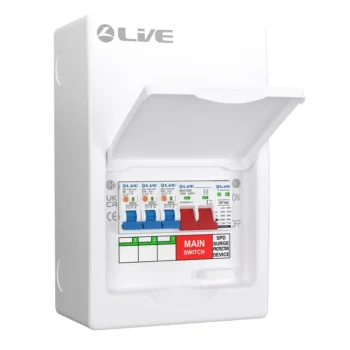
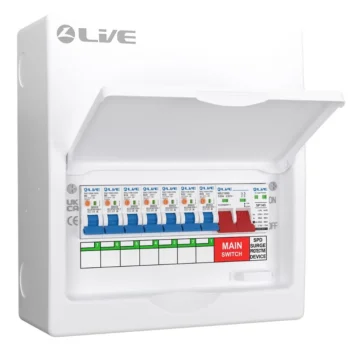
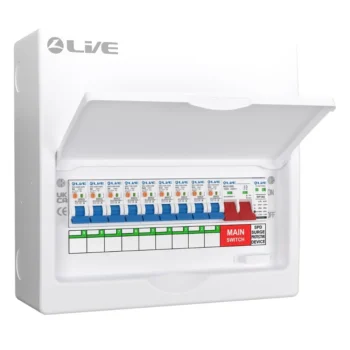
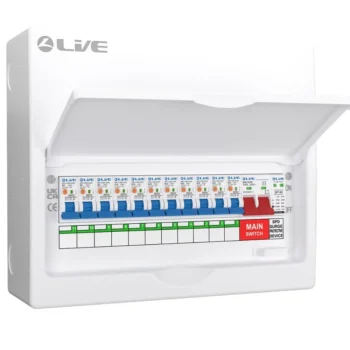
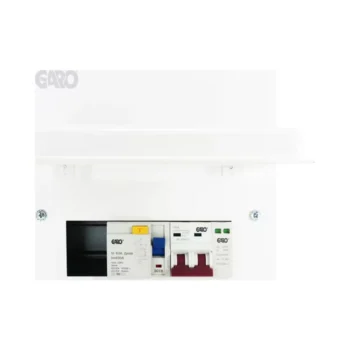
FuseBox, Hager, Live Electrical and WCED offer consumer units in a range of sizes and configurations.
When comparing brands, consider:
- Availability of compatible RCBOs
- Replacement-device availability
- Internal wiring space
- Number of usable and spare ways
- Surface and flush options
- Single-row or multi-row designs
- SPD configuration
- AFDD availability
- Specialist EV, solar and heat-pump options
The lowest-priced enclosure is not always the lowest-cost long-term option. Availability of compatible replacement devices and space for future additions should also be considered.
Consumer Unit Installation and Certification
Replacing a consumer unit involves more than removing the existing board and connecting a new one.
Before replacement, the electrician should assess:
- Existing circuit condition
- Earthing and bonding
- Meter tails
- Incoming supply
- Maximum demand
- Existing RCD protection
- Insulation resistance
- Circuit protective conductors
- Suitability of connected equipment
The completed installation must be inspected, tested and supported by the appropriate electrical certification.
Consumer unit replacement in a dwelling is also notifiable work under Building Regulations in England unless completed through the appropriate registered installer or Building Control process.
Wiring Regulations Update for 2026
Consumer units and protective devices must be selected and installed according to the applicable edition of BS 7671 and the manufacturer’s current instructions.
BS 7671:2018+A4:2026 has been published. Installers must ensure they are working to the applicable edition during the transition period and should not rely on outdated catalogues, articles or previous installation practices. (IET Wiring Regulations)
The main switch and individual RCBO arrangement is recognised as the most common modern configuration for domestic consumer units because it provides individual residual-current protection and improved circuit separation. (Electrical Safety First)
SPDs are normally installed within consumer units or distribution boards to protect installations and connected equipment against transient overvoltages. (IET Wiring Regulations)
Where solar PV or battery equipment may cause power to flow in either direction, installers must check whether the protective devices are suitable for bidirectional operation. (IET Wiring Regulations)
Conclusion
Learning how to choose a consumer unit involves more than selecting a brand or counting the existing circuits.
For most new domestic installations and consumer unit replacements in 2026, a main switch board fitted with individual RCBOs provides effective circuit separation, straightforward fault identification and flexibility for future additions.
The final selection must be based on the circuit design, installation environment, required protective devices and planned equipment such as EV chargers, solar PV, batteries or heat pumps.
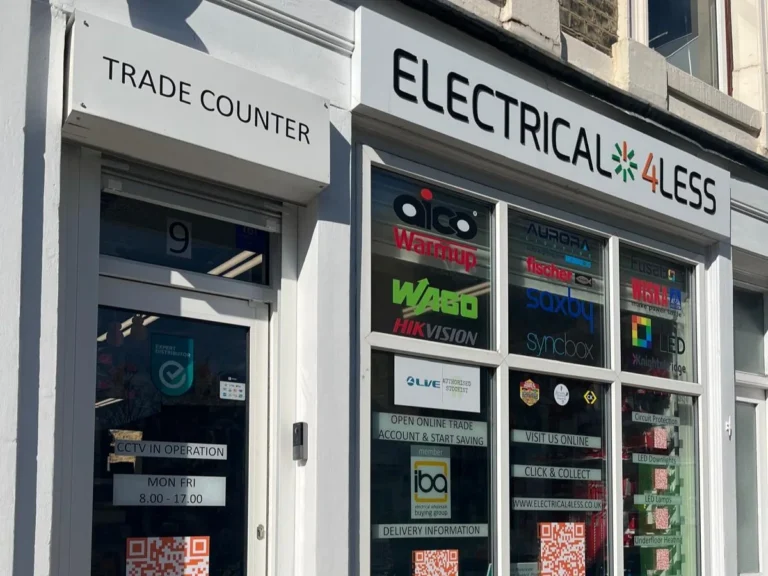
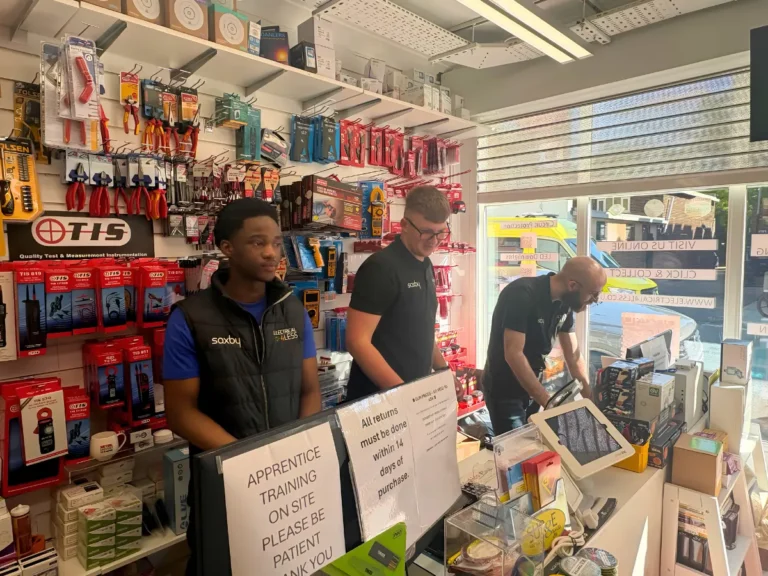
Electrical4Less supplies consumer units from FuseBox, Hager, Live Electrical, WCED and other established circuit-protection brands. Competitive trade prices are available online, with UK delivery and collection from our Fulham trade counter.




























How to Choose a Consumer Unit: UK Buying Guide