


How to choose an RCBO consumer unit depends on the number and type of circuits, the protective devices required, the available installation space and any future electrical work planned for the property.
For most new domestic installations and consumer unit replacements in 2026, a main switch consumer unit fitted with individual RCBOs is generally the preferred arrangement. Each circuit receives separate residual-current and overcurrent protection, so a fault will normally disconnect only the affected circuit. This provides better circuit separation than a dual RCD board, where several circuits may lose power together.
What Is an RCBO Consumer Unit?
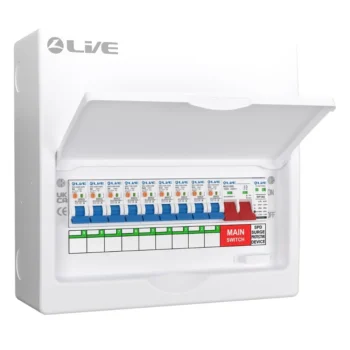
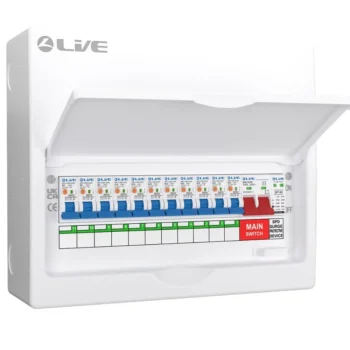
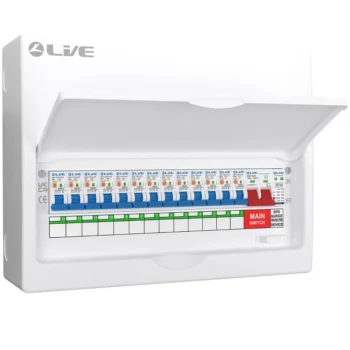
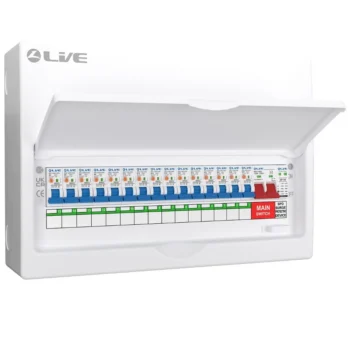
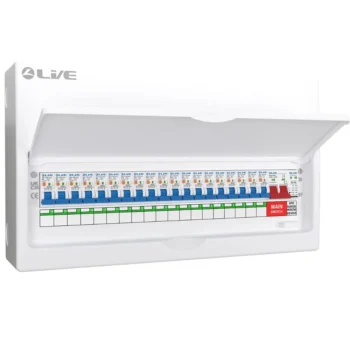
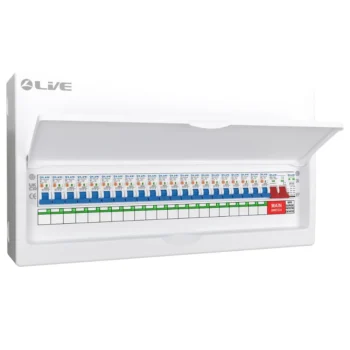
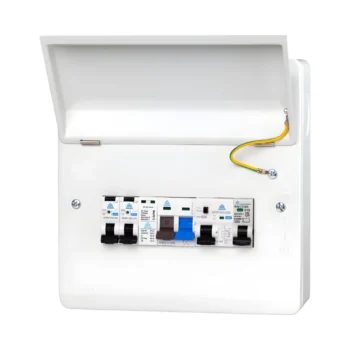
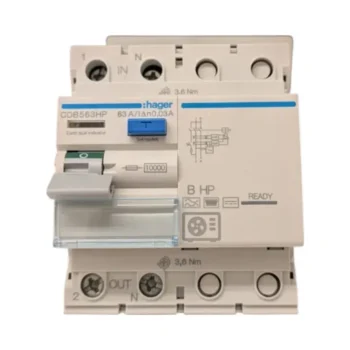
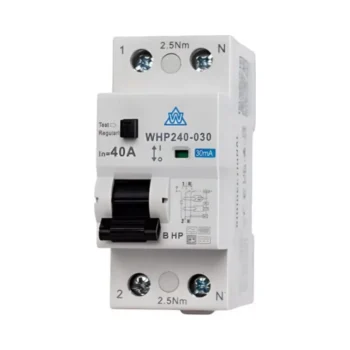
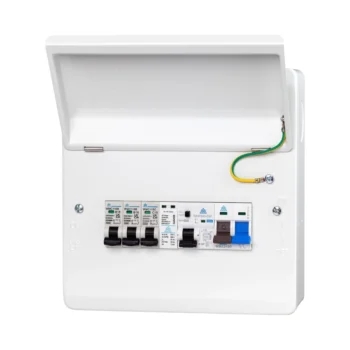
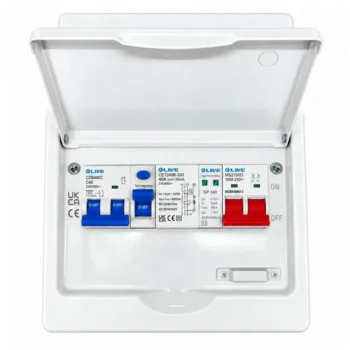
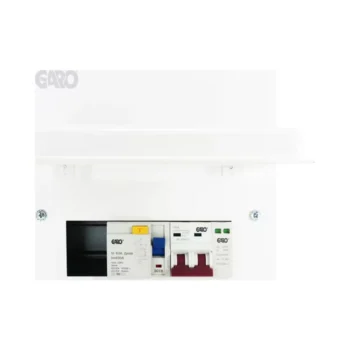
An RCBO consumer unit is a distribution board in which each outgoing circuit is protected by its own RCBO.
An RCBO combines:
- Residual-current protection
- Overload protection
- Short-circuit protection
This means one device provides the protection that would otherwise require a separate MCB and shared RCD.
Individual RCBO protection can make fault identification easier and reduce unnecessary loss of power to unrelated circuits.
How Many Ways Are Required?
The number of ways refers to the outgoing circuits that can be connected to the consumer unit.
Before choosing a board, list every existing and planned circuit, including:
- Lighting circuits
- Socket circuits
- Cooker and oven circuits
- Immersion heaters
- Electric heating
- Smoke and fire alarms
- Outdoor supplies
- Garages and outbuildings
- EV chargers
- Solar PV
- Battery storage
- Heat pumps
- Future spare circuits
Do not rely only on the advertised enclosure size. Check the number of usable ways after allowing for the main switch, SPD and any other devices installed in the board.
Choosing a consumer unit with spare capacity can avoid the need to extend or replace it when additional circuits are added later.
Check the Included RCBOs
Some RCBO consumer units are supplied empty, while populated kits include a fixed selection of RCBOs.
Before ordering a populated kit, check:
- RCBO current ratings
- Number of each rating supplied
- Trip curves
- Residual-current type
- Breaking capacity
- Number of poles
- Whether the devices are bidirectional
- Whether the configuration suits the planned circuits
The included RCBO combination may not match every installation. The electrician must confirm the protective-device ratings from the circuit design rather than choosing a kit only because it contains the correct number of devices.
Type A RCBOs
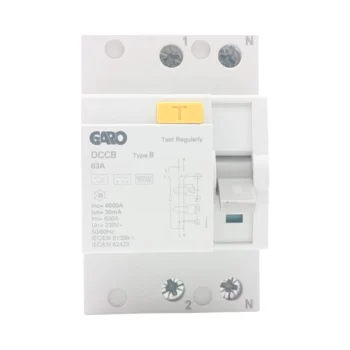
Type A RCBOs detect sinusoidal AC and pulsating DC residual currents and are widely used for modern domestic circuits containing electronic equipment.
However, Type A should not automatically be described as suitable for every load. EV chargers, solar inverters, variable-speed drives and other specialist equipment may require a different protective arrangement according to the manufacturer’s instructions.
Bidirectional RCBOs
Bidirectional RCBOs may be required where electrical energy can flow through the device in either direction.
This is particularly relevant to installations involving:
- Solar PV
- Battery storage
- Other generating equipment
- Circuits capable of importing and exporting power
Not every RCBO is suitable for bidirectional operation. The electrician should check the device markings, technical information and manufacturer compatibility before installation.
Does the Consumer Unit Include an SPD?
Many modern RCBO consumer units are available with a factory-fitted Type 2 Surge Protection Device.
An SPD helps protect the electrical installation and connected equipment against transient overvoltages. It may occupy one or more modules within the board, so its position must be considered when comparing the number of usable ways.
Check:
- Whether an SPD is included
- The SPD type
- Whether overcurrent protection is internal or external
- The manufacturer’s connection requirements
- The space remaining for outgoing circuits
Under BS 7671:2018+A4:2026, the SPD must have suitable overcurrent protection in accordance with the manufacturer’s instructions.
Main Switch and Incomer Rating
The consumer unit must include a suitable means of isolation, normally provided by the main switch.
The electrician should confirm that the main switch rating is suitable for the installation and coordinated with the incoming supply. The rating should not be selected without considering the service equipment, maximum demand and design of the complete installation.
Single-Row or Dual-Row Consumer Unit?
Single-row consumer units place the devices in one horizontal row and are suitable where adequate wall width is available.
Dual-row or multi-row consumer units divide the devices between two or more rows. They may be useful where:
- A large number of circuits is required
- Horizontal wall space is limited
- Additional wiring space is desirable
- AFDDs or other larger devices are being installed
- Extra capacity is needed for future equipment
Always check the external dimensions and internal wiring space before ordering.
Surface-Mounted or Flush Consumer Unit?
A surface-mounted consumer unit is fixed directly to the wall and is normally simpler to install and access.
A flush-mounted consumer unit is recessed into the wall, creating a neater appearance in hallways, kitchens and other visible areas. It requires sufficient wall depth and additional preparation during installation.
The mounting method does not change the required circuit protection, but it can affect installation time, cable entry and available wiring space.
RCBO Consumer Units for EV, Solar and Heat Pumps
Modern installations increasingly include high-load or generating equipment that may need additional consideration.
EV Chargers
An EV charging circuit may require appropriate RCBO protection, open-PEN protection, DC residual-current protection, an SPD and load-management equipment.
Some protective functions may be built into the charger, while others must be provided externally. Follow the charger manufacturer’s instructions before selecting the consumer unit.
Solar PV and Battery Storage
Solar and battery circuits may require bidirectional protective devices. The electrician should also consider isolation, surge protection, labelling and compatibility with the selected consumer unit.
Heat Pumps
Heat pumps may require higher-current RCBOs and additional space for contactors, meters or control equipment. Selection should be based on the heat-pump manufacturer’s instructions and the circuit design.
Choosing an RCBO Consumer Unit Brand
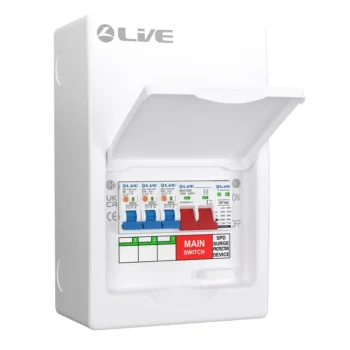
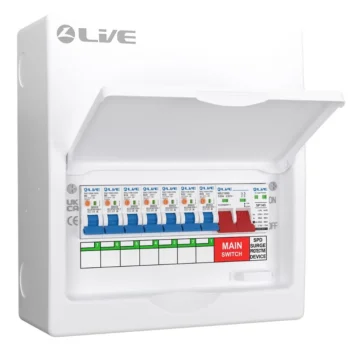
Electrical4Less supplies RCBO consumer units from manufacturers including FuseBox, Hager, Live Electrical and WCED.
When comparing brands, consider:
- Availability of compatible RCBOs
- Internal wiring space
- Number of usable ways
- Surface and flush options
- Single-row or multi-row construction
- SPD arrangement
- AFDD availability
- Bidirectional RCBO options
- Availability of replacement devices
Protective devices from different manufacturers should not be mixed unless their compatibility has been specifically confirmed.
Consumer Unit Installation and Testing
An RCBO consumer unit must be selected, installed, inspected and tested by a suitably qualified electrician.
Before replacement, the electrician should assess:
- Existing circuit condition
- Earthing and bonding
- Meter tails
- Incoming supply
- Maximum demand
- Insulation resistance
- Protective conductor continuity
- Suitability of connected equipment
The completed work must receive the appropriate electrical certification and Building Regulations notification where required.
Conclusion
Learning how to choose an RCBO consumer unit involves more than selecting the enclosure with the correct number of ways.
The electrician must consider the RCBO ratings and types, SPD arrangement, usable capacity, mounting method and any planned EV charging, solar PV, battery or heat-pump circuits.
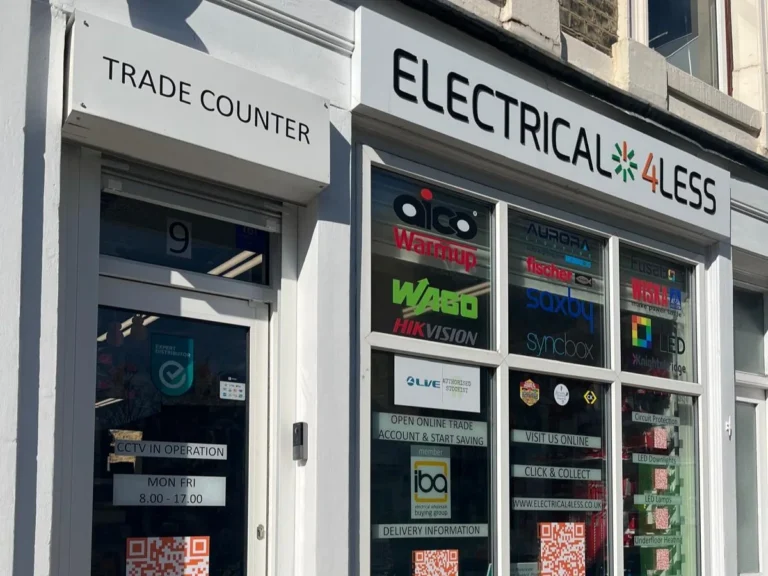
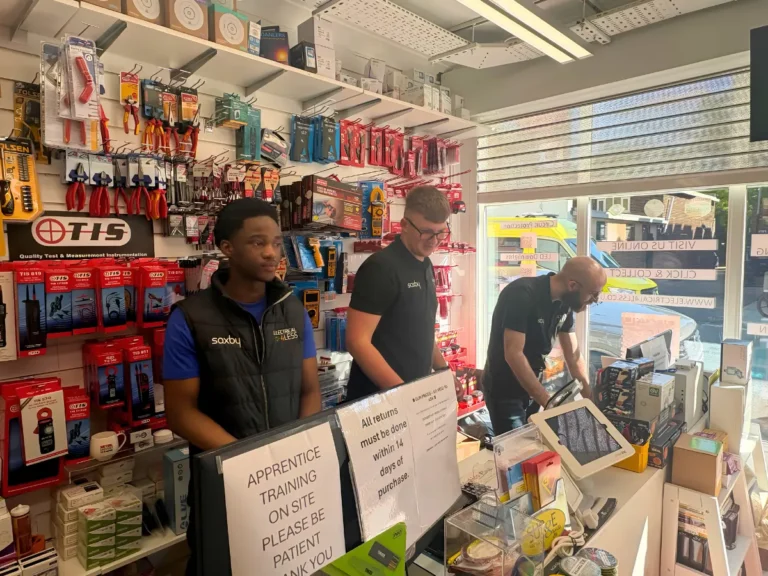
Electrical4Less supplies RCBO consumer units from established circuit-protection brands, with competitive trade prices available online, UK delivery and collection from our Fulham trade counter.




























How to Choose an RCBO Consumer Unit