


Table of Contents
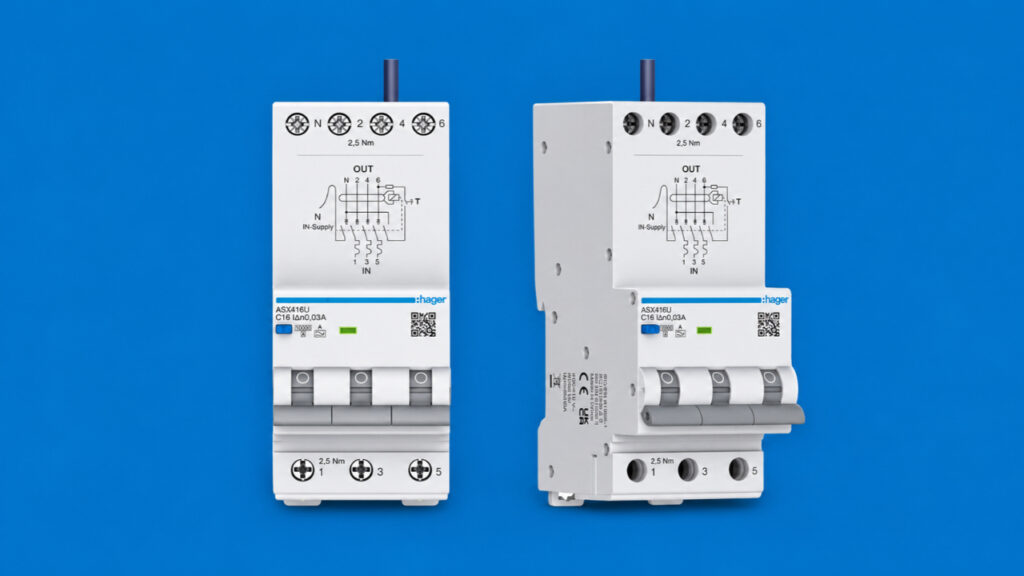
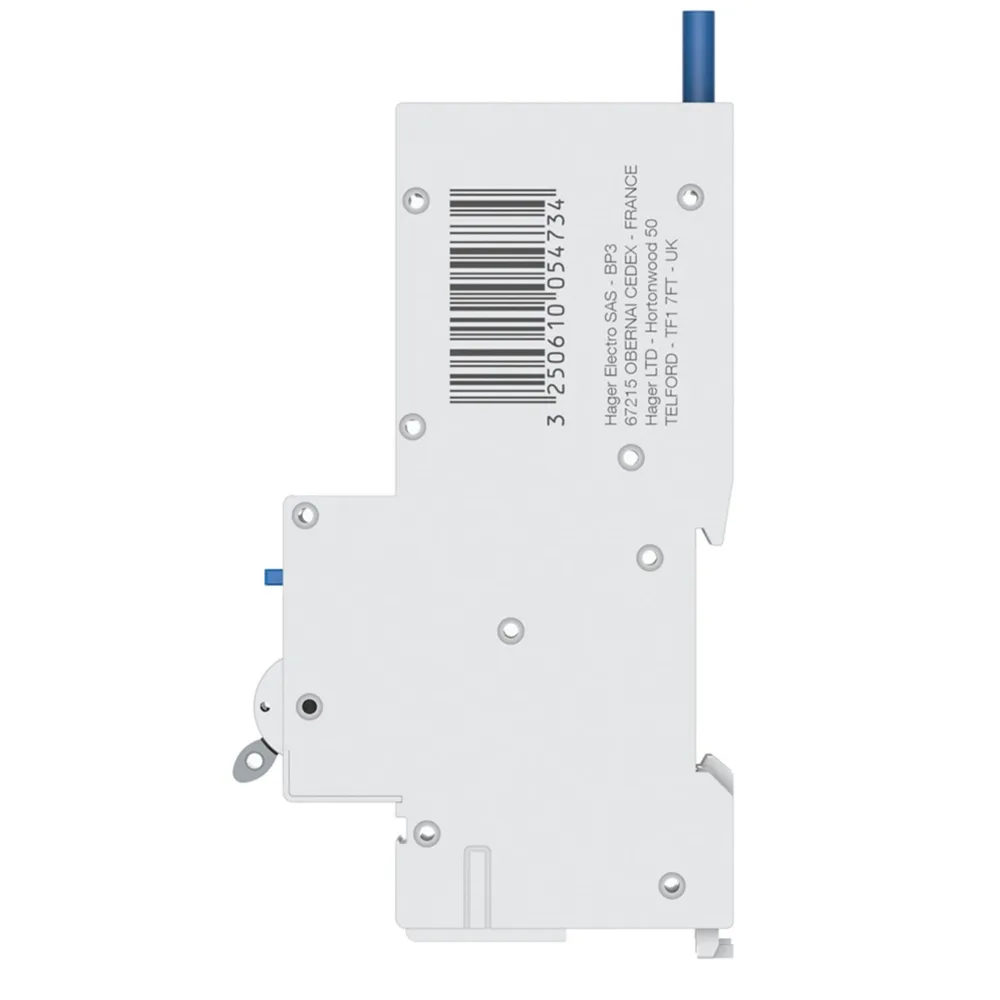
Hager has introduced a new generation of integrated three-phase RCBOs for compatible Invicta commercial distribution boards. Combining overcurrent protection, residual current protection and switched neutral functionality in a compact three-module device, the new range offers an alternative to traditional MCB and RCD add-on assemblies.
In this Hager three-phase RCBO explained guide, we look at what makes the new devices different, how they work, which variants are available and where they may be used. We also share our thoughts on an interesting omission from the range: the absence of B Curve options.
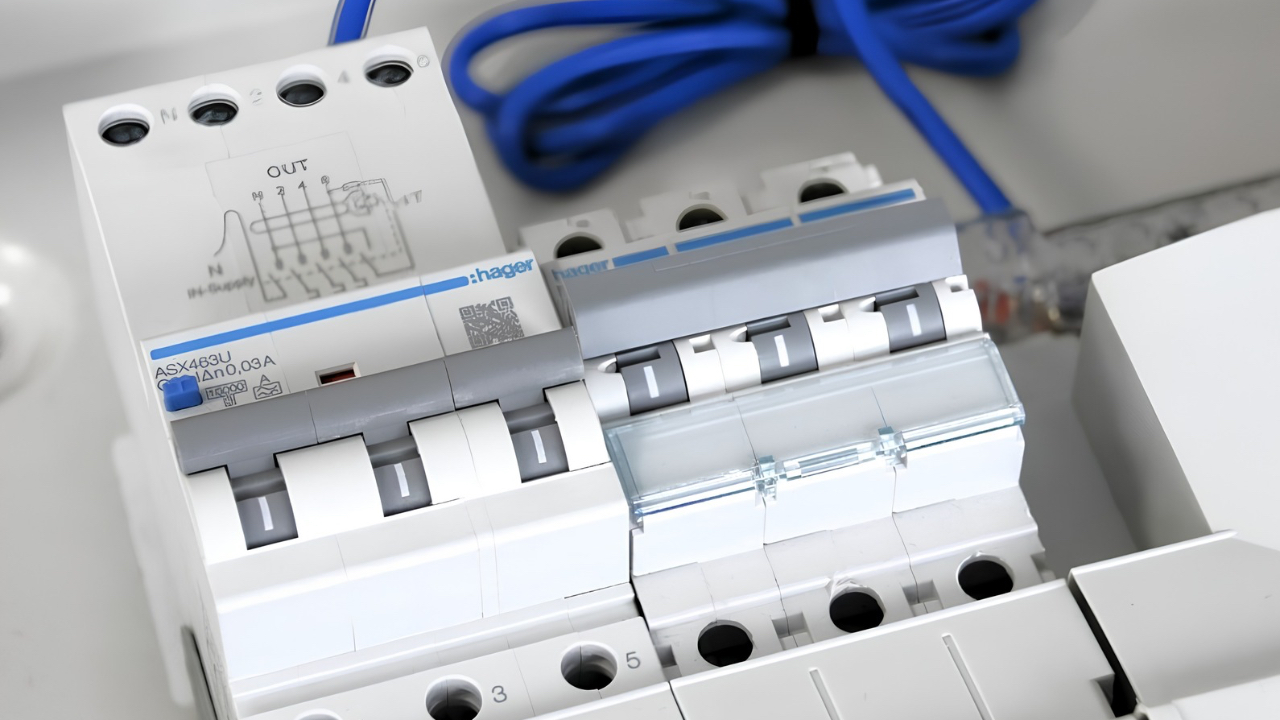
The new devices form part of Hager’s commercial circuit protection offering. You can explore the Hager three-phase RCBO range at Electrical4Less or browse our wider Hager Shop for related protective devices and distribution equipment.
What Is an Integrated Hager Three-Phase RCBO?
An RCBO (Residual Current Breaker with Overcurrent Protection) combines the functions of an MCB and an RCD within a single protective device.
It provides protection against overloads and short circuits while also detecting residual current faults. In a three-phase installation, this allows an individual circuit to have both types of protection without relying on separate protective devices.
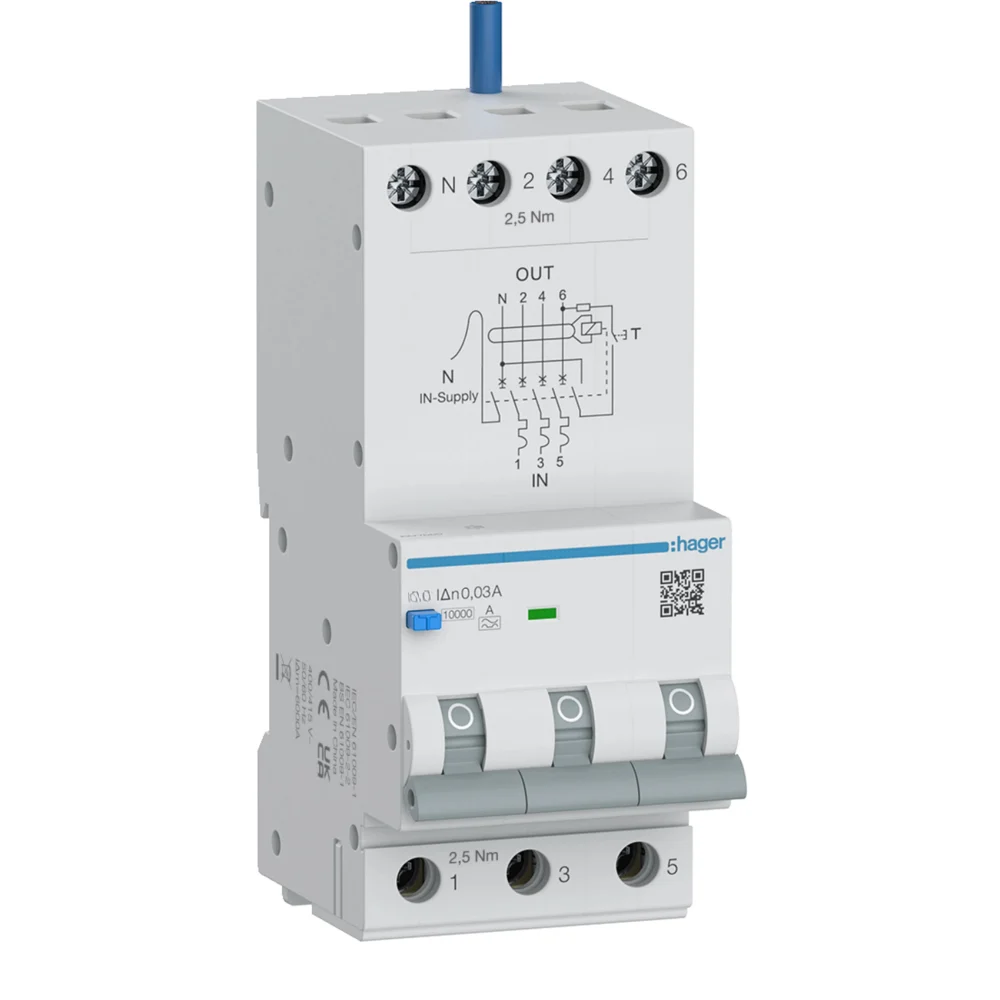
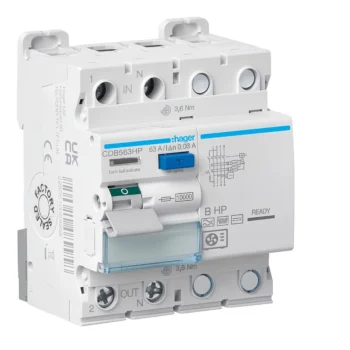
Hager’s new electronic three-phase RCBOs use a 3P+N switched neutral arrangement and occupy just three modules. They are designed for direct integration with compatible Hager Invicta commercial distribution boards.
How Does the New Hager Three-Phase RCBO Work?
During normal operation, the RCBO allows current to flow through the protected three-phase circuit. Its residual current protection monitors the balance between currents passing through the device.
If a residual current fault reaches the device’s operating threshold, the RCBO trips and disconnects the protected circuit. The overcurrent protection operates when the specified overload or short-circuit conditions are reached.
Unlike a conventional three-pole protective arrangement that does not switch the neutral, Hager’s new devices include switched neutral functionality within their compact construction.
The exact switching characteristics, neutral connection requirements and installation arrangements must be confirmed from Hager’s instructions for the selected device.
Key Features of the New Hager Three-Phase RCBO Range
Hager has introduced a selection of electronic 3P+N RCBOs designed to provide combined protection for suitable three-phase commercial and industrial circuits.
- Integrated protection: Overcurrent and residual current protection in one device.
- Switched neutral: Neutral switching incorporated into the RCBO.
- Three-module design: Compact construction for efficient use of distribution board space.
- 10kA breaking capacity: For appropriately designed circuits within the device’s rated short-circuit capacity.
- Type A residual current protection: 30mA, 100mA and 300mA options.
- C Curve and D Curve: Different instantaneous overcurrent tripping characteristics.
- Current ratings: 10A to 63A across the range.
- Invicta integration: Designed for compatible Hager Invicta commercial distribution board busbars.
Which Hager Three-Phase RCBO Variants Are Available?
Hager’s published product selection includes 29 variants in the new three-module 3P+N range. These are divided into four groups based on their tripping characteristics and residual current sensitivity.
| Range | Curve | Residual Current | Current Ratings |
|---|---|---|---|
| ASD | D Curve | 30mA | 10A, 16A, 20A, 25A, 32A, 40A |
| ASX | C Curve | 30mA | 16A, 20A, 25A, 32A, 40A, 50A, 63A |
| ASY | C Curve | 100mA | 10A, 16A, 20A, 25A, 32A, 40A, 50A, 63A |
| ASZ | C Curve | 300mA | 10A, 16A, 20A, 25A, 32A, 40A, 50A, 63A |
All these listed devices feature Type A residual current protection, 10kA breaking capacity and switched neutral functionality.
One important distinction is that 30mA, 100mA and 300mA RCBOs are intended for different protection requirements. The choice must be based on the circuit design and applicable electrical regulations rather than simply selecting the nearest available rating.
For example, 300mA protection should not be treated as interchangeable with 30mA additional protection against electric shock where the latter is required.
Why Is the Three-Module Design Important?
Space within commercial distribution boards can be an important consideration, particularly when multiple three-phase outgoing circuits require individual residual current protection.
A conventional solution may combine a three-pole MCB with a separate residual current add-on block. Depending on the selected components, this arrangement can occupy additional module space.
The new Hager RCBO incorporates both protective functions within a three-module device. This can simplify the protection arrangement and help make more efficient use of the available distribution board space.
Its direct connection to compatible Hager Invicta busbars can also reduce wiring complexity compared with certain conventional protective arrangements.
C Curve vs D Curve: What’s the Difference?
The new range includes both C Curve and D Curve variants. These characteristics determine the instantaneous magnetic tripping response of the overcurrent protection.
C Curve Protection
C Curve devices generally have an instantaneous magnetic tripping range of approximately five to ten times their rated current.
They are commonly considered for appropriately designed commercial circuits where moderate starting currents may occur.
D Curve Protection
D Curve devices generally have an instantaneous magnetic tripping range of approximately ten to twenty times their rated current.
This characteristic may be suitable for certain equipment with higher short-duration inrush currents, provided the installation meets the necessary fault protection and disconnection requirements.
Neither characteristic is universally better. The correct device must be selected according to circuit conditions, prospective fault current, earth fault loop impedance and the applicable requirements of BS 7671.
Where Can Hager Three-Phase RCBOs Be Used?
Hager identifies several commercial and industrial applications for its integrated three-phase RCBO range.
Three-Phase EV Charging
Three-phase EV charging equipment, including suitable systems rated up to 22kW, may require individual overcurrent and residual current protection.
Hager identifies EV charging as a potential application for the new range. However, a Type A RCBO alone does not necessarily satisfy every EV charging installation requirement.
Installers must consider the charging equipment manufacturer’s instructions, BS 7671 and any additional smooth DC residual current detection or protection required by the installation design.
Commercial HVAC Systems
Three-phase heating, ventilation and air conditioning equipment can require appropriately selected overcurrent and residual current protection.
The C Curve and D Curve options allow electrical designers to consider different starting-current characteristics, subject to the necessary electrical calculations and equipment requirements.
Industrial Socket Outlets
Industrial three-phase socket outlets used in workshops, warehouses and commercial buildings are another potential application for integrated circuit protection.
Where the circuit design requires both overcurrent and residual current protection, an integrated RCBO can provide these functions within one device.
Understanding 30mA, 100mA and 300mA Protection
The different residual current sensitivities available in Hager’s new range are an important consideration when specifying protective devices.
- 30mA: Commonly used where additional protection against electric shock is required by BS 7671.
- 100mA: May be selected for suitable fault protection or other residual current protection arrangements, depending on the installation design.
- 300mA: May be used for certain fault protection or fire-risk mitigation arrangements where the relevant requirements are satisfied.
A higher residual operating current does not make a device a substitute for 30mA additional protection where that protection is required. The correct sensitivity must be determined from the circuit design and relevant regulations.
Compatibility with Hager Invicta Distribution Boards
Hager has designed its new integrated three-phase RCBOs for use with compatible Invicta commercial distribution boards.
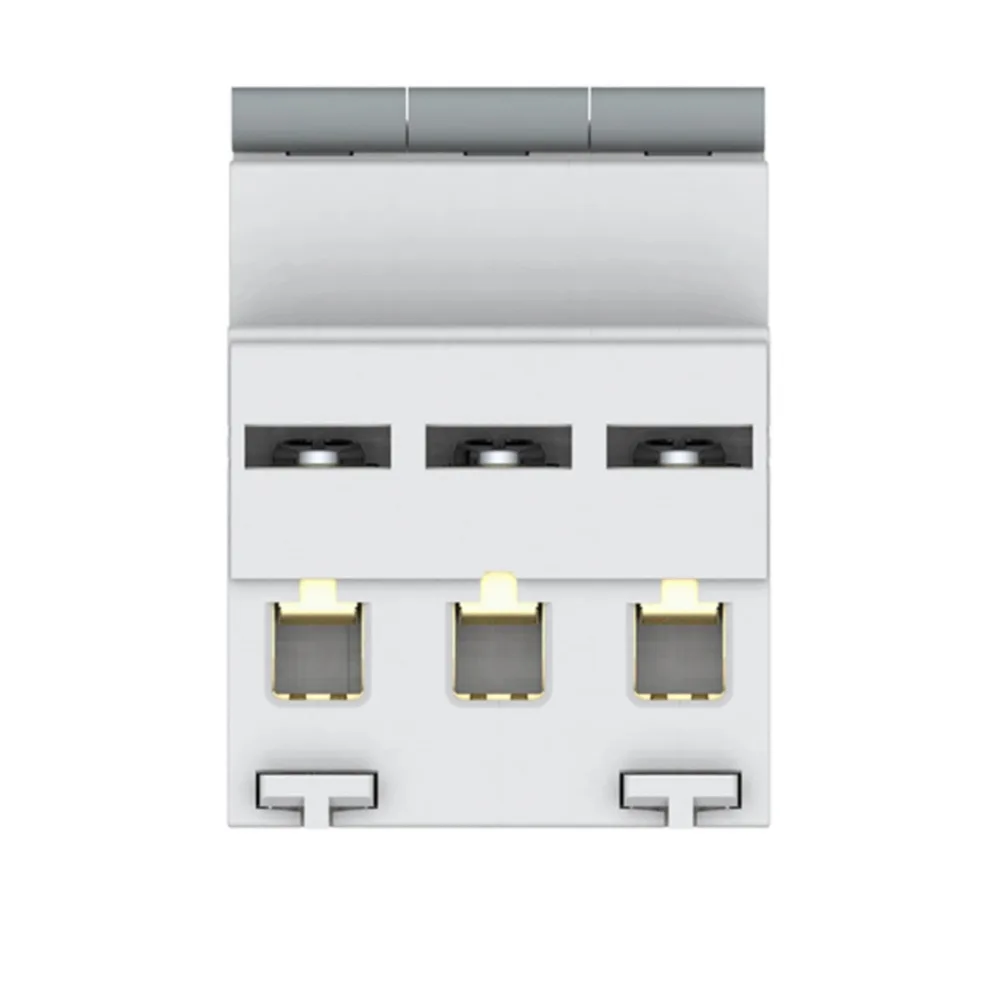
The devices are intended to fit directly onto the appropriate busbar system, offering a more integrated arrangement for outgoing circuit protection.
Electricians planning a commercial distribution installation can explore the Hager TPN Distribution Boards category at Electrical4Less.
For a wider selection of commercial distribution equipment, visit our Three-Phase Distribution Boards category, which includes solutions from several manufacturers.
Important: Compatibility should not be assumed for every existing Hager distribution board. Always confirm the board series, busbar arrangement, device reference and manufacturer installation instructions before fitting a new RCBO.
Integrated RCBO vs Traditional MCB and RCD Add-On
The new integrated design differs from traditional arrangements that use a compatible three-pole MCB together with a separate RCD add-on block.
| Feature | Integrated Hager RCBO | Traditional MCB + RCD Add-On |
|---|---|---|
| Construction | Single integrated device | Separate protective components |
| Overcurrent protection | Integrated | Provided by MCB |
| Residual current protection | Integrated | Provided by RCD add-on |
| Switched neutral | Included | Depends on assembly |
| Module width | 3 modules | Depends on selected components |
| Board compatibility | Compatible Invicta boards | Depends on board and components |
Although an integrated design can offer installation advantages, it should not automatically be considered a direct replacement for an existing MCB and RCD add-on assembly. The electrical specifications and board compatibility must be checked before making any changes.
Our Thoughts: A Smart New Design, but Where Is the B Curve?
At Electrical4Less, we think Hager’s approach to its new three-phase RCBO range is interesting. Combining overcurrent protection, residual current protection and switched neutral functionality in just three modules is certainly a welcome development.
Hager has also introduced a broad selection of ratings, including 30mA, 100mA and 300mA Type A protection, with C Curve and D Curve options.
However, one thing caught our attention. Looking through the 29 variants currently listed by Hager, we couldn’t find a single B Curve three-phase RCBO.
Instead, Hager has concentrated on C Curve devices across the 30mA, 100mA and 300mA sensitivities, alongside a smaller selection of D Curve devices offering 30mA protection.
This may be a deliberate decision aimed at commercial and industrial applications, where C Curve and D Curve characteristics are often appropriate.
However, B Curve devices can also be useful where circuit characteristics, fault conditions and protection requirements support their selection. Having that additional option could provide more flexibility for certain installations.
Of course, the absence of B Curve applies to this particular new three-module 3P+N range. Hager already manufactures B Curve RCBOs in other configurations.
So we’re interested to know whether electricians see this as a limitation or whether the C Curve and D Curve selection already covers the majority of their three-phase work.
What Do You Think?
We would genuinely like to hear from electricians and electrical contractors who regularly work with three-phase distribution boards.
- Would you like Hager to introduce B Curve versions of its new three-phase RCBOs?
- Do C Curve and D Curve options cover most of your commercial installations?
- Which residual current sensitivity do you specify most often: 30mA, 100mA or 300mA?
- What do you think of Hager’s compact three-module approach compared with other manufacturers’ solutions?
Share your thoughts in the comments below. We’re particularly interested in feedback from electricians installing Hager Invicta boards and other commercial three-phase distribution equipment.
Your feedback also helps us understand which circuit protection products are most useful to offer at Electrical4Less.
Frequently Asked Questions
Conclusion: A Welcome Addition to Three-Phase Circuit Protection
As this Hager three-phase RCBO explained guide shows, the new integrated design brings together several useful features: compact construction, switched neutral functionality, multiple current ratings and compatibility with suitable Invicta commercial distribution boards.
With 29 published variants across C Curve and D Curve characteristics and three residual current sensitivities, Hager has introduced a substantial range for commercial and industrial applications.
Whether the absence of B Curve options will matter in practice is something we’d be interested to hear from working electricians.
For individual device specifications, explore the Hager Three-Phase RCBO range at Electrical4Less.
You can also browse our Hager Shop for other circuit protection products and accessories.
For further technical information and manufacturer documentation, visit the official Hager Three-Phase RCBO page.






























Leave a Reply