


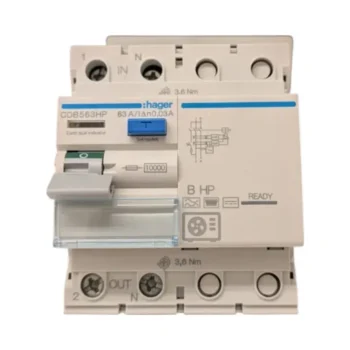
This Hager Bidirectional RCBO Guide explains what Hager bidirectional RCBOs are, how they work and where they may be used in compatible Hager consumer units and distribution boards. A bidirectional RCBO is designed for circuits where current flow direction may need to be considered, while still providing overload, short-circuit and residual current protection in one device.
Looking for Hager bidirectional RCBO products? Browse our Hager bidirectional RCBO range, or view our main Hager RCBO category for the wider Hager RCBO range.
Bidirectional RCBOs are often considered for modern installations involving solar PV, battery storage, EV charging equipment and other systems where current flow may not always be one-way. The correct device should always be selected by a qualified electrician based on the equipment, circuit design and manufacturer instructions.
Why Bidirectional RCBOs Are Used
Traditional protective devices are commonly used on circuits where current flows from the supply to the load. In some modern electrical systems, current may also flow back towards the supply, depending on the equipment and installation design.
A bidirectional RCBO is designed to provide suitable protection where this type of current flow has been allowed for by the device manufacturer. This makes it useful for selected renewable energy, battery storage and EV-related applications where bidirectional operation is required.
How Hager Bidirectional RCBOs Work
Hager bidirectional RCBOs combine two main protective functions:
- Overcurrent protection – helps protect against excessive current caused by overloads or short circuits.
- Residual current protection – helps disconnect the circuit where residual current leakage is detected.
The bidirectional design means the device is suitable for circuits where current may flow in either direction, subject to the product specification and installation requirements.
Typical Applications
Hager bidirectional RCBOs may be selected for installations where reverse or two-way current flow needs to be considered. Common examples include:
- Solar PV systems
- Battery storage installations
- Selected EV charging circuits
- Renewable energy systems
- Modern domestic and light commercial installations with compatible equipment
The exact device type, rating and compatibility should always be confirmed before ordering or installation.
Benefits of Hager Bidirectional RCBOs
Suitable for Modern Circuit Designs
Bidirectional RCBOs are useful where the installation design includes equipment that may allow current to flow in more than one direction.
Combined Protection in One Device
Like other RCBOs, they combine overload, short-circuit and residual current protection in one unit, helping protect individual circuits in compatible boards.
Useful for Renewable and EV-Related Installations
They are commonly considered for installations involving solar PV, battery storage and selected EV charging applications, where manufacturer guidance may require suitable bidirectional protection.
Hager RCBO Compatibility
Before ordering, check that the Hager bidirectional RCBO is compatible with the consumer unit, distribution board, busbar arrangement and circuit design. RCBOs are not normally interchangeable between different board ranges, so manufacturer compatibility should always be confirmed.
Important details to check include:
- Current rating
- Tripping curve
- Breaking capacity
- Residual current type
- Bidirectional suitability
- Board and busbar compatibility
- Manufacturer installation instructions
Hager Bidirectional RCBO or Standard RCBO?
A standard RCBO may be suitable for many normal final circuits. A bidirectional RCBO may be required where current can flow in either direction, such as certain solar PV, battery storage or EV-related installations.
The correct choice depends on the connected equipment, installation design and manufacturer requirements. This should be confirmed by the electrician before installation.
Browse Hager Bidirectional RCBOs
For current product options, visit our Hager bidirectional RCBO category.
You can also browse our wider Hager RCBO range or view the main RCBO circuit breakers category for other brands and ratings.
Installation Notes
Hager bidirectional RCBOs should be selected, installed and tested by a qualified electrician in accordance with current UK wiring regulations, manufacturer instructions and the requirements of the connected equipment. Always confirm the correct rating, residual current type, breaking capacity, bidirectional suitability and board compatibility before installation.
Conclusion
Hager bidirectional RCBOs are designed for suitable modern installations where current may flow in either direction. They are commonly considered for solar PV, battery storage and selected EV-related circuits, providing combined overcurrent and residual current protection in one device.


































Hager Bidirectional RCBO Guide