

If you’re searching for a complete and practical Octopus Energy smart tariff guide, this is where everything comes together.
Not just how the tariff works.
Not just when electricity is cheaper.
👉 But how to actually benefit from it in real life.
Because here’s the reality most EV drivers discover later:
Two people can be on the same smart tariff —
and end up paying very different amounts to charge their cars.
The reason is simple.
👉 The tariff finds cheaper electricity
👉 The charger determines whether you actually use it
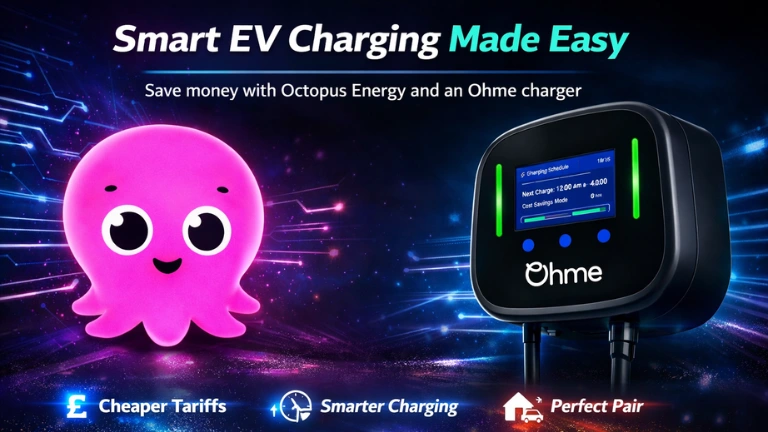
This is why across the UK, many EV drivers are using a setup that combines an Octopus smart tariff with an Ohme charger — not because it’s promoted, but because it works in practice.
⚡ Octopus Energy smart tariff guide: what it actually does
In this Octopus Energy smart tariff guide, the first thing to understand is that smart tariffs are not just “cheap night rates”.
Smart tariffs from Octopus Energy are designed to:
- Respond to electricity demand on the grid
- Use smart meter data (half-hourly readings)
- Automatically schedule charging sessions
- Shift usage to lower-cost periods
👉 The system is dynamic, not fixed.
Instead of saying:
“Electricity is cheap from midnight to 5am”
It works more like:
“When is electricity cheapest tonight — and how do we use it?”
🧠 Why EV charging has fundamentally changed
As this Octopus Energy smart tariff guide explains, EV charging has moved from static to dynamic.
Old model (still widely used)
- Plug in at night
- Use a timer
- Charge at the same time every day
New model (smart tariff)
- Charging times vary
- Electricity price varies
- System decides optimal schedule
👉 This shift is the most important change in home EV charging.
And it’s where many setups fall short.
🔌 Octopus Energy smart tariff guide: why your charger matters more than you think
A key part of this Octopus Energy smart tariff guide is understanding that the tariff itself does not physically control your car.
It can only send instructions.
👉 Your charger must be able to receive and follow them.
If your charger:
- Uses fixed timers
- Cannot communicate with the tariff
- Cannot adjust charging dynamically
Then:
- Charging may start at the wrong time
- Cheaper energy windows may be missed
- You may only partially benefit from the tariff
👉 This is why setup matters more than most people expect.
🚗 Why Ohme chargers are widely used with Octopus Energy
In this Octopus Energy smart tariff guide, it’s important to understand why Ohme chargers are so commonly used in the UK.
Ohme chargers are:
- Widely installed across UK homes
- Selected as home charging partners by major car manufacturers
- Designed specifically for smart tariff environments
👉 This reflects practical compatibility, not just branding.
The key reason:
👉 Ohme chargers are built to integrate directly with smart tariff systems like Intelligent Octopus Go.
⚙️ Real-life charging scenario (what actually happens)
Let’s apply this Octopus Energy smart tariff guide to a real situation.
You arrive home at 6pm
This is typically a peak demand period.
Electricity is more expensive.
With a basic charger
- Charging starts immediately OR
- Charging starts at a fixed time
👉 No optimisation.
With a smart tariff + Ohme charger
- Charging does NOT start immediately
- System waits for cheaper electricity
- Charging is scheduled dynamically
👉 Result: lower-cost charging without manual input
⚡ Off-peak vs smart charging (critical difference)
This Octopus Energy smart tariff guide must make this clear:
Fixed off-peak window
- Typically around 6 hours overnight
- Lower rate applies to the whole home
Smart charging periods
- Can occur outside that window
- Still billed at lower EV rate (if scheduled)
👉 This is the hidden advantage most people don’t fully understand.
And it only works if your charger allows it.
💡 Common mistakes EV drivers make
This Octopus Energy smart tariff guide highlights where things often go wrong:
Using timers instead of smart control
Limits flexibility and misses cheaper periods
Assuming “overnight = cheapest”
Electricity prices can still vary
Choosing a non-compatible charger
Prevents full optimisation
Expecting fixed charging times
Smart charging is meant to change
👉 These mistakes explain why some users don’t see expected savings.
🔄 Why your charging times will constantly change
Within this Octopus Energy smart tariff guide, this is one of the most misunderstood points.
Charging times may:
- Start at different hours
- Be split across sessions
- Change daily
👉 This is not inconsistency.
It is optimisation.
📊 What actually determines your EV charging cost
A complete Octopus Energy smart tariff guide must explain this clearly.
Your cost depends on:
- Your tariff
- When your car charges
- Whether your charger follows the schedule
👉 All three must align.
🔌 Octopus Energy smart tariff guide: deep dive into Ohme chargers
This is the most important section of this Octopus Energy smart tariff guide, because this is where your real-world experience is shaped.
All Ohme chargers:
- Support smart tariff integration
- Allow automated scheduling
- Adjust to electricity pricing
But the difference is in daily usability, flexibility, and installation.
Ohme Home Pro 5m cable – full breakdown
Design and installation
- Tethered unit (fixed cable)
- 5 metre cable
- Wall-mounted
👉 Ideal when your car parks consistently in one position.
User interface
- Built-in display
- App connectivity
- Direct charger control
👉 You can monitor and adjust charging easily.
Smart functionality
- Integrates with Octopus tariff
- Automatically schedules charging
- Adjusts to dynamic pricing
Everyday usability
- Plug in and charge
- No cable handling
- Fast daily routine
Best for:
- Standard driveways
- Single vehicle households
- Users prioritising convenience
Limitation
- Cable reach may be restrictive in some layouts
Ohme Home Pro 8m cable – full breakdown
This model solves one of the biggest real-world issues: positioning.
Key difference
- 8 metre cable instead of 5m
Why it matters
Parking is not always consistent.
- Larger driveways
- Different vehicle positions
- Multiple cars
👉 The extra 3 metres makes a practical difference daily.
Functionality
- Same smart features as 5m version
- Same integration with Octopus
- Same automation
Best for:
- Flexible parking setups
- Future-proof installations
- Multi-vehicle households
Trade-off
- More cable to manage
Ohme ePod (untethered charger) – full breakdown
The ePod is a different approach entirely.
Design
- Untethered (no fixed cable)
- Compact wall unit
- Socket-based connection
Installation benefit
- Clean, minimal appearance
- No hanging cable
- Smaller footprint
Charging process
- Plug cable into charger
- Plug into car
- Remove after use
Smart functionality
- Same smart tariff integration
- Same scheduling capability
- Same optimisation
Best for:
- Design-conscious installations
- Users with multiple EVs
- Those who prefer flexibility
Consideration
- Requires manual cable handling
🧠 Which Ohme charger should you choose?
This part of the Octopus Energy smart tariff guide is where decisions are made.
Home Pro 5m
Best for simplicity and fixed setups
Home Pro 8m
Best for flexibility and future-proofing
ePod
Best for aesthetics and adaptability
👉 All three deliver the same smart charging capability.
The difference is how they fit into your daily life.
🏪 About us – Electrical4Less Ltd
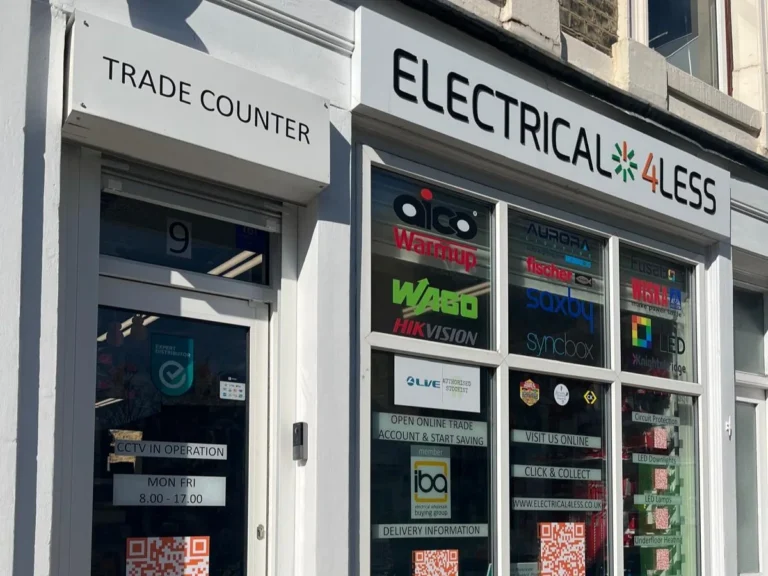
At Electrical4Less Ltd, we are official Ohme stockists, supplying EV chargers for customers across the UK.
- Fulham, London (SW6 1RP)
- Nationwide UK delivery
- Easy online ordering
We supply Ohme chargers designed to work with smart EV tariffs.
❓ FAQs – Octopus Energy Smart Tariff Guide
A smart meter with half-hourly readings
A compatible EV or charger
Access to the supplier app
A home EV charging setup
💬 Octopus Energy smart tariff guide: final takeaway
To conclude this Octopus Energy smart tariff guide:
👉 The tariff finds the cheapest electricity
👉 The charger ensures you actually use it
This is why many EV drivers in the UK choose a setup that combines a smart tariff with an Ohme charger — because it allows the system to operate as intended.



































Octopus Energy Smart Tariff Guide: How It Works