


Interlinking smoke alarms explained properly is essential for anyone responsible for fire safety in domestic properties. While most people understand that smoke alarms save lives, far fewer understand how interlinking works, when it is needed, and what the correct options are when cabling or alarm types differ.
Incorrect assumptions about interlinking often lead to unsafe wiring practices, non-compliant installations, or unreliable alarm systems. This guide explains interlinking smoke alarms clearly, with practical, real-world guidance for electricians, landlords, and informed homeowners.
In this article, interlinking smoke alarms explained covers:
- What interlinking means and why it matters
- When interlinking is required or strongly recommended
- Wired interlinking and cable requirements
- What must never be used as an interlink
- Wireless (RF) interlinking and when it should be used
- Hybrid systems (wired + RF)
- Adding alarms to existing interlinked systems
- Key differences between Aico and ESPire RF solutions
Interlinking Smoke Alarms Explained – What Does It Mean?
When interlinking smoke alarms is explained, it simply means connecting multiple alarms so that when one alarm activates, all alarms in the system sound at the same time.
For example:
- Smoke detected in a hallway triggers bedroom alarms
- A kitchen heat alarm activates smoke alarms upstairs
- A carbon monoxide alarm alerts the whole property
This shared response provides earlier warning, especially in larger or multi-storey homes.
Why Interlinking Smoke Alarms Is So Important
Interlinking is one of the most effective ways to improve escape time.
Key reasons interlinking matters:
- Fires often start away from sleeping areas
- Closed doors significantly reduce audibility
- Multi-storey homes need faster warning
- Vulnerable occupants benefit from whole-property alerts
When interlinking smoke alarms is explained in real-world terms, standalone alarms clearly provide less protection than an interlinked system.
Regulations & Best Practice (UK) – Interlinking Smoke Alarms Explained
BS 5839-6 – Domestic Fire Detection
BS 5839-6 is the British Standard covering domestic fire alarm systems. It strongly supports the use of interlinked alarms, particularly in:
- New builds
- Major refurbishments
- Multi-storey dwellings
- Rental properties
Interlinked alarms are considered best practice because they function as a coordinated safety system, not isolated devices.
Wired Interlinking – Interlinking Smoke Alarms Explained Electrically
Traditional wired interlinking uses a dedicated interlink conductor between alarms.
Correct Cable for Wired Interlinking
- 3 Core & Earth (3C+E)
- Live
- Neutral
- Interlink (signal)
- Earth (CPC)
This is the correct and compliant method for hard-wired interlinked smoke alarms.
⚠️ What If 3 Core & Earth Is Missing?
In many existing properties, installers find only twin & earth (T&E) cabling.
When interlinking smoke alarms is explained correctly, this means:
- Hard-wired interlinking cannot be achieved safely
- Improvised solutions are not acceptable
❌ What Must NEVER Be Used as an Interlink
This point is critical.
Earth Conductors
- Green/yellow earth conductors must never be sleeved and repurposed
- The bare CPC in twin & earth must never be used as a signal wire
- Earth conductors are for protective purposes only
Using an earth conductor as an interlink is dangerous and non-compliant.
Wireless (RF) Interlinking – The Correct Alternative
When suitable cabling is missing, RF interlinking is the correct and compliant solution.
When interlinking smoke alarms is explained for retrofit installations, RF systems:
- Avoid unsafe wiring
- Require no additional cabling
- Reduce disruption
- Are compliant when installed to manufacturer instructions
Critical Rule: Do Not Duplicate Interlinking Paths
Duplicating wired and RF interlinking between the same alarms can cause:
- False alarms
- Signal looping
- Unpredictable system behaviour
Extending an Existing Hard-Wired System (Correct Use of RF)
There is one permitted scenario where RF may be introduced.
When interlinking smoke alarms is explained properly, RF can be used to extend a wired system when:
- Existing alarms are already hard-wired
- A new alarm location has no interlink cable
- Running new cable is impractical
Correct Method
- Keep the existing alarms hard-wired
- Add RF to one existing alarm only (closest to the new location)
- Add RF to the new alarm
- RF acts as a bridge, not a duplicate interlink path
Key Differences Between Aico and ESPire RF Systems
Understanding brand differences is essential to avoid incorrect installations.
Aico RF Interlinking – Series-Specific
Aico 140 Series (Mains + 9V Backup)
- Uses RF bases
- RF added beneath the alarm
- Designed specifically for 140 Series alarms
Aico 3000 Series (Mains + 10-Year Sealed Battery)
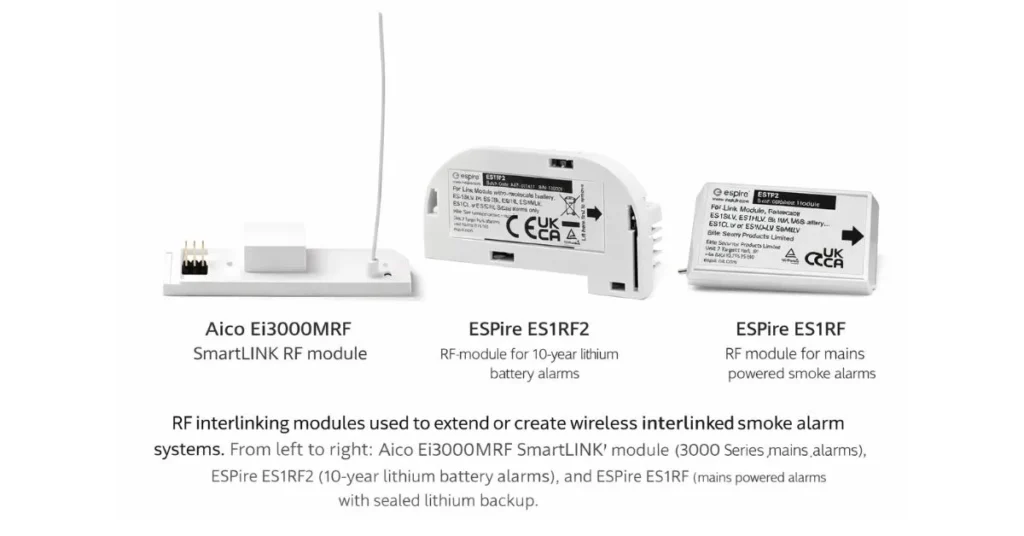
- Uses the Ei3000MRF SmartLINK plug-in module
- RF plugs into the rear of the alarm
- Supports wired, RF, and hybrid systems
Aico 600RF Series (10-Year Battery with Built-In RF)
- RF is built in as standard
- No additional RF module required
- Must be 600RF (standard 600 Series does not include RF)
⚠️ Common mistake: confusing 600RF alarms with standard 600 Series models.
ESPire RF Interlinking – Modular Across Ranges
ESPire uses separate RF-Link modules, giving flexibility but requiring correct selection.
ESPire 10-Year Battery Alarms
- RF-Link modules sold separately
- RF added only when required
ESPire Mains + 10-Year Battery Alarms
- RF-Link modules sold separately
- Supports wired, RF, and hybrid systems
ESPire Hybrid Rule
- Only one alarm on the hard-wired circuit may have an RF-Link module
- That alarm acts as the RF bridge to the new device
RF Interlinking Products Used in This Guide
The RF interlinking products below are referenced throughout this article to demonstrate how interlinking smoke alarms explained works in real installations. Always ensure the RF solution matches the correct alarm series and power type.
Aico RF Interlinking Products
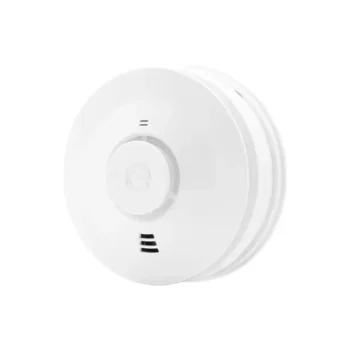
Aico Ei168RC RadioLINK base for 140 Series mains smoke alarms (9V backup)
Used with Aico 140 Series mains powered smoke alarms with 9V battery backup. RF functionality is added via the base, making it suitable where no hard-wired interlink cable is available.
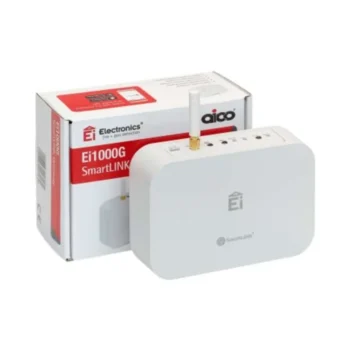
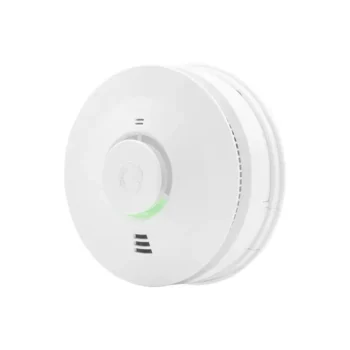
Aico Ei3000MRF SmartLINK RF module for 3000 Series mains alarms (10-year sealed battery)
Designed specifically for Aico 3000 Series mains powered alarms with sealed 10-year battery backup. This plug-in RF module supports wired, RF, and hybrid systems when installed in line with manufacturer guidance.
ESPire RF Interlinking Products
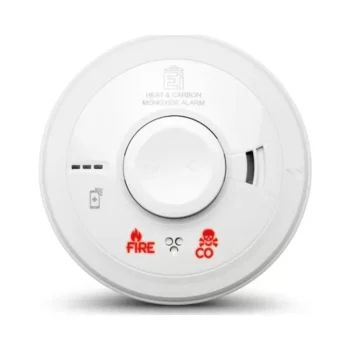
ESPire ES1RF2 RF module for 10-year lithium battery smoke alarms
Used with ESPire 10-year sealed lithium battery alarms where wireless interlinking is required. RF is added only when needed via the module.
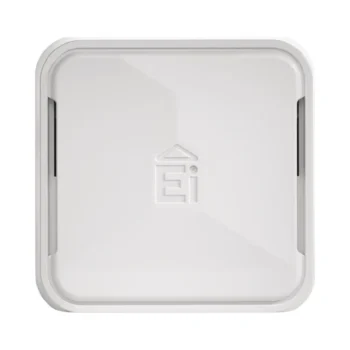
ESPire ES1RF RF module for mains powered smoke alarms with lithium battery backup
Used with ESPire mains powered alarms with sealed lithium backup, allowing RF interlinking or compliant hybrid system extensions where no interlink cable exists.
⚠️ Important
Side-by-Side Summary
| Brand | Alarm Type | RF Method |
|---|---|---|
| Aico | 140 Series (Mains + 9V) | RF base |
| Aico | 3000 Series (Mains + 10-Year) | Plug-in RF module |
| Aico | 600RF (10-Year Battery) | Built-in RF |
| ESPire | 10-Year Battery | Separate RF module |
| ESPire | Mains + 10-Year | Separate RF module |
Interlinking as a Complete Fire Safety System
When interlinking smoke alarms is explained holistically, alarms should be designed as a complete system:
- Smoke alarms in circulation areas
- Heat alarms in kitchens
- CO alarms near fuel-burning appliances
- All alarms interlinked appropriately
Key Takeaways – Interlinking Smoke Alarms Explained
- Interlinking smoke alarms improves early warning and safety
- Wired interlinking requires a dedicated interlink conductor
- Earth conductors must never be repurposed
- RF interlinking is the correct solution where cabling is missing
- Wired and RF paths must not be duplicated
- RF may be used correctly to extend a wired system
- Always match RF solutions to the alarm series, not just battery type



































Interlinking Smoke Alarms Explained: Wired, RF & Hybrid Systems