


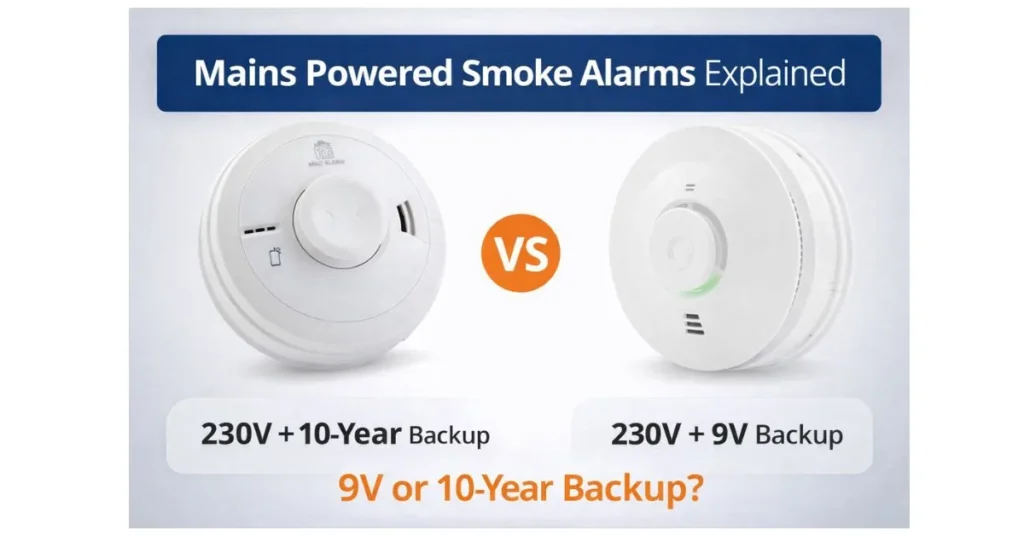
Mains powered smoke alarms explained properly can help homeowners, landlords, and electricians make better decisions about fire safety, long-term reliability, and legal compliance. While many alarms may look similar on the surface, the difference between 230V mains powered alarms with a 9V battery backup and 230V mains powered alarms with a 10-year sealed lithium backup can have a significant impact on maintenance, lifespan, and overall protection.
In this in-depth guide, we explain how mains powered smoke alarms work, compare the two backup battery options, clarify common misconceptions about lifespan, and outline relevant UK regulations. We also look at the latest ranges from Aico and ESP Fire & Security (ESPire), two trusted brands available from Electrical4Less.
You can shop all smoke, heat & carbon monoxide alarms below:
Mains Powered Smoke Alarms Explained: What Does It Mean?
When mains powered smoke alarms are explained, the term refers to alarms that are permanently connected to the property’s 230V electrical supply. Unlike battery-only alarms, mains powered units receive continuous power directly from the consumer unit, ensuring consistent operation.
To protect against power cuts, all compliant mains alarms include a backup battery, allowing the alarm to function even if mains power is lost.
In domestic settings, mains powered smoke alarms are often:
Used as part of a wider system including heat alarms and carbon monoxide (CO) alarms.
Interlinked (wired or wireless)
Installed in hallways, landings, and living areas
Mains Powered Smoke Alarms Explained: Backup Battery Options
When mains powered smoke alarms are explained, the term refers to alarms that are permanently connected to the property’s 230V electrical supply. Unlike battery-only alarms, mains powered units receive continuous power directly from the consumer unit, ensuring consistent operation.
To protect against power cuts, all compliant mains alarms include a backup battery, allowing the alarm to function even if mains power is lost.
In domestic settings, mains powered smoke alarms are often:
- Interlinked (wired or wireless)
- Installed in hallways, landings, and living areas
- Used as part of a wider system including heat alarms and carbon monoxide (CO) alarms
Mains Powered Smoke Alarms Explained: 230V + 9V Backup Alarm Range
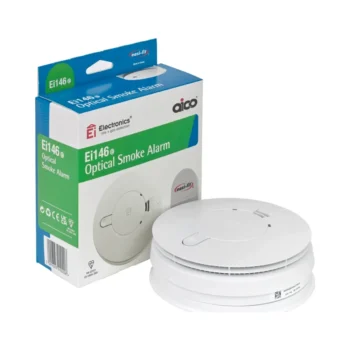
You can view 230V mains powered alarms with 9V battery backup below
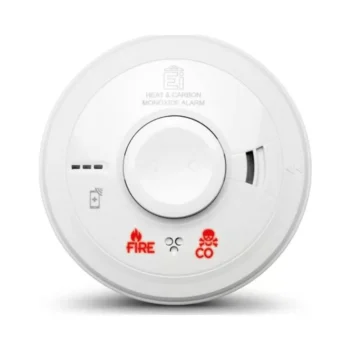
In this section of our mains powered smoke alarms explained guide, 230V + 9V backup alarms represent the more traditional solution.
Key features:
- Powered by 230V mains with a replaceable 9V backup battery
- Battery requires regular checking and replacement
- Familiar option for electricians and maintenance teams
- Often lower initial purchase cost
These alarms are commonly specified for refurbishments and like-for-like replacements, with reliable options available from both Aico and ESPire.
Mains Powered Smoke Alarms Explained: 230V + 10-Year Backup Alarm Range
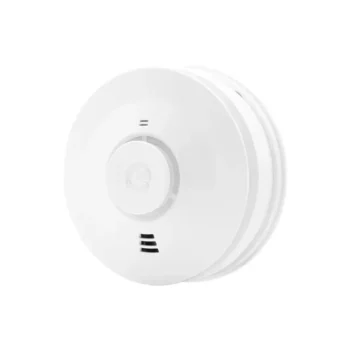
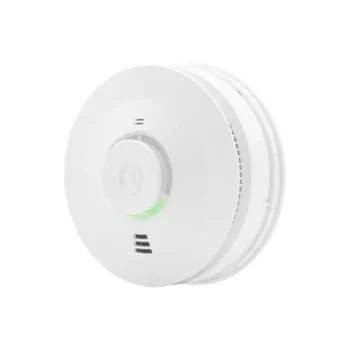
You can browse 230V mains powered alarms with 10-year sealed lithium backup by clicking the button below
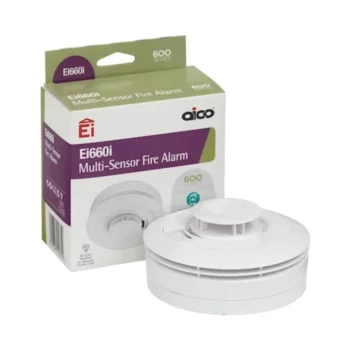
When mains powered smoke alarms are explained for modern installations, 10-year sealed battery alarms are often the preferred choice.
Key features:
- 230V mains powered with a sealed lithium backup battery
- Battery lasts for the entire working life of the alarm
- No battery replacements required
- Reduced risk of tampering or forgotten batteries
These alarms are widely used in new builds, rental properties, and upgraded domestic installations where long-term reliability is essential.
Which Option Is Right? – Mains Powered Smoke Alarms Explained Simply
| Feature | 230V + 9V Backup | 230V + 10-Year Backup |
|---|---|---|
| Battery maintenance | Required | None |
| Risk of battery removal | Possible | Eliminated |
| Ongoing call-outs | Higher | Lower |
| Typical applications | Refurbs, budget installs | New builds, rentals |
⏳ Detector Lifespan – Mains Powered Smoke Alarms Explained Clearly
When mains powered smoke alarms are explained, it’s important to understand that the detector itself has a limited lifespan, regardless of battery type.
A common misconception is that 10-year sealed battery alarms are not worth buying, without realising that:
Why Alarms Must Be Replaced
- Smoke sensors degrade over time due to dust and contamination
- Electronic components lose sensitivity
- Accuracy and response times reduce with age
This applies to:
- Mains powered smoke alarms with 9V backup
- Mains powered smoke alarms with 10-year sealed backup
- Heat alarms
- Carbon monoxide (CO) alarms
Most modern alarms include an end-of-life warning chirp or display a manufacture date to indicate replacement is due.
⏳ Detector Lifespan – A Key Point Often Missed
One of the most misunderstood aspects when mains powered smoke alarms are explained is detector lifespan.
Some customers question whether a 10-year sealed battery alarm is worth buying, without realising that:
Why Alarms Have a Limited Lifespan
- Smoke sensors degrade due to dust and contamination
- Electronics lose sensitivity over time
- Response accuracy reduces as components age
This applies to:
- Smoke alarms
- Heat alarms
- Carbon monoxide (CO) alarms
- 9V backup alarms
- 10-year sealed battery alarms
Most modern alarms include an end-of-life warning chirp to indicate replacement is required.
✅ Why 10-Year Sealed Backup Still Makes Sense
Choosing a 230V + 10-year sealed backup alarm does not mean the alarm lasts longer than 10 years — it means consistent protection with minimal maintenance throughout its correct working life.
This is why sealed battery mains alarms are increasingly specified in:
- Rental properties
- New-build homes
- Modern domestic upgrades
UK Regulations – Mains Powered Smoke Alarms Explained in Context
Understanding regulations is essential when mains powered smoke alarms are explained correctly.
- BS 5839-6 domestic fire alarm standards explained
https://www.aico.co.uk/technical-support/standards-regulations/fire-british-standard-bs-5839-62019/ - UK landlord smoke and carbon monoxide alarm regulations
https://www.gov.uk/government/publications/smoke-and-carbon-monoxide-alarms-explanatory-booklet-for-landlords - Best practice: all alarms should be replaced every 10 years
Quick Links
Shop all smoke, heat & carbon monoxide alarms
Includes all battery types, plus smoke alarms, heat alarms, and carbon monoxide (CO) alarms, allowing you to specify a complete fire safety system from one place.
View 230V mains powered alarms with 9V battery backup
Browse 230V mains powered alarms with 10-year sealed lithium backup

































Mains Powered Smoke Alarms Explained: 9V Backup vs 10-Year Sealed Battery