


Why Almost Every Circuit in Your Home Now Needs It
If you’re working in domestic installations today, you’ve probably noticed that Domestic RCD protection requirements UK have evolved so much that almost every final circuit in a home now needs RCD coverage. This is driven by stricter standards in BS 7671:2018+A2:2022, with guidance reinforced by the IET, NICEIC, and NAPIT.
At Electrical4Less Ltd, we work with professional electricians and informed homeowners every day, supplying brands like Hager, FuseBox, Live Electrical, Niglon, and WCED (Whitecliffe Electrical) — all of which manufacture consumer units designed to meet and exceed current UK RCD regulations.
The Main Driver: Cables in Walls
One key reason for this near-universal RCD protection requirement is Regulation 522.6.202. It mandates that any cable:
- Buried less than 50mm deep in a wall
- Not in earthed metallic conduit or trunking
- Not protected by mechanical barriers
…must be protected by a 30mA RCD.
Since most UK domestic wiring runs in plasterboard walls at shallow depth without earthed mechanical protection, RCD protection rules for homes UK effectively apply to every final circuit, from lighting to cookers.
Key BS 7671 Clauses You Can’t Ignore
| Regulation | Topic | Why It Matters in Domestic Installations |
|---|---|---|
| 411.3.3 | RCDs on socket outlets ≤32A | All socket circuits need RCDs unless exceptional exemptions apply |
| 411.3.4 | RCDs on other final circuits | Extends to fixed appliances, lighting, and more |
| 522.6.202 | Buried cables | Almost every domestic circuit is affected |
| 314.1 | Division of installation | Prevents one fault from disabling large parts of the system |
| 536.4.202 | Avoiding overload on RCDs | Critical for coordination and avoiding nuisance tripping |
The IET, NICEIC, and NAPIT all highlight these regulations in their training and inspection guidance.
From the Age of Dual RCD Boards to RCBO Consumer Units
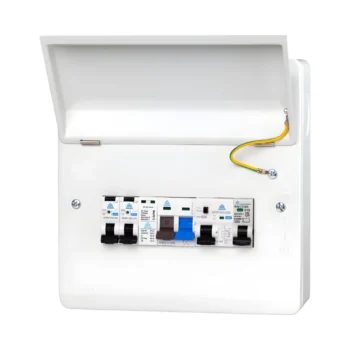
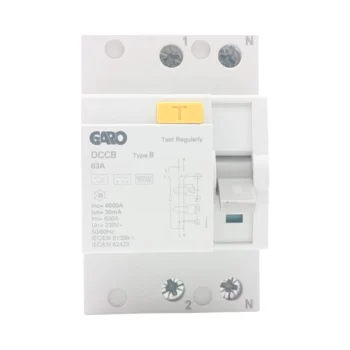
Before the 18th Edition and the requirement for non-combustible (metal) consumer units in domestic premises, plastic dual RCD boards — particularly 2×63A RCD units — dominated the mass market. They were cheap, and in many cases, electricians found it difficult to persuade customers to opt for RCBO protection.
However, quality often suffered. Just before 2015, many mass-market consumer units had reached their lowest build quality in decades. Some respected electricians welcomed the metal enclosure requirement because it forced better construction standards.
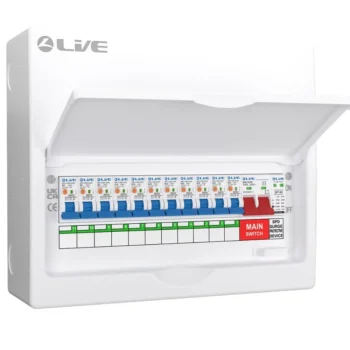
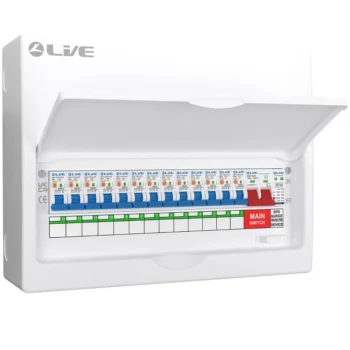
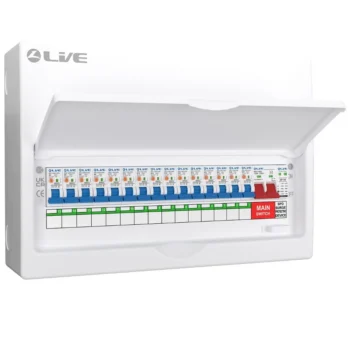
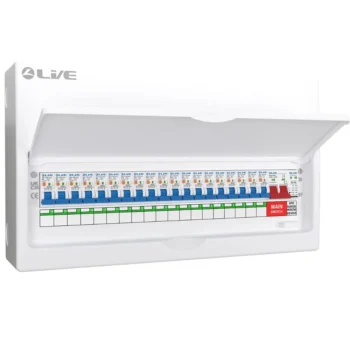
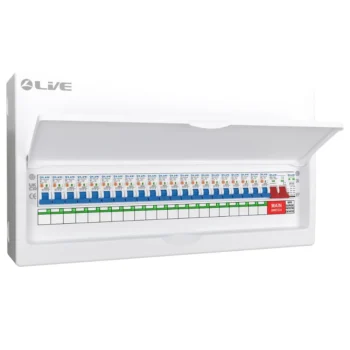
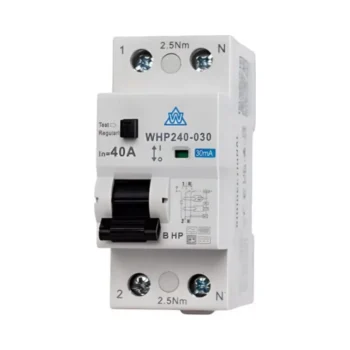
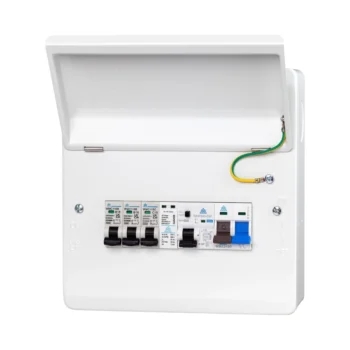
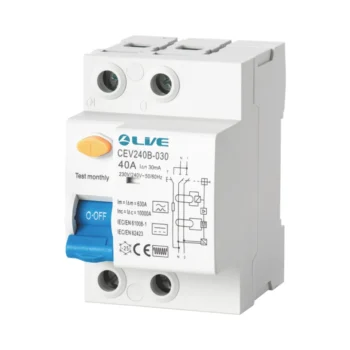
Today, with BS7671 RCD circuit regulations in mind, RCBO consumer units are the clear winner. Each circuit has its own residual current protection, meaning:
- A single fault won’t shut down half the house.
- Earth leakage from multiple circuits can’t accumulate on one RCD and cause nuisance trips.
- Selectivity is easier to achieve.
Why Dual RCD Boards Create Practical Problems
While they can still technically comply with UK home RCD requirements, dual RCD boards are prone to issues:
- Neutral-to-earth faults on one circuit will take out all circuits on that RCD until the fault is fixed — switching off the MCB isn’t enough.
- Cumulative leakage from multiple circuits (as low as 22–25mA) can trip a 30mA RCD without a fault.
- Selectivity issues make coordination with upstream devices harder.
For most electricians, the safer, cleaner option is domestic RCBO consumer units from reputable brands.
Special Locations and Outdoor Installations
Under RCD wiring regulations for domestic circuits, certain locations always require additional 30mA protection:
- Bathrooms and shower rooms
- Outdoor sockets and lighting
- Outbuildings, sheds, and garages
- EV chargers (with Type A RCD or RCBOs as a minimum)
The Brands We Recommend for RCD-Compliant Installations
At Electrical4Less, we stock:
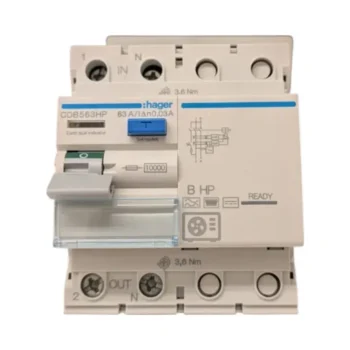
- Hager — premium build quality, long-standing reputation, and a wide range of RCBO boards.
- FuseBox — popular with electricians for excellent value, with RCBO boards available from 6 to 21 usable ways.
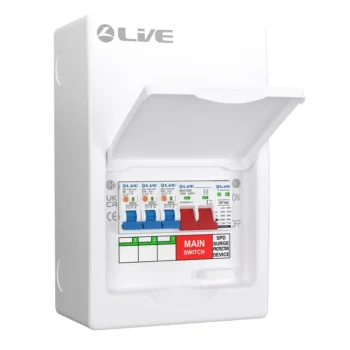
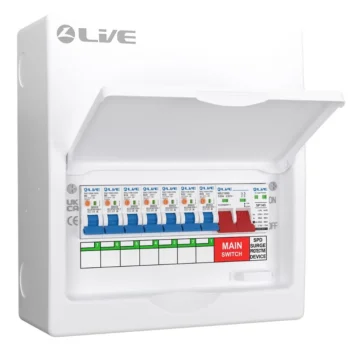
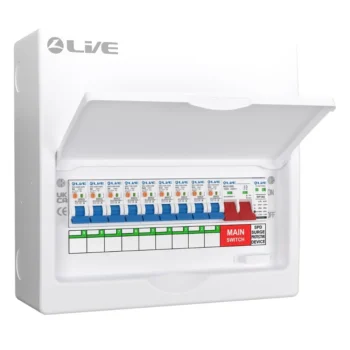
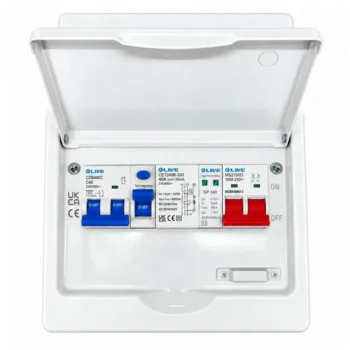
- Live Electrical — robust designs, often pre-wired for faster installs.
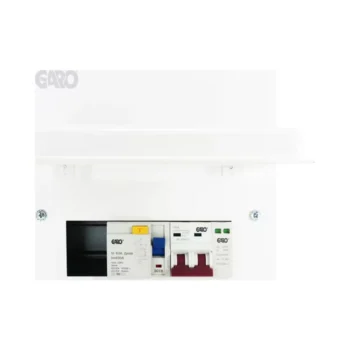
- Niglon — versatile consumer units with both dual RCD and RCBO configurations.
- WCED (Whitecliffe Electrical) — known for commercial-grade construction and reliable SPD integration.
Electrical4Less — Your Trusted UK Electrical Wholesaler
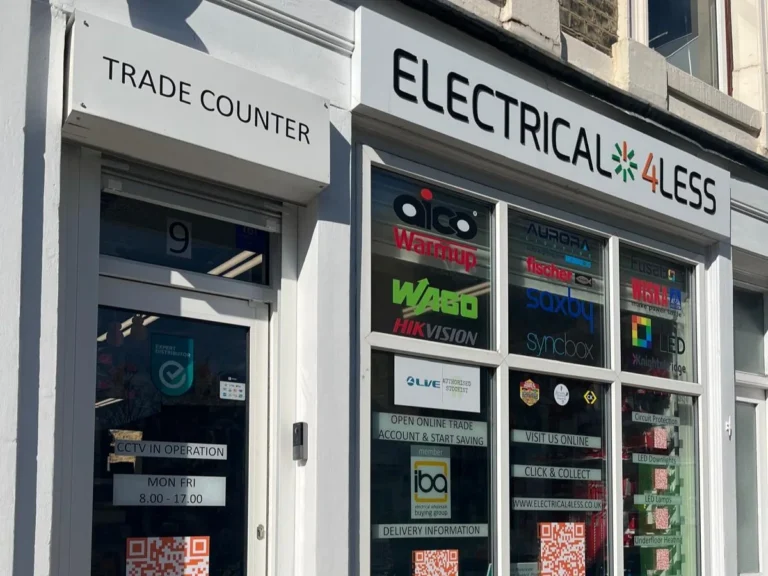
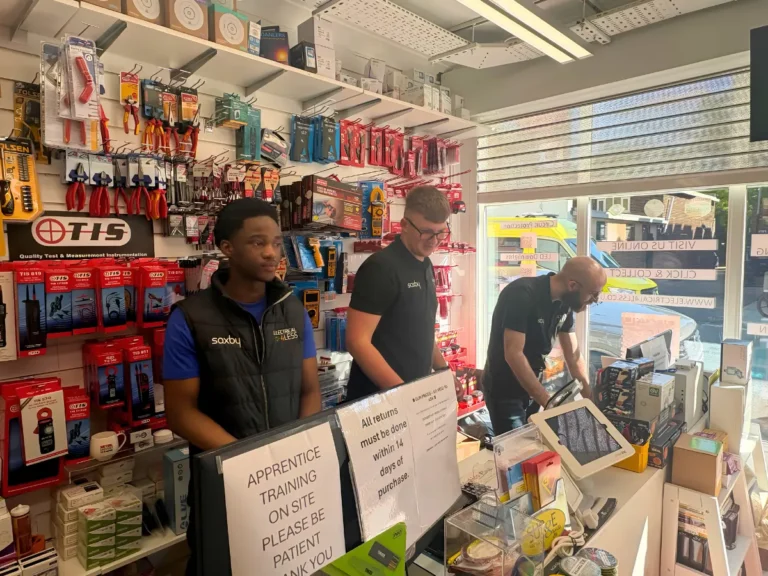
We’re not just another online shop. Electrical4Less Ltd operates from our Fulham, London SW6 1RP trade counter, serving both the public and the trade. As proud members of the IBA (Independent Buyers Association) and the EDA (Electrical Distributors’ Association), we’re part of a network that represents the most trusted names in UK electrical supply.
When you shop with us, you get:
- Fast UK delivery and same-day collection from our Fulham branch.
- Competitive trade pricing across all major brands.
- Friendly, expert advice for both professionals and homeowners.
FAQs — Technical
FAQs — Practical
Join the Conversation
We’d love to hear your thoughts on Domestic RCD protection requirements UK and how the latest BS 7671 changes have affected your work. Have you fully moved away from dual RCD boards? Are you installing RCBO consumer units in every domestic job now?
Leave a comment below with your experiences — electricians, apprentices, and even homeowners are welcome to join the discussion.





























Domestic RCD Protection Requirements UK