


The Safer, Smarter Choice for Modern Electrical Installations
The debate around RCBO consumer units vs dual RCD is effectively over in 2025. Electricians across the UK are turning away from split-load setups in favour of modern, safer, and regulation-ready boards. Whether you’re working on a rewire, fitting EV protection, or upgrading a solar-ready system, RCBO consumer units offer clear benefits in fault isolation, compliance, and performance.
RCBO Consumer Units
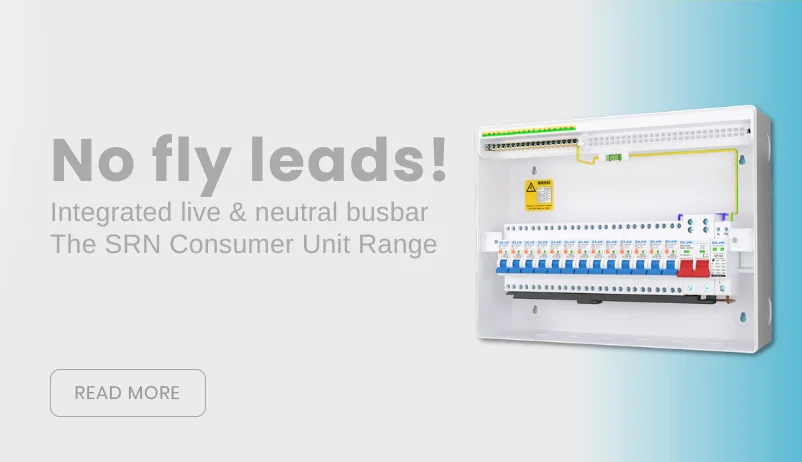
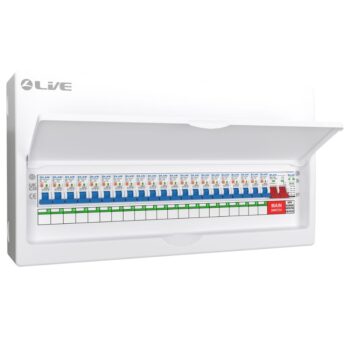
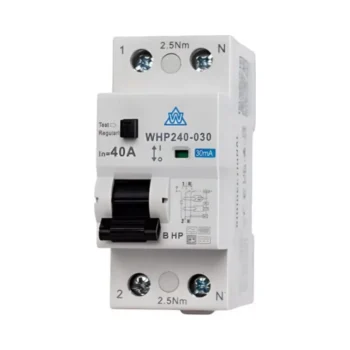
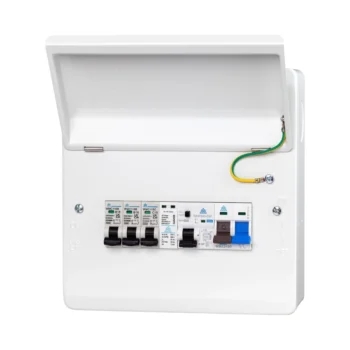
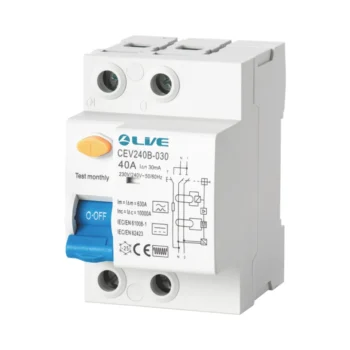
RCBO consumer units use individual RCBOs on every circuit, combining overcurrent and residual current protection in one device. Most units include a 100A main switch and a metal enclosure, making them ideal for domestic, commercial, and rental properties alike.
Unlike dual RCD boards, RCBO units offer true circuit-by-circuit fault handling, making them the go-to solution for professional electricians. They are available with or without surge protection and often include extras like blanks, cable glands, and ID labels.
If you’re new to RCBO boards or want to compare different setups, start with our Populated RCBO Consumer Units section below.
⚡ 18th Edition Consumer Units (SPD RCBO Boards)
Under Amendment 2 of the 18th Edition Wiring Regulations (BS 7671), consumer units in domestic installations must offer protection not only from overcurrents and residual currents, but also from surges.
Our 18th Edition-compliant consumer units feature:
- A 100A main switch
- Type A RCBOs (now standard)
- A pre-installed Type 2 SPD
- Full metal enclosure
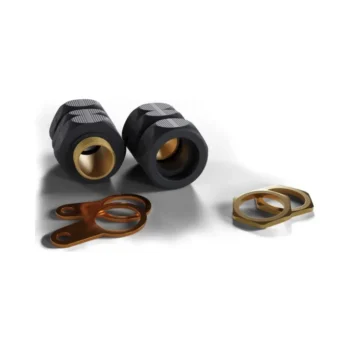
- Tails gland and blanks included
These boards are required for most new installations and strongly recommended when adding EV chargers, induction hobs, or solar PV systems. For setups involving PV, always select bi-directional RCBOs to ensure proper fault detection regardless of current direction.
We list all SPD-equipped models under the 18th Edition Consumer Units section for your convenience.
RCBO Boards vs Split Load Units: What Went Wrong?
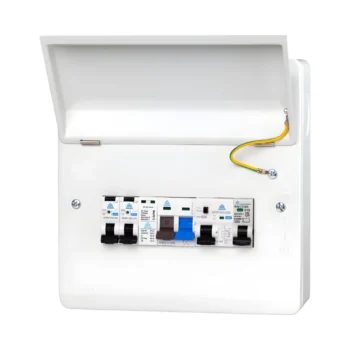
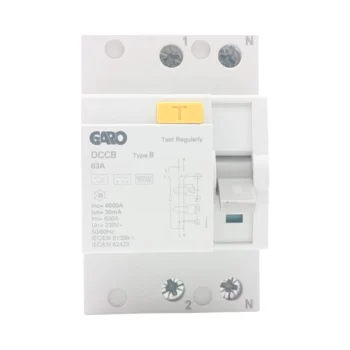
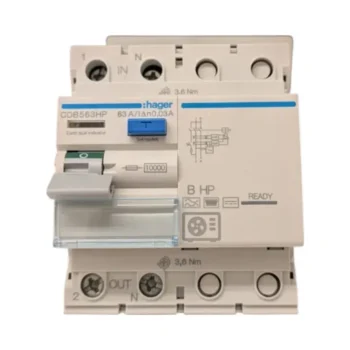
Split-load (dual RCD) boards dominated the domestic market for years. They featured two RCDs (commonly 63A) covering banks of circuits via MCBs. The appeal was simple: low cost. But this created real-world problems:
- ⚠️ Shared RCDs cause mass tripping from single faults
- ⚠️ Neutral-to-earth faults trip the RCD even if the MCB is off
- ⚠️ Background leakage from grouped circuits often exceeds 25mA, causing unexplained trips
- ⚠️ Most used undersized 63A RCDs, despite modern loads requiring 100A
Worse, the period just before 2015 saw a drop in quality, with flimsy plastic boards and unreliable components flooding the market. For many installers, the 2016 metal consumer unit regulation (Reg 421.1.201) was a welcome reset.
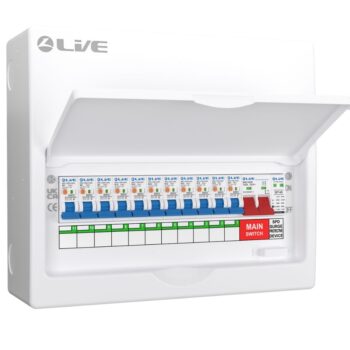
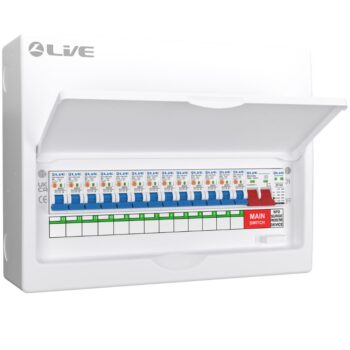
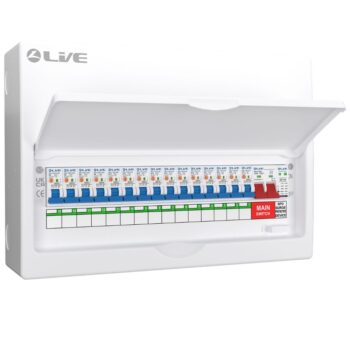
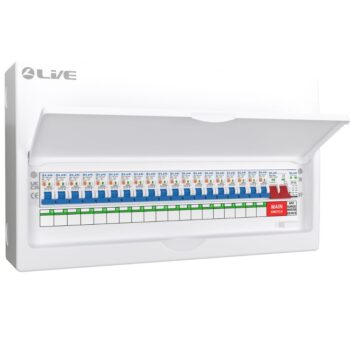
Populated RCBO Consumer Units
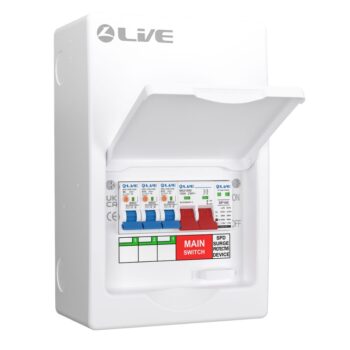
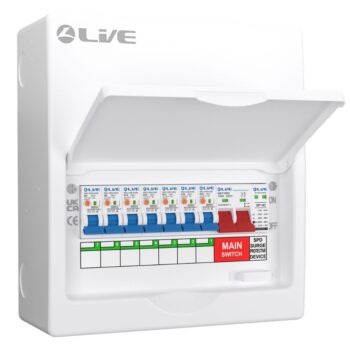
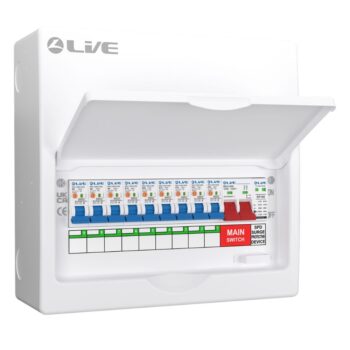
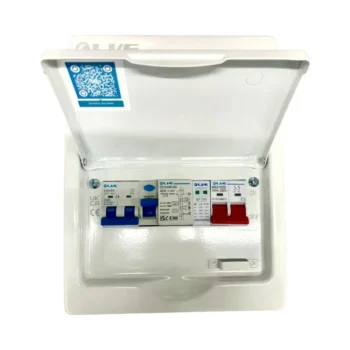
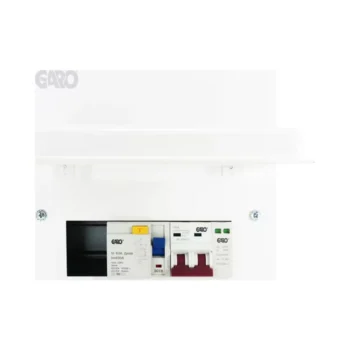
For electricians wanting to save time and avoid last-minute surprises, populated RCBO boards are the perfect option. These boards arrive with all RCBOs pre-installed — matched in rating and type — along with any required blanks, SPD, tails gland, and enclosure accessories.
Available in a wide range of configurations:
- ✅ Single-row units: 6, 8, 10, 14, up to 21 usable ways
- ✅ Double-bank units: larger format boards offering up to 45 usable ways
These fully populated RCBO consumer units are:
- ✅ 18th Edition compliant (with Type A RCBOs and metal enclosures)
- ✅ Designed for fast, clean installations
- ✅ Ideal for rewires, landlord upgrades, commercial installs, and solar-ready properties
Browse our full collection of Populated RCBO Consumer Units for trusted options from FuseBox, Live Electrical, and Hager.
RCBO Consumer Units vs Dual RCD – Real-World Comparison
| Feature | Dual RCD Board | RCBO Consumer Unit |
|---|---|---|
| Fault Isolation | Shared across multiple circuits | Circuit-specific fault isolation |
| RCD Tripping from N-E Fault | Yes (even with MCB off) | No (isolated to one RCBO) |
| Earth Leakage Nuisance Trips | Common | Rare |
| Solar PV Compatibility | Not suitable without adaptation | Fully compatible with bi-directional RCBOs |
| Regulation Compliance | Needs 2×100A RCDs minimum | Fully compliant (18th Edition) |
| Futureproof Design | ❌ Obsolete | ✅ Modern standard |
Recommended RCBO Consumer Boards
We stock the most trusted RCBO boards in the UK, including:
- FuseBox Consumer Units with SPD
- Live Electrical Consumer Units with SPD
- Hager Consumer Units with SPD
All are compatible with Amendment 2, EV-ready, and available now for fast UK delivery or collection.
Technical FAQs: RCBO & Regulatory Questions
Practical FAQs: Installer Insights
Join the Conversation
What are your thoughts on RCBO consumer units vs dual RCD?
- Still using dual RCD boards anywhere?
- Have you installed bi-directional RCBOs for solar?
- Got tips or photos to share?
Leave a comment below or reach out to our team. We’re building a community of electricians who care about doing things right — and staying ahead of the curve.






























RCBO Consumer Units vs Dual RCD – Why Electricians Are Making the Switch