


Why do many electricians and homeowners still refer to the consumer unit as a “fuse box” in 2025? Although the official name has been standardised in regulations for decades, the term fuse box remains deeply rooted in everyday language. This post explores the journey from fuse boxes to FuseBox consumer units, unpacks the brand’s role in keeping the term alive, and explains how evolving regulations continue to shape the UK’s electrical landscape.
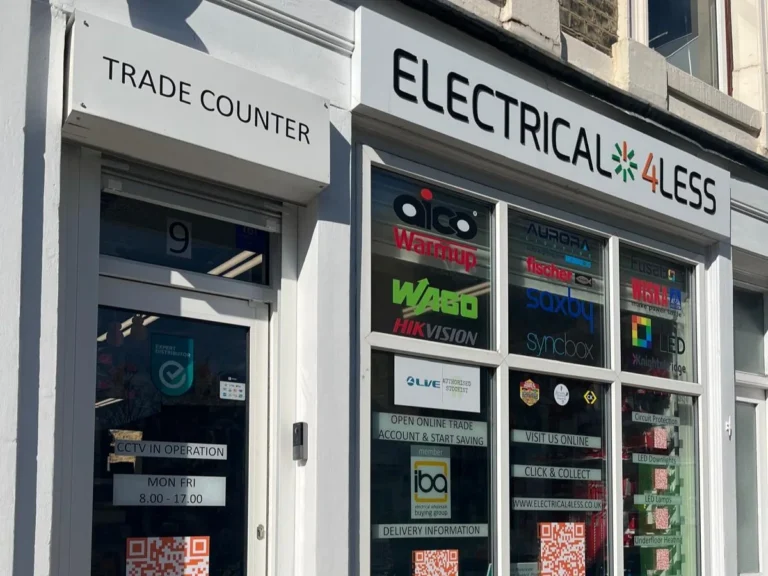
At Electrical4Less.co.uk, a trusted online electrical wholesaler and independent trade counter in Fulham, London, we’ve stocked FuseBox consumer units since their early growth phase. Our team is committed to fast service, clear advice, and an easy ordering experience—backed by tracked next-day delivery from reliable UK couriers.
The FuseBox Brand: A Clever Revival of a Familiar Name
The FuseBox brand, launched in 2017 by CP Electric Ltd in Kilmarnock, Scotland, is now a recognised leader in UK circuit protection. Under the direction of Robin Forsyth, the company quickly became known for building robust, installer-friendly metal consumer units that meet evolving 18th Edition standards.
With a compact team and dedicated field agents, FuseBox expanded rapidly across the UK and Ireland, supplying over 1,200 wholesalers. Products are manufactured in partnership with facilities in Europe and Asia, and include features like:
- Top-mounted earth and neutral bars
- Plenty of wiring space
- Factory-fitted Type 2 SPDs
- Full compliance with BS EN 61439-3 and BS 7671:2018+A2
This clever re-use of the nostalgic “fuse box” term likely helped the brand’s early popularity. It resonated with homeowners and experienced electricians alike—and from 2018 to 2019, word-of-mouth and wholesaler demand helped FuseBox take off.
Why Are We Still Saying “Fuse Box”?
We’ve been trying to pinpoint exactly when “consumer unit” became the formal term in the UK. Our research suggests:
- The term “consumer unit” began appearing in British Standards from the 1960s onward
- It was formalised in documents like BS 5486-13:1979 and BS 7671 (then the IEE Wiring Regulations)
- Even today, BS 7671 (18th Edition) uses only “consumer unit”—you won’t find “fuse box” in modern regulations
Yet the term fuse box persists, especially in domestic settings. Why?
Because FuseBox, the brand, brought it back. Their success helped reinforce the old term with a new product identity. Now, phrases like “FuseBox consumer unit” dominate search results and wholesaler websites alike.
If you know of any earlier uses of “consumer unit” or specific standards where the terminology shifted, let us know! We’re always updating our knowledge and would love to include better references.
Reference: BS 7671 official site – IET Wiring Regulations
Timeline: From Fuse Boards to 18th Edition Consumer Units
| Period | Common Term | Technology Highlights |
|---|---|---|
| Late 1800s–1950s | Fuse box / fuse board | Rewirable fuses in wooden/metal enclosures |
| 1950s–1970s | Fuse board | Cartridge fuses, grouped circuits, early isolators |
| 1980s–2000s | Consumer unit | MCBs and split-load boards, rise of plastic enclosures |
| 2001–2015 | Consumer unit | Dual RCD layouts, 17th Edition regs (BS 7671:2001) |
| 2015–Present | Consumer unit | Metal enclosures become mandatory (Reg. 421.1.201), surge protection introduced, 18th Edition evolves |
| 2020s–Present | FuseBox consumer units | RCBO boards with factory-fitted SPDs, bi-directional readiness, EV/PV support, more compact enclosures |
⚡ Introducing the F3 Series – FuseBox’s Latest Innovation (2025)
FuseBox launched their brand-new F3 Series in 2025, representing their most advanced consumer unit design yet.
Key differences:
- SPD does not require an MCB – it fits directly onto the busbar
- No wasted ways – with the MCB removed, you gain an extra usable way (e.g. 6-way unit becomes 7-way)
- SPD colour change – from the older orange to a modernised pink finish
The F3 range also supports bi-directional RCBOs, making it perfect for solar PV systems and EV charger-ready installs. This series improves layout flexibility and saves on parts—further cementing FuseBox as a forward-thinking manufacturer.
Read our full post on the FuseBox F3 Series →
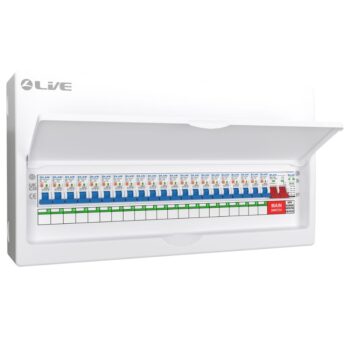
Explore the FuseBox Consumer Unit Range
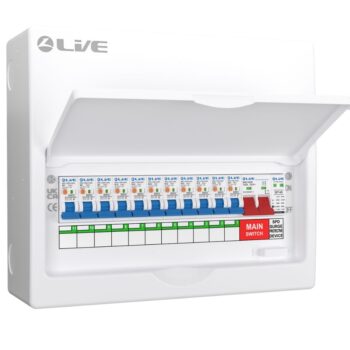
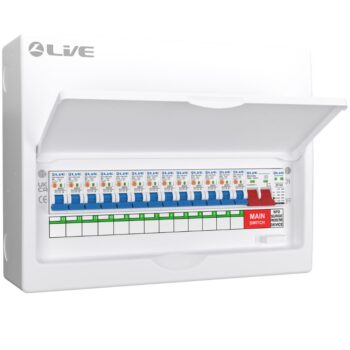
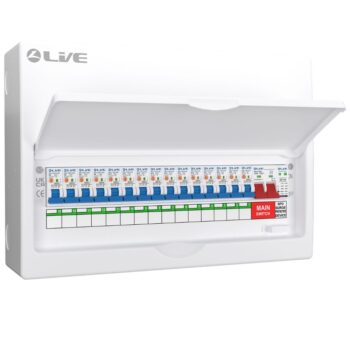
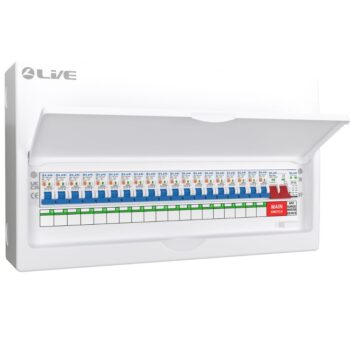
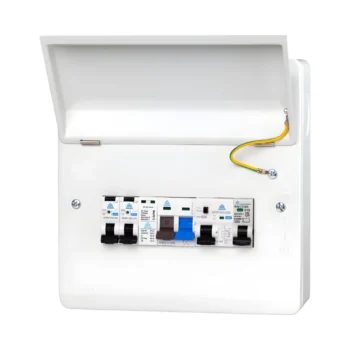
Dual RCD Consumer Units
Two RCDs split the circuits into two protected zones. A traditional setup—now largely phased out in favour of RCBO-populated boards.
Shop Dual FuseBox RCD FuseBox Boards ⚡
Dual Tariff Units
Designed for economy 7 or dual-rate tariffs, these boards separate day/night circuits for energy savings.
View FuseBox Dual Tariff Units
Garage Consumer Units
Metalclad, 18th Edition compliant, ideal for sheds, outbuildings, and garages. Available with main switch or RCBO.
Browse FuseBox Garage Consumer Units
Main Switch Consumer Units
Basic and flexible. Populate with RCBOs or MCBs as needed. Great for domestic custom setups.
See FuseBox Main Switch Boards
Main Switch Units with SPD
Pre-fitted with Type 2 SPD, saving time on-site. Ensures compliance with surge protection requirements.
Find FuseBox SPD-Ready Boards ⚙️
Historical Terms Still in Use
- “Fuse Boards” – The original name for grouped fuse enclosures
- “Fuse Boxes” – Still used casually today
- “Consumer Units” – The formal, regulated name in all modern documentation



























From Fuse Boxes to FuseBox Consumer Units – How Branding Changed the Game