



Garage Consumer Units
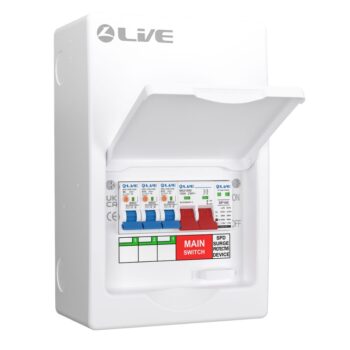
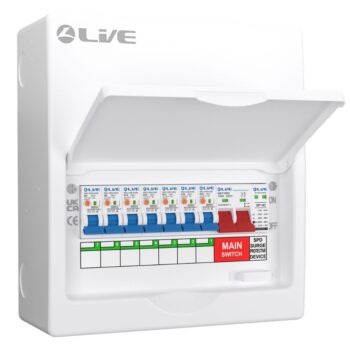
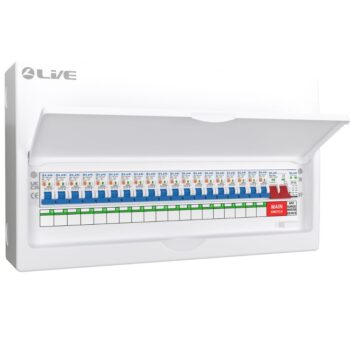
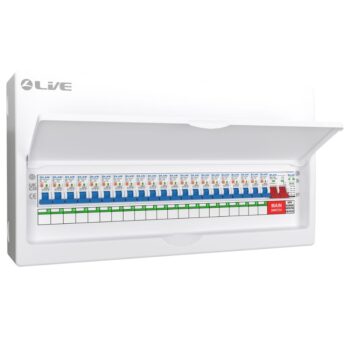
Garage consumer units, also referred to as fuse boxes or distribution boards, are vital components in any garage’s electrical infrastructure. These units are designed to safely distribute electricity to various circuits, providing essential protection against electrical faults and facilitating efficient power management. In this comprehensive guide, we will explore the technical details of garage consumer units, their primary functions, the reasons for their creation, and their significance in modern garages. We’ll also review key models, including the popular Hager VML406AH and FuseBox F100GRA.
Why Were Garage Consumer Units Created?
Garage consumer units were developed in response to the growing need for safer and more efficient electrical installations in garages. Initially, garages featured basic electrical setups, typically limited to a single switch and a few power outlets. However, as garages increasingly became multifunctional spaces housing power tools, lighting, and other appliances, the demand for a more sophisticated and safer electrical system grew.
Garage consumer units address these needs by serving as the central hub for all electrical connections in the garage. They provide a structured and safe way to manage power distribution, incorporating protective features to prevent electrical hazards. The creation of these units was a pivotal step towards enhancing electrical safety and convenience in garage environments, making them indispensable in both residential and commercial settings.
Key Functions of Garage Consumer Units
1. Power Distribution
A primary function of a garage consumer unit is to distribute electrical power across various circuits within the garage. Acting as a control center, it facilitates the connection of multiple circuits, including those for lighting, power outlets, heating systems, and more. By segregating the electrical load into distinct circuits, the consumer unit ensures balanced power distribution, reducing the risk of overloads and enhancing the efficiency of the electrical system.
2. Circuit Protection
Garage consumer units come equipped with circuit protection devices, such as circuit breakers and fuses, which are crucial for safeguarding against electrical faults. These devices monitor the electrical current flow and automatically disconnect the circuit in the event of a fault, such as a short circuit or an overload. This mechanism not only prevents further damage but also minimizes the risk of fire and electric shock. Additionally, the unit facilitates easy identification and replacement of faulty components, ensuring continuous safety and functionality.
3. Earth Fault Protection
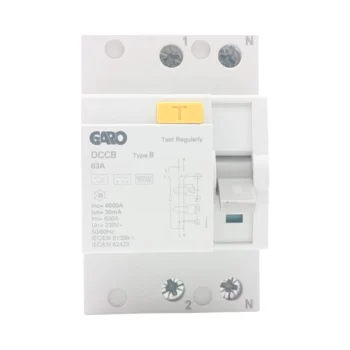
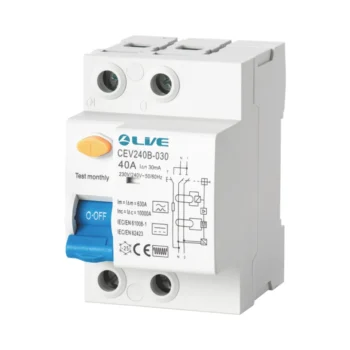
Another critical feature of garage consumer units is earth fault protection. Many units incorporate Earth Leakage Circuit Breakers (ELCBs) or Residual Current Devices (RCDs), which detect any leakage of current to the ground. In case of an earth fault, such as when a person accidentally contacts a live wire, the ELCB or RCD instantly shuts off the power, preventing potential electrocution. This feature is especially important in garages, where the risk of exposure to live wires is higher.
4. Isolation and Maintenance
Garage consumer units also provide an effective means of isolation, which is vital for safe maintenance and repairs. The main circuit breaker or isolator switch can be used to completely cut off power to the garage, ensuring that anyone working on the electrical system is protected from accidental contact with live wires. This isolation capability is crucial for performing maintenance tasks safely, without the risk of electrical shock or injury.
The Importance of Garage Consumer Units in Modern Garages

In today’s garages, which often serve as workshops, storage spaces, and utility areas, the presence of a well-installed and fully functioning consumer unit is essential. Here’s why:
- Electrical Safety: Garage CUs significantly reduce the risk of electrical accidents, protecting users from electric shock, fire, and equipment damage. The integration of circuit breakers, fuses, and earth fault protection devices provides a comprehensive safety net.
- Enhanced Control: With separate circuits for different electrical appliances and systems, a garage consumer unit offers better control over the electrical system. This setup prevents overloads and allows for the independent operation of various devices, ensuring efficient power usage.
- Compliance with Regulations: Installing a garage consumer unit is often a regulatory requirement, ensuring that the electrical installation meets safety standards. Compliance not only enhances safety but also ensures that the property adheres to legal standards.
- Future Expansion: Modern garage consumer units are designed to accommodate future electrical expansions. They come with spare circuits, enabling the addition of new appliances or systems without the need for major rewiring, thus providing a flexible solution for growing power needs.
Garage Consumer Units We Stock
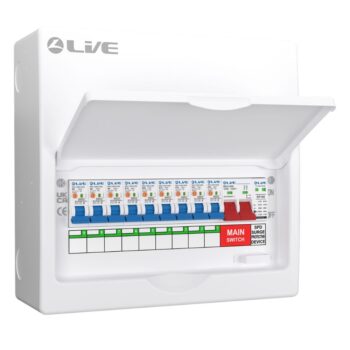
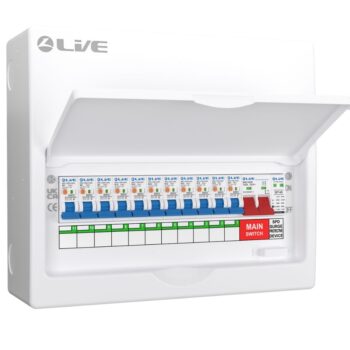
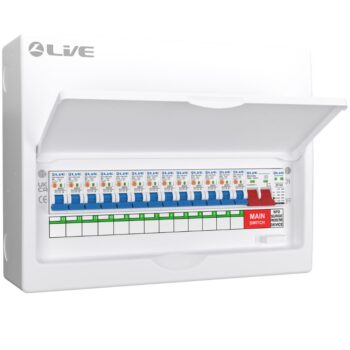
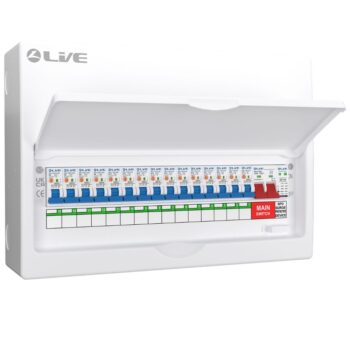
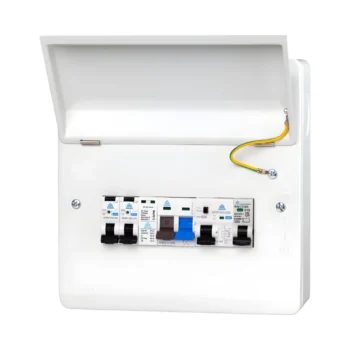
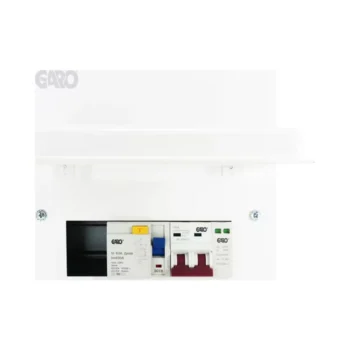
FuseBox F100GRA Garage Consumer Unit

The FuseBox F100GRA is a popular choice for residential garages due to its robust construction, compact design, and advanced safety features.
Key Features:
- Design: Crafted from high-quality steel, the FuseBox F100GRA ensures durability and resistance to environmental conditions. It supports up to ten usable ways, allowing for the connection of multiple circuits.
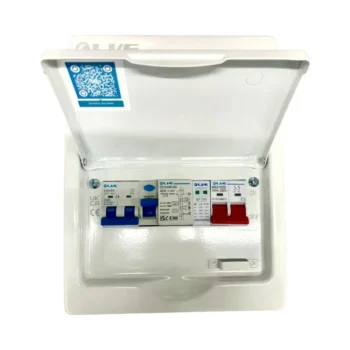
- Circuit Protection: The unit includes a 100A main switch for easy isolation and features RCD protection. It typically comes with two RCDs, providing differential protection for various circuits and enhancing overall safety.
- Installation and Wiring: Designed for straightforward installation, the unit offers ample wiring space, clearly labeled terminals, and organized cable management, making it an installer-friendly option.
Hager VML406AH Garage Consumer Unit

The Hager VML406AH is another excellent choice, known for its reliability and comprehensive protection features. It is particularly suited for garages that require multiple circuit connections and enhanced safety measures.
Key Features:
- Design: The Hager VML406AH features a sleek, durable design with a corrosion-resistant enclosure. It supports six ways, providing ample capacity for connecting various circuits within the garage.
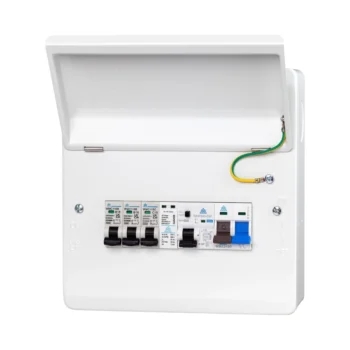
- Circuit Protection: Equipped with a 63A main switch and integrated RCD protection, the VML406AH offers robust defense against electrical faults. The unit’s RCD provides rapid disconnection in the event of earth faults, ensuring maximum safety.
- Installation and Flexibility: The unit offers generous space for wiring, making installation easier. Its modular design allows for future upgrades or additions, catering to evolving power needs.
Both the FuseBox F100GRA and Hager VML406AH garage consumer units are excellent choices for ensuring safety, compliance, and efficient power management in your garage. They not only meet the latest electrical safety standards but also provide the flexibility needed for modern electrical installations.
Conclusion
In summary, garage consumer units are essential components of modern garage electrical systems. They offer a centralized and safe way to manage power distribution, protect against electrical faults, and ensure compliance with safety regulations. With the ability to handle multiple circuits and provide both overcurrent and earth fault protection, garage consumer units like the FuseBox F100GRA and Hager VML406AH are invaluable for both residential and commercial garages. These units not only enhance safety but also provide flexibility for future expansions, making them a wise investment for any property owner.

































How is it wired from the MDB? Am I wiring from another MCB?
Hi Mark — thanks for your question.
In most garage or outbuilding setups, the garage consumer unit is fed from the main dwelling’s consumer unit (MCB or main switch area) via a suitable sub-main cable. The exact method depends on the installation design, cable size, load demand and protection requirements.
In many cases the supply is taken from a dedicated MCB in the main board, but the correct arrangement (MCB, RCBO, RCD, cable route, earthing, etc.) must be determined on-site by a qualified electrician in line with BS 7671.
Because supply methods vary between properties, it’s not possible to confirm your exact setup without inspecting the installation — but any electrician will be able to identify the correct feed from the MDB and ensure the garage CU is protected and compliant.
If you’re unsure how your garage is supplied, your electrician will be able to confirm the correct setup. We’re always happy to work directly with your electrician or organise the order according to their materials list, so feel free to get in touch if you need anything.
— Electrical4Less Team